Scientists Crack the 'Readout Problem' for Majorana Qubits — Bringing Fault-Tolerant Quantum Computing Closer
A QuTech-led team at Delft University published the first real-time, single-shot measurement of Majorana qubit parity in Nature, achieving coherence times exceeding one millisecond and resolving a fundamental experimental barrier that has blocked topological quantum computing for decades.
Scientists have cleared one of the most fundamental obstacles blocking the path to stable, error-resistant quantum computers: they have learned how to reliably read the information stored inside Majorana qubits in a single shot, in real time, without destroying the fragile quantum state in the process. The achievement, published in the journal Nature in February 2026 by an international collaboration led by QuTech at Delft University of Technology in the Netherlands and Spain's Institute of Materials Science, marks a decisive step forward in a decades-long quest to harness an exotic form of quantum information that is inherently protected against the noise and errors that plague conventional quantum systems.
Majorana qubits are named for the Italian physicist Ettore Majorana, who in 1937 predicted the existence of a particle that is its own antiparticle. In a quantum computing context, Majorana-based qubits store information in a fundamentally different way than conventional qubits: the data is distributed nonlocally across two separated quantum states rather than residing at a single physical location. This distributed architecture is theoretically far more robust against the environmental disturbances — stray electromagnetic fields, temperature fluctuations, mechanical vibrations — that constantly threaten to corrupt the fragile quantum states in today's machines. It is this inherent protection that has made Majorana-based qubits so coveted, and so elusive.
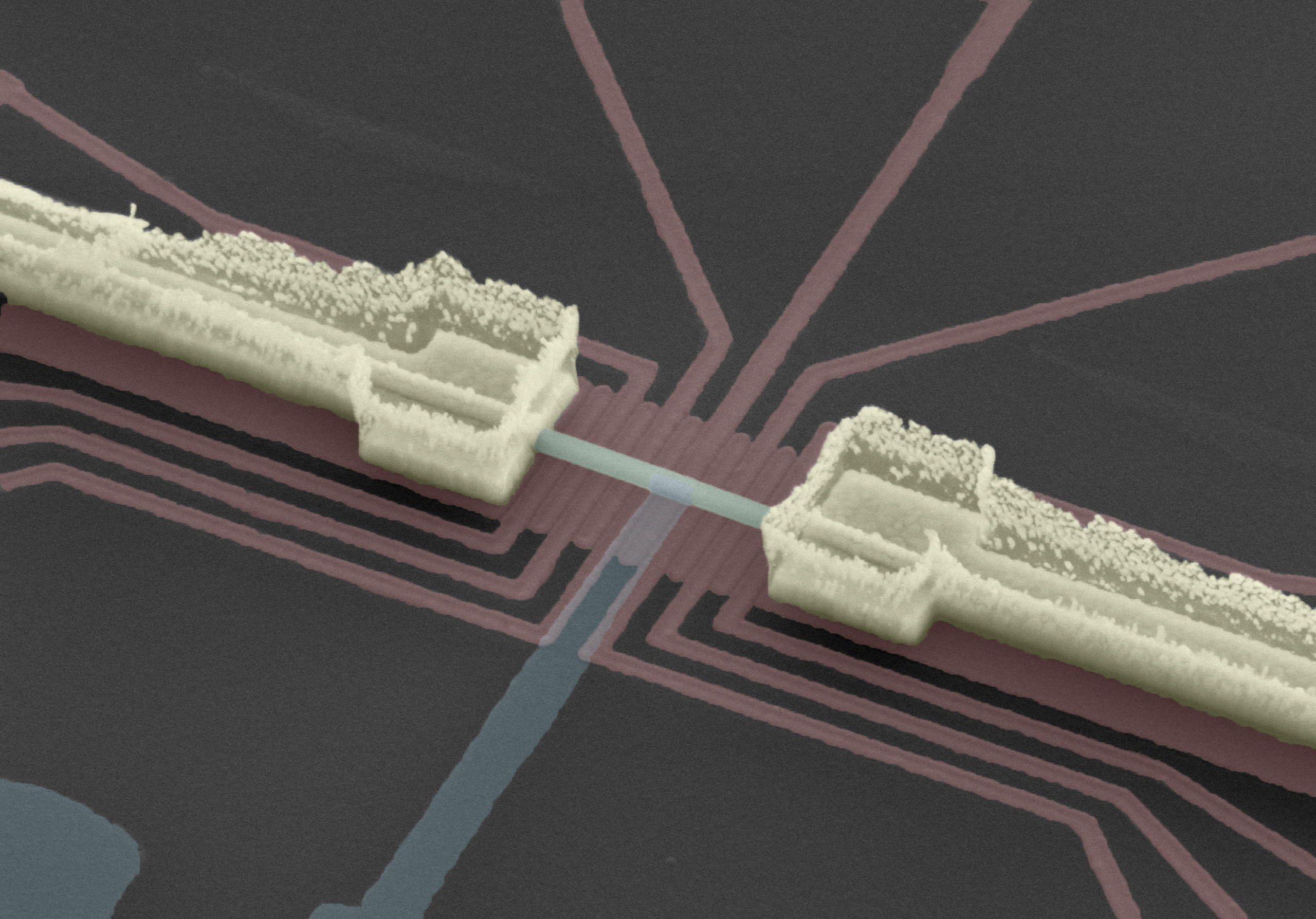
The core challenge the QuTech team solved is what researchers call the "readout problem." If the information in a Majorana qubit is deliberately distributed across two separated points to protect it, how do you measure it without collapsing or compromising that protective distribution? As lead theorist Ramón Aguado of ICMM CSIC in Madrid put it: "How do you 'read' or 'detect' a property that doesn't reside at any specific point?" The answer the team developed involves a technique called quantum capacitance probing, applied to a device known as a Kitaev minimal chain — two semiconductor quantum dots linked through a superconducting material. By measuring the collective quantum state of the whole chain at once, rather than probing either dot individually, the researchers could determine the qubit's "parity" — whether the combined state is even or odd — which is exactly how Majorana qubits encode one bit of information.
Critically, the team achieved what they called "parity coherence exceeding one millisecond." In the quantum computing world, one millisecond is a significant window — long enough to perform the quantum gate operations that calculations require. Lead experimentalist Sander Goswami of QuTech described the achievement as "proof that Majorana-based qubits are transitioning from theoretical curiosities into measurable, operational hardware." The research builds directly on Microsoft's February 2025 announcement of its Majorana 1 processor, which introduced the world's first topological qubit chip but left the readout problem unresolved.
The practical implications extend well beyond the laboratory. Current quantum computers, including the most advanced machines from IBM, Google, and IonQ, must perform thousands of error-correction operations just to keep a single logical qubit stable. This overhead dramatically limits how much useful computation they can perform. Majorana qubits, if their inherent noise resistance can be confirmed at scale, would dramatically reduce or potentially eliminate the need for error correction, making quantum computers both smaller and more computationally powerful. Microsoft has separately announced plans to build a one-million-qubit quantum processor based on topological principles by the early 2030s.
The QuTech result represents independent experimental validation of the approach's feasibility. "What we have shown is that you can read a Majorana qubit's state in a single measurement, in real time, without destroying what you just read," said Aguado. "That is the bedrock of any computing operation. Without it, you have a fascinating quantum phenomenon. With it, you have the beginning of a computer."