Physicists Achieve First Reliable Readout of Majorana Qubit With Millisecond Coherence, Opening Path to Fault-Tolerant Quantum Computing
A QuTech team at Delft University published the measurement technique topological quantum computing has been missing — quantum capacitance spectroscopy that reads Majorana zero modes without destroying them, with coherence stable for over one millisecond.
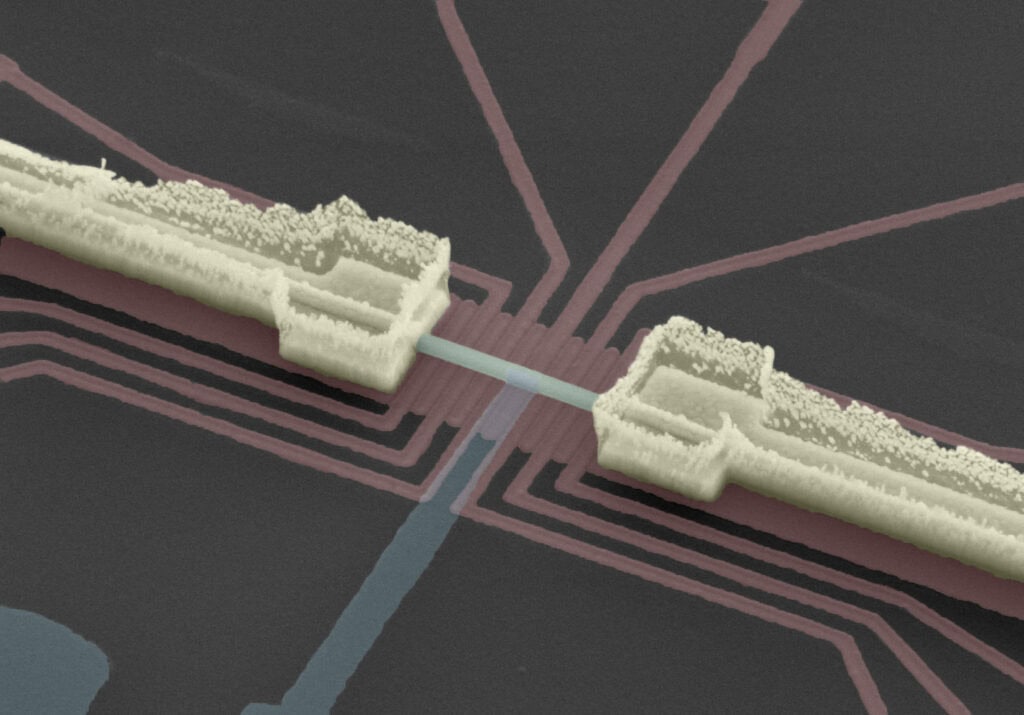
Scientists at Delft University of Technology's QuTech laboratory in the Netherlands, working with theoretical colleagues at Spain's Madrid Institute of Materials Science, have achieved a long-sought milestone in quantum computing: the first reliable readout of a Majorana qubit, with the quantum state remaining coherent — stable and computationally useful — for longer than one millisecond. The result, published February 11 in the journal Nature, provides what researchers describe as "the measurement primitive protected qubits have been missing" and opens a credible path toward fault-tolerant quantum computers that could dramatically outperform any machine in existence today.
Majorana qubits are a fundamentally different approach to quantum computing from the superconducting or photonic qubits used by most research groups and technology companies. Rather than encoding a quantum bit at a single physical location — where local disturbances like heat or electromagnetic interference can corrupt the information — Majorana qubits store information non-locally across two paired quantum states called Majorana zero modes. Because the information is distributed across two separate locations, any local perturbation sees only half the system and cannot decode or corrupt the encoded state. Theoretical lead author Ramón Aguado of ICMM–CSIC described them as "safe boxes for quantum information."
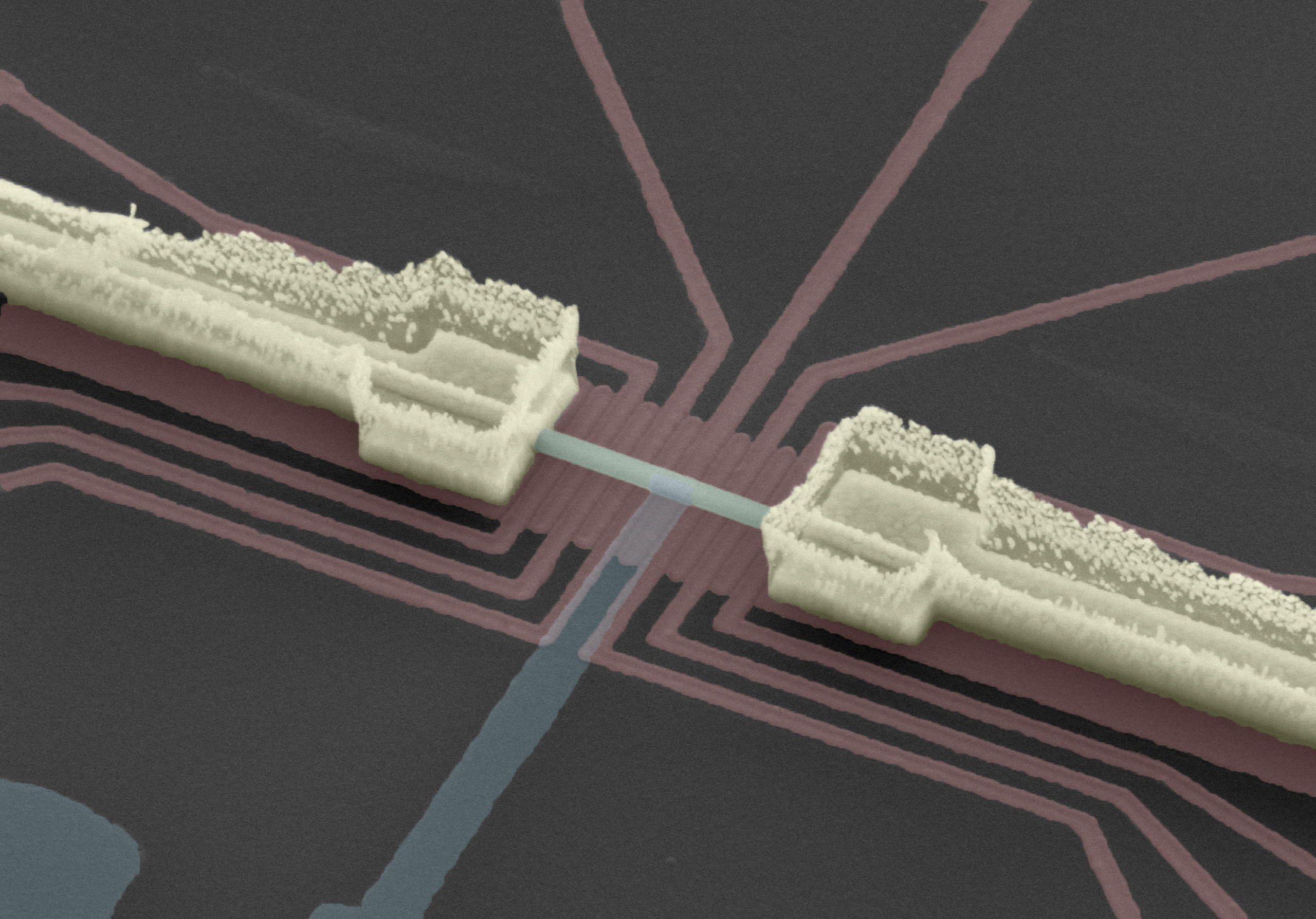
The challenge has been that this same protective non-locality makes Majorana qubits extraordinarily difficult to read. The QuTech team overcame this obstacle with a device called a minimal Kitaev chain — a nanostructure consisting of two semiconductor quantum dots connected by a short superconducting segment. They developed a readout technique based on quantum capacitance spectroscopy, using a radio-frequency resonator to measure the collective quantum state of the entire system. The key measurement is fermionic parity: whether the total number of electrons in the system is even or odd. Even-parity states allow electrons to pair up and flow freely; odd-parity states leave one unpaired electron that changes the system's measurable capacitance, distinguishing the two logical states of the qubit.
The result exceeded expectations. The team achieved single-shot parity readout on microsecond timescales — fast enough to complete many quantum gate operations within a single measurement — while the parity itself remained stable for longer than one millisecond. In quantum computing terms, a millisecond coherence time at microsecond readout speeds provides the ratio that makes error correction protocols viable. Lead experimentalist Nick van Loo wrote that the work "sets the stage for the next steps," while co-author Francesco Zatelli called the readout "the measurement primitive protected qubits have been missing."
Fault-tolerant quantum computers — machines capable of correcting their own errors in real time — are widely considered the threshold at which quantum computing would unlock capabilities far beyond classical machines: simulating molecular interactions for drug discovery, cracking modern encryption, and accelerating artificial intelligence at the hardware level. Reaching fault tolerance requires qubits that can be read reliably, operated with error rates below roughly one percent, and implemented in scalable physical systems. The Majorana approach, if fully realized, may provide all three. The next challenges are demonstrating braiding — manipulating Majorana modes to perform quantum gates through topology rather than local pulses — and fusion, neither of which has yet been achieved. Chetan Nayak of Microsoft Quantum cautioned that the current Kitaev chain device "does not constitute a scalable platform for topological qubits" and that braiding remains an unsolved problem. The road to a practical topological quantum computer remains long, but the QuTech result establishes that the most fundamental measurement obstacle has now been cleared.