QuTech Solves Quantum Computing's 'Achilles' Heel' With First Reliable Majorana Qubit Readout
Physicists at Delft University and Spain's CSIC demonstrated single-shot parity readout of Majorana qubits with coherence exceeding one millisecond, confirming topological protection and opening the path to error-resistant quantum computers.
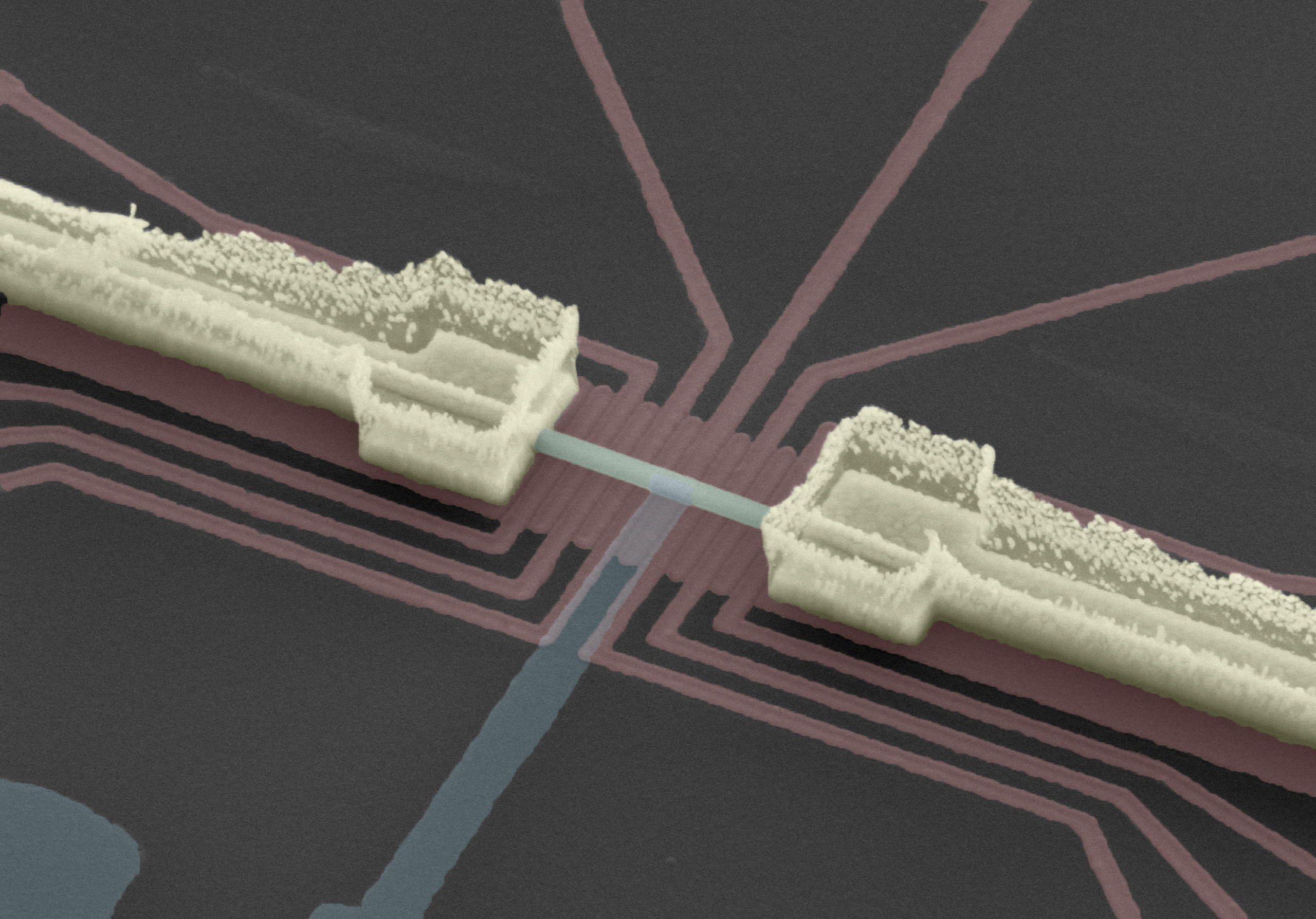
Physicists at Delft University of Technology's QuTech research center and the Spanish National Research Council have achieved a landmark breakthrough in quantum computing, successfully measuring the quantum state of Majorana qubits with unprecedented reliability and demonstrating for the first time the topological protection that has made these exotic quantum systems so attractive to quantum engineers. The results, published in the journal Nature in early 2026, resolve one of the most persistent experimental challenges in the field and move the prospect of fault-tolerant, error-resistant quantum computers measurably closer to reality.
Majorana qubits take their name from Italian physicist Ettore Majorana, who in 1937 theorized the existence of particles that are their own antiparticles. In quantum computing, Majorana modes are not particles in the traditional sense but collective quantum excitations that emerge at the endpoints of specially engineered semiconductor-superconductor nanowires. Their defining advantage is topological: the quantum information they encode is distributed across two spatially separated points in the device, making it inherently resistant to the local noise and environmental disturbances that cause conventional qubits to lose their quantum states — a process called decoherence. Researcher Ramón Aguado of the Spanish National Research Council described them as "like safe boxes for quantum information."
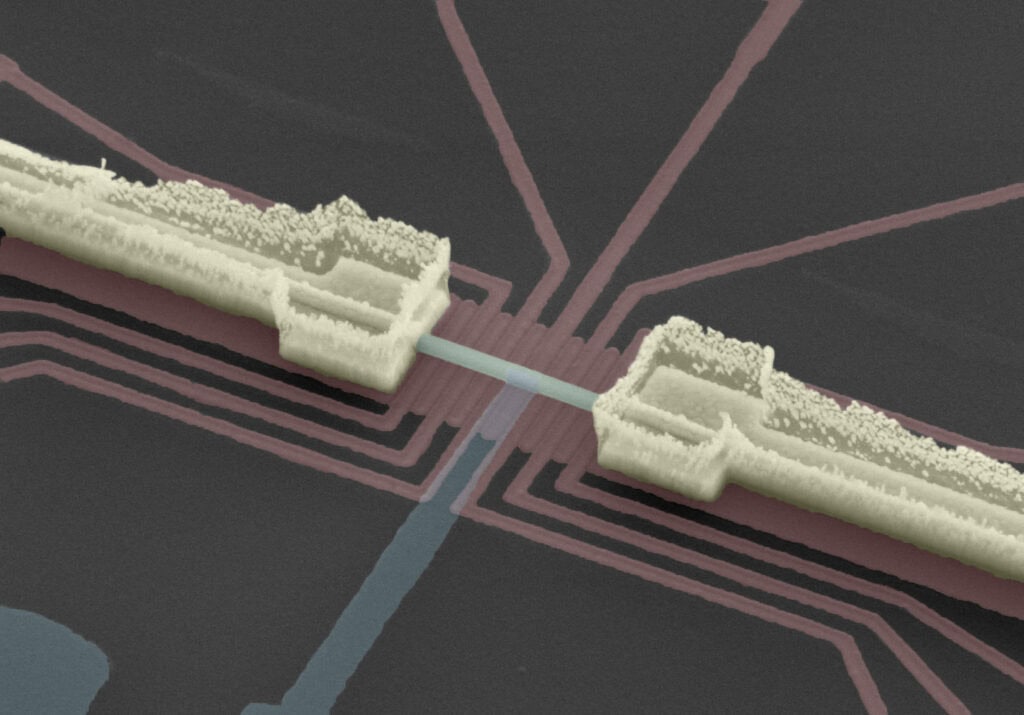
The central problem the QuTech team solved was the readout challenge. Because Majorana information does not reside at any specific point in the device, conventional measurement methods fail to access it reliably. The team constructed a minimal Kitaev chain — a system of two semiconductor quantum dots connected by a segment of superconductor — and used quantum capacitance techniques to perform what they call single-shot parity readout. An RF resonator connected to the superconductor senses the quantum state of the entire two-dot system by measuring how charge flows into and out of the superconducting condensate, providing clear, real-time discrimination of parity states. Crucially, the experiment achieved parity coherence exceeding one millisecond, directly confirming that the system is protected against local noise sources — the key theoretical prediction that had never before been experimentally verified.
The result is significant because it resolves what Aguado called "the experimental Achilles' heel" of the topological qubit approach. Microsoft has invested heavily in Majorana-based quantum computing and released related announcements in 2025, but independent peer-reviewed confirmation of the key readout mechanism by academic physicists at Delft represents a major validation of the overall strategy. Conventional superconducting qubits, as used by Google and IBM, and trapped-ion qubits require extensive overhead for error correction, consuming many physical qubits to protect each logical qubit. Majorana qubits, if topological protection proves scalable, could dramatically reduce this overhead and make large-scale fault-tolerant quantum computing more practical.
The path from a two-quantum-dot laboratory demonstration to a working quantum computer remains long and requires advances in materials science, device fabrication, and classical control electronics. But by confirming the topological protection mechanism experimentally and demonstrating reliable single-shot readout on microsecond timescales, the QuTech team has transformed Majorana-based quantum computing from a theoretical promise into a verified experimental platform. "This is the proof of principle that makes everything else possible," said Nick van Loo of Delft, a co-author of the paper. The results were published in Nature, Volume 650, as a paper titled "Single-shot parity readout of a minimal Kitaev chain" — a modest title for a result that researchers across the quantum computing field are calling one of the most important experimental milestones of the decade.