For the First Time, Physicists Make Light Mimic the Nobel Prize Quantum Hall Effect
Photons drifting sideways in quantized steps through engineered optical resonator arrays have reproduced one of physics' most celebrated phenomena, opening new pathways in topological photonics and quantum computing.

Physicists have made light mimic one of the most celebrated and counterintuitive phenomena in condensed matter physics — the quantum Hall effect — for the first time, opening a new frontier in the study of topological physics and potentially paving the way for optical devices that route light with a precision impossible to achieve using conventional methods. The result, published in February 2026, has been described by researchers in the field as a landmark demonstration of the deep mathematical connections between quantum electron physics and the behavior of photons.
The quantum Hall effect, first observed in 1980 by Klaus von Klitzing and recognized with a Nobel Prize in Physics in 1985, describes a remarkable behavior of electrons confined to two dimensions in a strong magnetic field. Rather than flowing through a conductor in the way that classical physics would predict, the electrons drift sideways in precisely quantized steps — whole-number multiples of a fundamental constant — with a resistance that is extraordinarily immune to impurities or defects in the material. The effect arises from the topological properties of the electrons' quantum states, properties that are determined by the global geometry of those states rather than local details of the material.
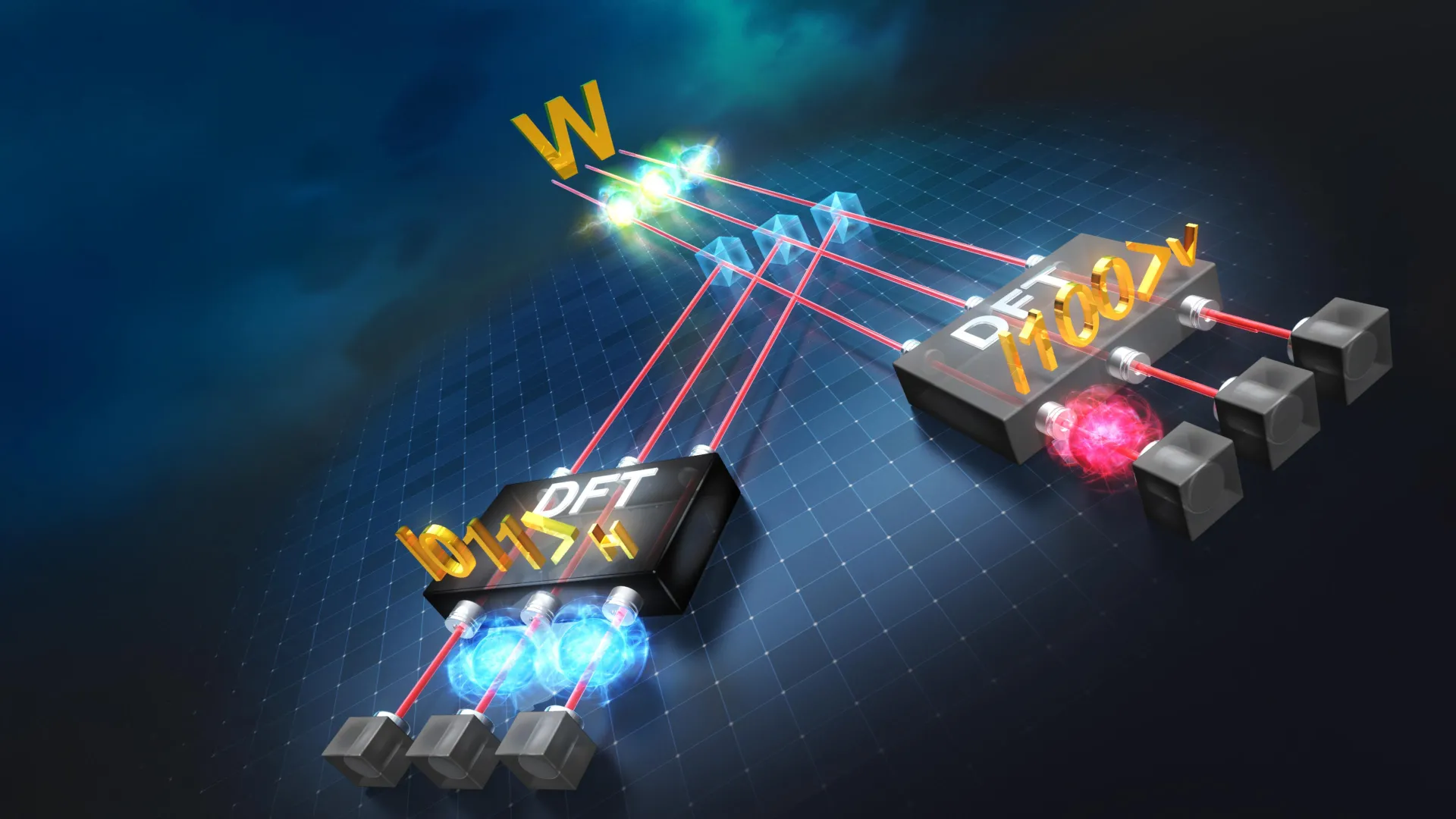
Photons, unlike electrons, carry no electric charge and therefore cannot be directly deflected by a magnetic field in the conventional sense. Achieving an analogous effect in light has been a goal of physicists for years, requiring the construction of elaborate artificial environments that mimic the role of magnetism through other means. The team that achieved the feat — working with carefully engineered optical resonator arrays — created an effective gauge field for photons by patterning the resonators with controlled phase gradients. Photons traveling through the array experienced a synthetic magnetic force and began drifting sideways in the quantized steps characteristic of the quantum Hall effect.
The result was confirmed by measuring the Hall conductance of the photonic system and finding it matched the topological invariant predicted by theory with high precision. Crucially, the researchers demonstrated that the sideways drift was robust: introducing deliberate defects and impurities into the resonator array did not disrupt the quantized flow, confirming that the effect shares the topological protection that makes the electronic version so remarkable. In practical terms, this robustness means that photonic devices exploiting this phenomenon could route optical signals reliably even in the presence of manufacturing imperfections.
The implications for photonic engineering are significant. Conventional optical fiber and waveguide systems are sensitive to backscattering and losses at bends, junctions, and defects. A topologically protected photonic pathway, by contrast, could maintain signal integrity through complex circuit architectures without the careful engineering workarounds currently required. Researchers envision applications in quantum optical computing, where coherent manipulation of photon states is essential, and in telecommunications systems that handle signals at the speed of light.
Beyond engineering applications, the result deepens a theoretical connection that physicists have been exploring for decades. The mathematical framework underlying the quantum Hall effect — known as topological band theory — has been progressively extended from electrons to acoustic waves, photons, and mechanical vibrations. Each new implementation tests the universality of the underlying physics and potentially reveals new phenomena that have no analog in the original electronic system. The photonic quantum Hall system, because photons interact with each other far more weakly than electrons do, offers a particularly clean laboratory for probing topological effects without the complicating many-body interactions that obscure the physics in electronic materials.
Researchers involved in the work said the next steps would include demonstrating quantum Hall physics with individual photons — a prerequisite for quantum computing applications — and exploring whether more exotic topological phases, such as fractional quantum Hall states that require strong electron-electron interactions, have photonic analogs that could be engineered in optical systems.