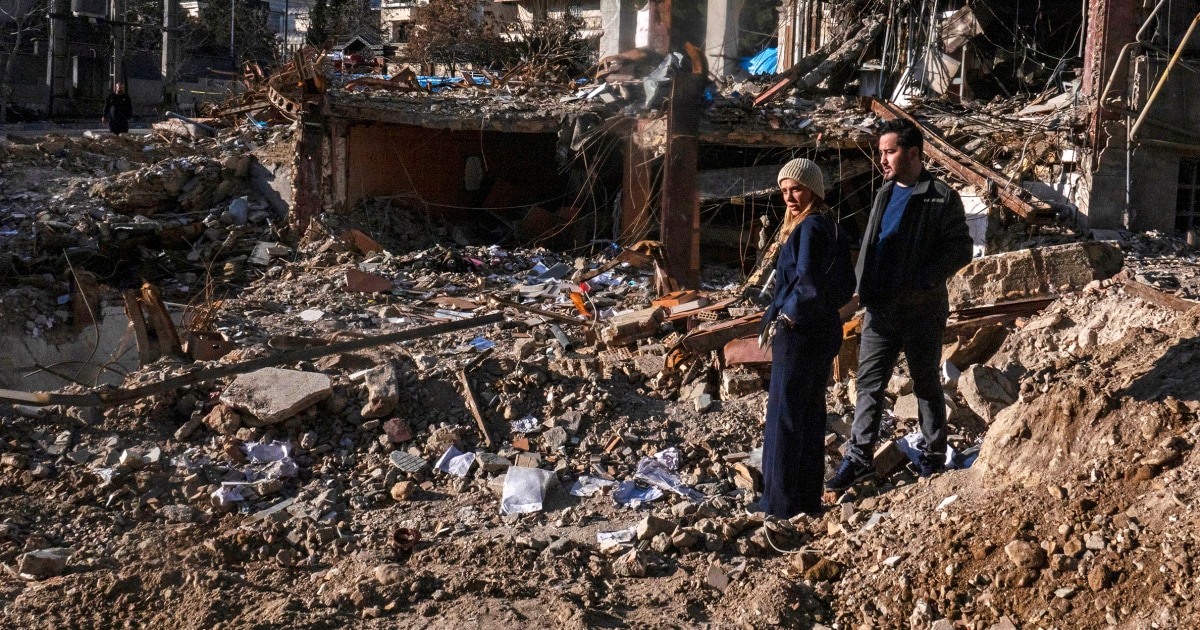
Iranian Kurds See Historic Opportunity as Tehran's Leaders Face Military Pressure
Kurdish groups on Iran's rugged frontier hope their long-held dream of federal autonomy may finally be within reach as Iranian leadership weakens.

Kurdish political and military leaders in Iraq and among diaspora communities in Europe are speaking with unusual openness about what they describe as a historic opportunity created by the American military campaign against Iran — a moment that could, if the Tehran government sufficiently weakens or collapses, allow Iran's estimated 10 to 12 million Kurds to press for autonomy or independence in a way that has been impossible under the Islamic Republic's decades of repression. The cautious but unmistakable optimism comes even as Kurdish leaders warn that the path from Iranian military weakness to Kurdish self-determination is far from guaranteed and could easily produce chaos rather than freedom.
The Kurdistan Democratic Party of Iran, which maintains an armed presence and political apparatus largely based in the semi-autonomous Kurdistan Region of Iraq, has issued statements calling for the international community to support a 'democratic and federal' outcome in Iran that would include guaranteed rights for the Kurdish minority. The party's leaders have held meetings in recent weeks with European officials and, according to sources familiar with the discussions, have sought assurances that any post-conflict settlement would include Kurdish representation. Similar statements have come from KOMALA, another major Iranian Kurdish organization, though the groups have different ideological orientations and have historically been rivals.
For decades, the Islamic Republic systematically suppressed Kurdish cultural and political expression, executing hundreds of activists, blocking Kurdish-language education, and crushing periodic uprisings with military force. The 2022 uprising that swept Iran following the killing of Mahsa Amini — herself a Kurdish woman — showed that Kurdish identity remained deeply embedded despite decades of pressure, and the slogan 'Jin, Jiyan, Azadi' (Woman, Life, Freedom), rooted in Kurdish feminist politics, became the symbolic heart of the nationwide protest movement. Many Kurds view the current U.S. military campaign as having fundamentally altered the regime's capacity and willingness to project internal force.
However, analysts cautioned that the path from Iranian instability to Kurdish political gains is strewn with obstacles. The Kurdistan Region of Iraq, which provides the most plausible logistical base for Iranian Kurdish political movements, is itself deeply dependent on maintaining functional relationships with Tehran for energy exports and trade. The Iraqi Kurdish leadership has been publicly muted about the conflict, calculating that open support for Iranian Kurdish aspirations would damage those relationships regardless of the conflict's outcome. Turkey, which has its own large Kurdish minority and has fought a decades-long armed conflict with the PKK, has made clear it opposes any political outcome in the region that it perceives as emboldening Kurdish separatism.
'The opportunity is real but the risks are equally real,' said Denise Natali of the National Defense University, a scholar of Kurdish politics. 'History is full of moments where Kurds thought the stars were aligning, and then geopolitics intervened. The Kurds of Iran need to be very careful about assuming that American military pressure on Tehran automatically translates into international support for their political aspirations.' Kurdish activists in European diaspora communities, particularly in Germany and Sweden, have been more direct, holding rallies and lobbying politicians to include Kurdish rights in any framework for post-conflict Iran. Their influence on actual policy outcomes remains limited, but their visibility has increased substantially since the American campaign began.