Iran War Erases Global Growth Forecast, Pushes Oil to $112 and U.S. Inflation to 4.2%, OECD Warns
The OECD's March 2026 interim outlook projects 1.2 percentage points added to global inflation, $1.72 trillion lost by America's top tech stocks, and recession risk rising if Brent crude — already up 55% since the conflict began — sustains above $140 per barrel.

The Organization for Economic Cooperation and Development warned Thursday that the U.S.-Iran war has erased what would have been an upward revision to global growth forecasts for 2026, projecting the conflict has added 1.2 percentage points to global inflation and pushed oil prices to levels that could trigger a mild global recession if sustained. The OECD's March 2026 interim economic outlook revised global GDP growth down to 2.9 percent for 2026, while projecting G20 inflation rising to 4.0 percent — both significantly worse than the December forecast, which was itself on track for an upward revision before hostilities began.
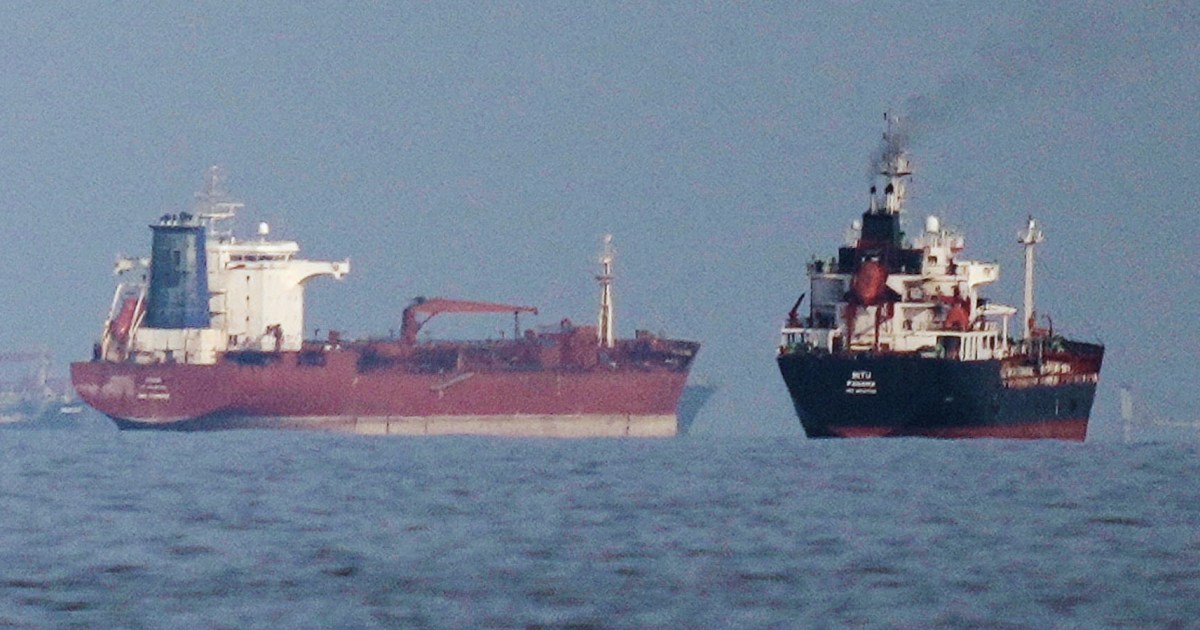
The report comes as Brent crude oil has surged more than 55 percent since before the conflict began, reaching $112 per barrel by late March compared to the pre-war baseline of $72. The Strait of Hormuz — through which approximately 20 percent of the world's oil supply and 20 percent of global liquefied natural gas volumes transit — has been partially blockaded since early March. Qatar, responsible for roughly 20 percent of global LNG supply, declared force majeure on exports after attacks on its Ras Laffan facility reduced production by 17 percent. Natural gas prices in Europe nearly doubled to over €60 per megawatt-hour. One-third of global fertilizer supply transits the Strait, amplifying food inflation risks across the developing world.
The economic damage across financial markets has been severe. The S&P 500 closed at 6,368 on March 27 — down approximately 8.7 percent from its January 2026 record high, its fifth consecutive weekly loss. The Dow Jones fell into correction territory, declining more than 10 percent from its record. The so-called Magnificent Seven technology companies — Apple, Microsoft, Amazon, Alphabet, Meta, Nvidia, and Tesla — lost a combined $1.72 trillion in market capitalization since the conflict began. South Korea's KOSPI suffered its largest single-day drop since the 2008 financial crisis when the war began, triggering circuit breakers. Pakistan's KSE-100 experienced its worst single-session collapse in history. Global airlines canceled more than 4,000 daily flights to avoid conflict zones, adding further disruption to supply chains already strained by the energy shock.
The Federal Reserve faces an increasingly difficult position. U.S. headline inflation is projected to reach 4.2 percent in 2026, up 1.2 percentage points from the December forecast — the highest among G7 economies. Futures markets have eliminated expectations for interest rate cuts this year, with some traders pricing in potential hikes. The 10-year Treasury yield climbed to 4.46 percent, its highest since mid-2025. The European Central Bank has also postponed planned rate reductions. Treasury auctions have shown weaker demand, with the United States needing to roll over approximately $10 trillion in debt within 12 months under increasingly challenging borrowing conditions.
OECD Secretary-General Mathias Cormann acknowledged the extreme uncertainty facing policymakers. "There's a high level of uncertainty around the duration and the magnitude of the current conflict in the Middle East, and that means that this outlook is subject to significant downside risks," he said in a statement accompanying the report. Oxford Economics identified $140 per barrel sustained over two months as the critical threshold at which parts of the global economy would enter mild recession, with world inflation spiking to 5.8 percent. Brent crude briefly surpassed $119 per barrel in mid-March, and analysts have warned prices could surge toward $200 per barrel if Iran fully closed the Strait with naval mines. The International Energy Agency described the current situation as "the greatest global energy security challenge in history."