Iran Holds a Six-Day Funeral for Khamenei as His Chosen Successor Stays Out of Sight
Millions of mourners filled Tehran for the slain supreme leader, but the son widely seen as his heir has not appeared in public since the war that killed his father.

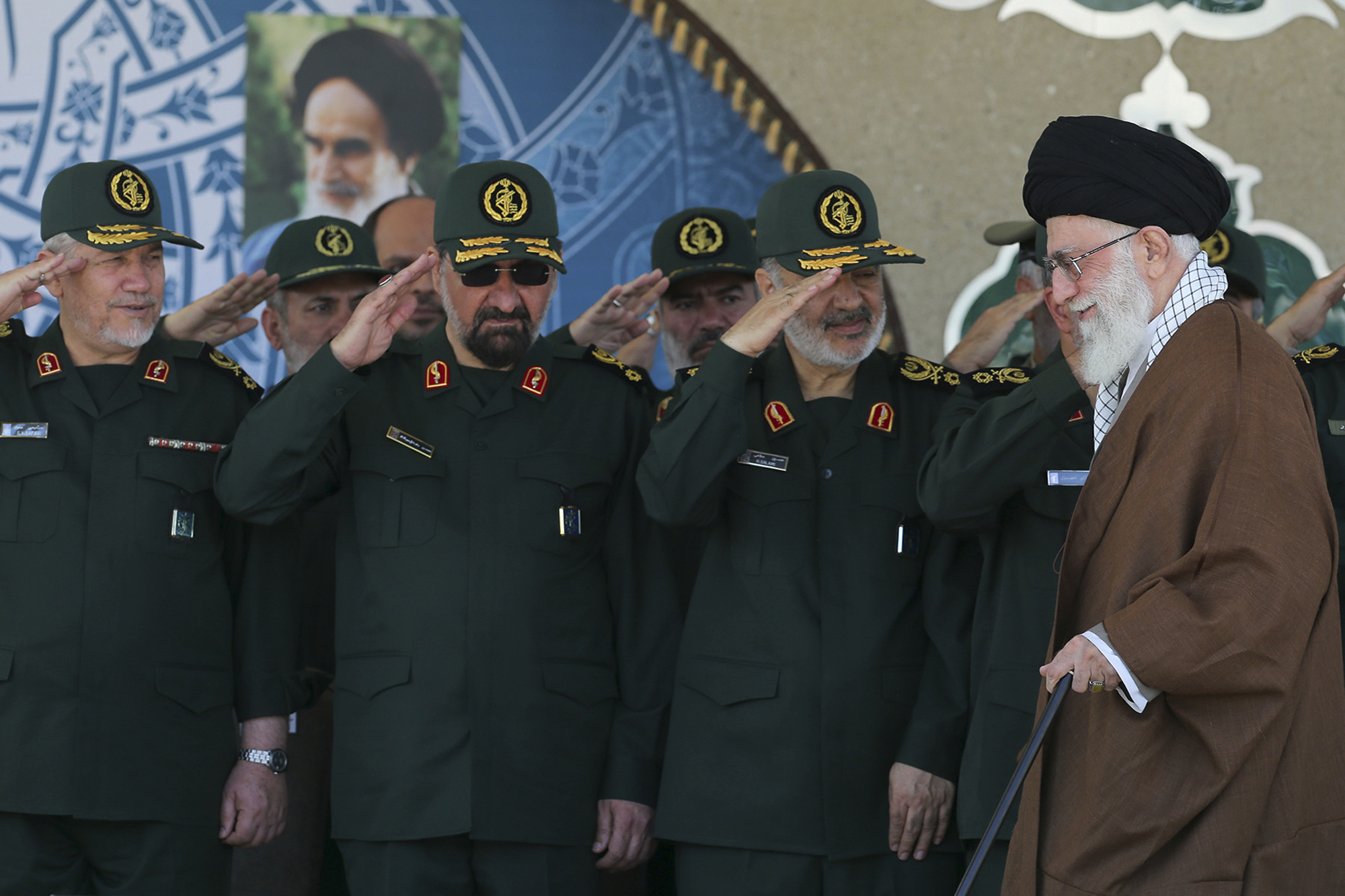
TEHRAN — Iran staged an extraordinary six-day funeral this week for Ayatollah Ali Khamenei, the supreme leader who ruled the Islamic Republic for nearly four decades, in a carefully choreographed display of strength for a government still reeling from war.
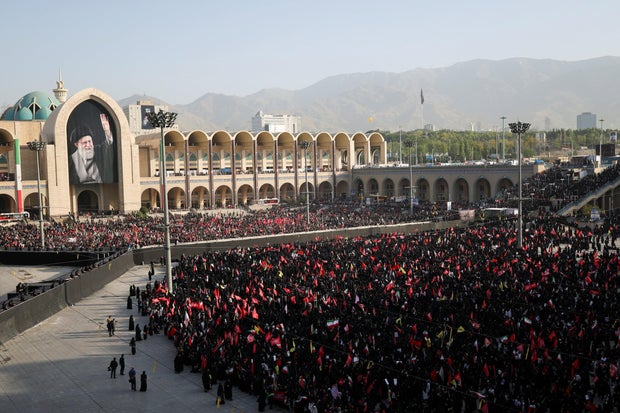
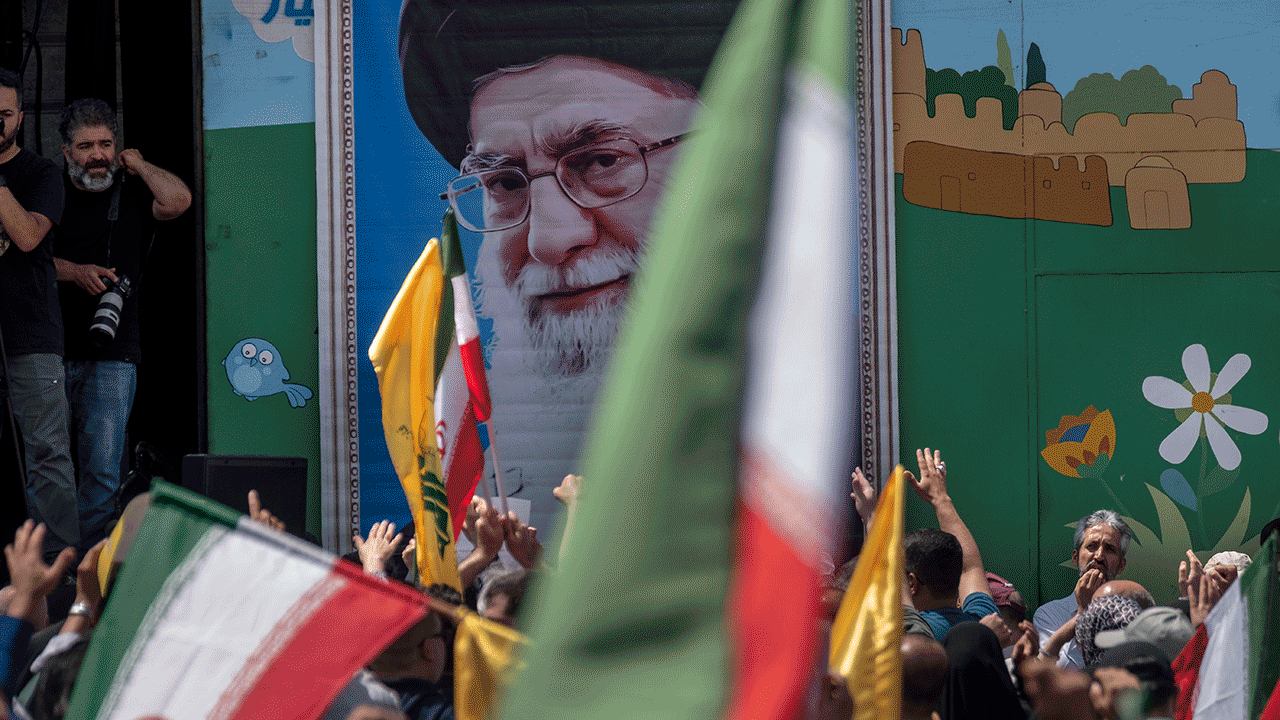
Khamenei was killed in February on the first day of the U.S.-Israeli assault on Iran, and his burial was delayed for months amid the fighting and its chaotic aftermath. The public ceremonies began July 4 and were scheduled to run through July 9, with Iran's Health Ministry estimating that around 15 million people would take part. Enormous crowds packed the streets of Tehran, beating their chests and chanting, as a flag-draped casket moved slowly through the capital under heavy security.
The funeral procession was set to travel through several cities sacred to Shia Islam — including Qom, and symbolically linking to Najaf and Karbala in Iraq — before Khamenei is laid to rest in Mashhad, his birthplace and Iran's holiest city, home to the shrine of Imam Reza, the eighth Shia imam. State television broadcast the ceremonies around the clock, casting the outpouring of grief as proof that the Islamic Republic remains intact despite the loss of the man who embodied it.
Yet the event was shadowed by a conspicuous absence. Mojtaba Khamenei, the ayatollah's son and the figure many analysts believe is positioned to succeed him, has not appeared publicly since his father's death. U.S. Defense Secretary Pete Hegseth said in March that Mojtaba had been "wounded and likely disfigured" in the strike that killed the elder Khamenei, and later reports suggested he was recovering from severe facial and leg injuries. His silence has fueled speculation about who truly holds power in Tehran.
The war that killed Khamenei reshaped the region. The February assault, which Israeli and American officials said targeted Iran's nuclear and military leadership, decapitated much of the Islamic Revolutionary Guard Corps command and left the country's air defenses in tatters. An uneasy interim arrangement to halt the fighting has held only fitfully, punctuated by fresh exchanges of strikes, and Iran's rivals are watching closely for any sign that the post-Khamenei leadership is weaker or more willing to negotiate.
The succession question looms over a country transformed by the war. Iran's leadership has sought to project continuity, but the funeral underscored the uncertainty at the top of a system built around a single, unchallenged figure for 36 years. For ordinary Iranians filling the streets, the ceremonies were a moment of collective mourning; for the ruling establishment, they were a bid to show the world — and rivals at home — that the Islamic Republic can survive the death of its longtime guide.