IceCube Pins High-Energy Cosmic Neutrinos to Supermassive Black Holes in X-Ray Bright Galaxies — Opening New Window on Universe's Most Violent Engines
Cross-referencing a decade of Antarctic neutrino data with X-ray telescope observations, scientists have found the strongest statistical evidence yet that X-ray luminous active galactic nuclei are a primary source of cosmic neutrinos.

The IceCube Neutrino Observatory at the South Pole has found new evidence linking high-energy cosmic neutrinos to a specific class of extraordinarily bright astrophysical objects — galaxies with supermassive black holes at their centers that blaze intensely across the X-ray spectrum — in a discovery that gives astronomers their clearest picture yet of where these enigmatic particles come from and how the universe's most violent processes generate them.
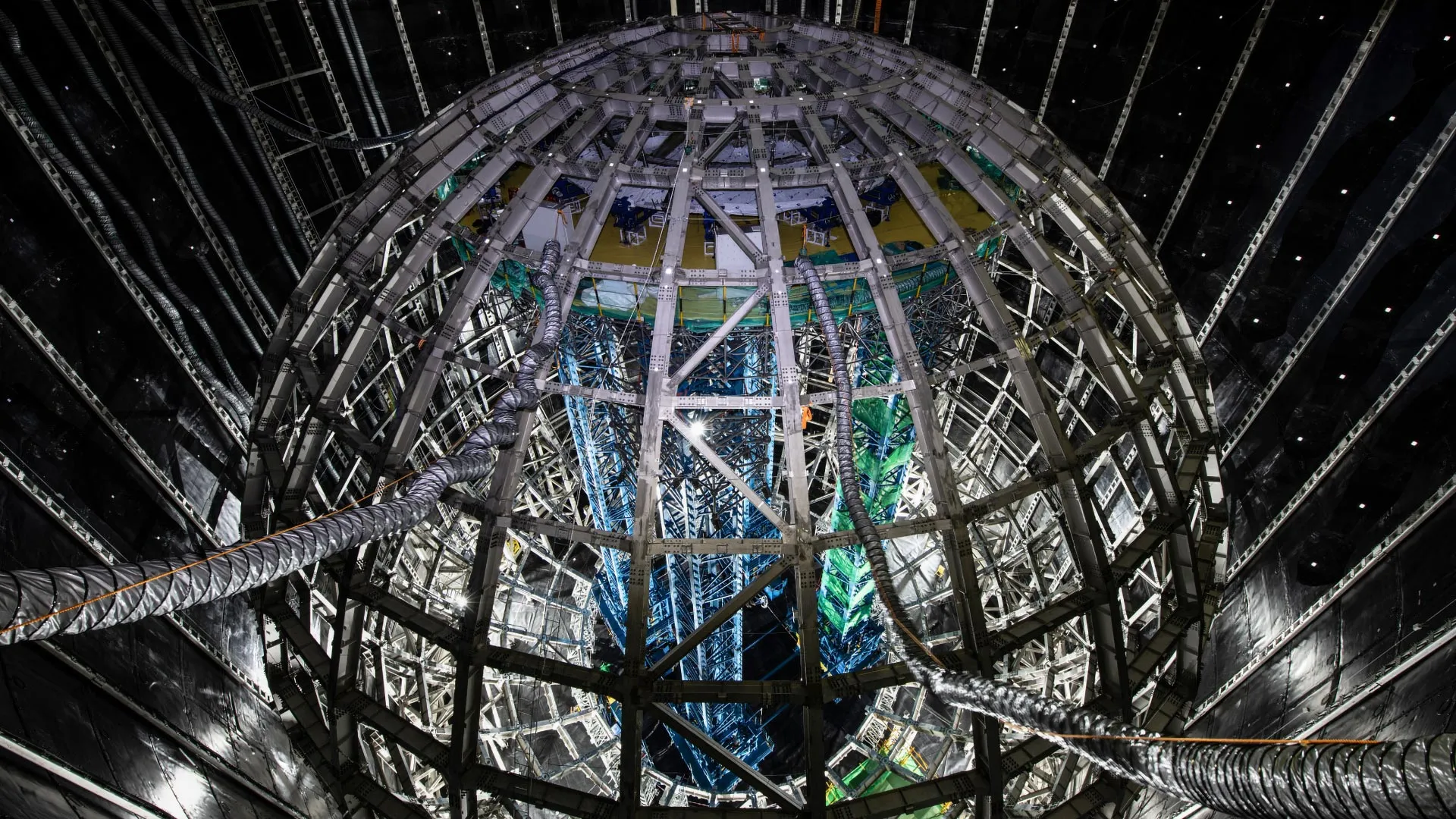
IceCube, a cubic-kilometer array of more than 5,000 light sensors embedded deep in the Antarctic ice, detects neutrinos — subatomic particles so small and weakly interacting that they can pass through the entire Earth without disturbing a single atom. The observatory has been collecting data for more than a decade, and the new analysis cross-referenced years of neutrino detections with X-ray observations made by satellite telescopes, finding a statistically significant correlation between high-energy neutrino events and active galactic nuclei that are particularly bright in X-ray wavelengths.
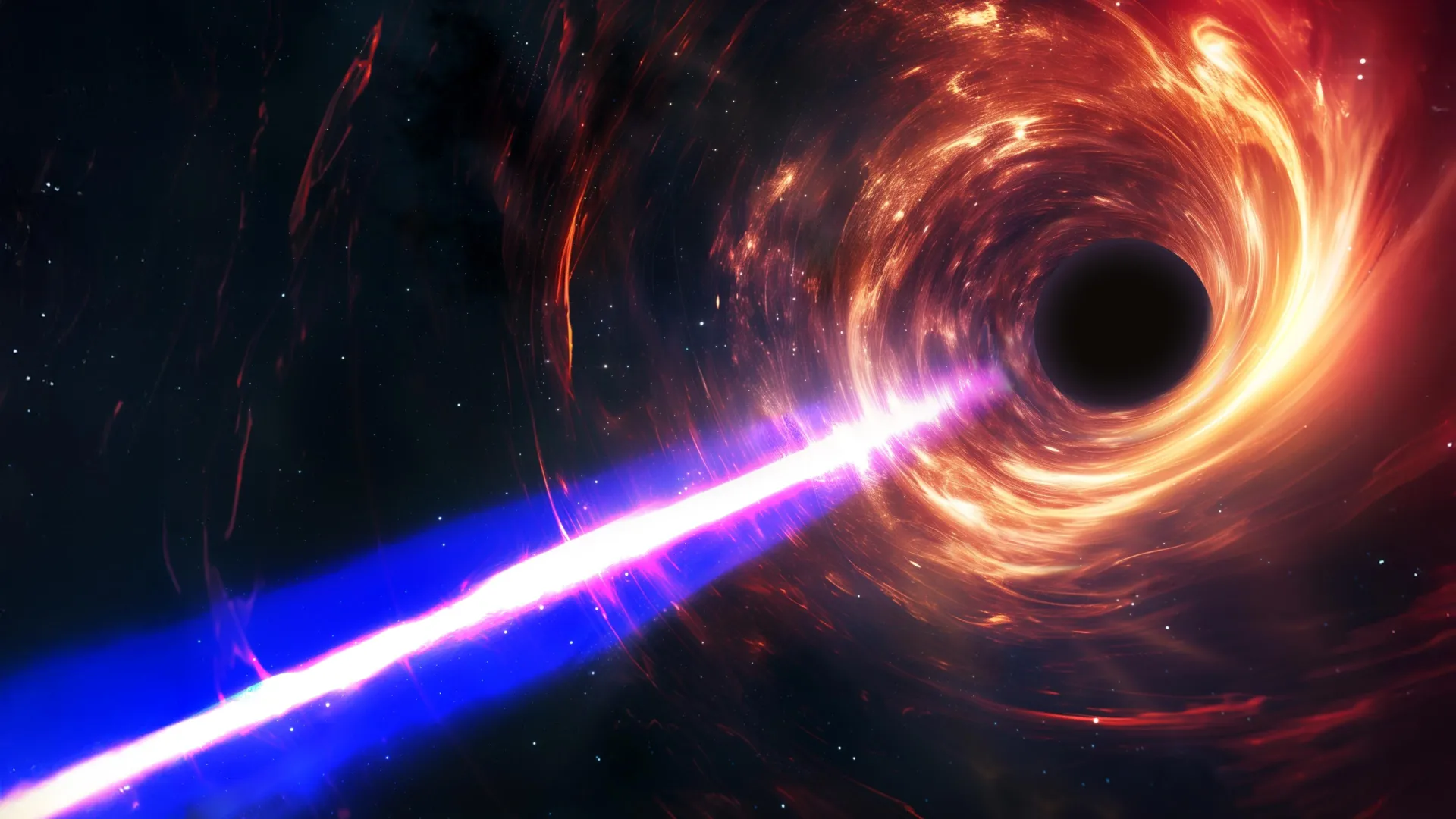
Active galactic nuclei, known as AGN, are galaxies powered by supermassive black holes consuming enormous quantities of gas and dust. The process releases prodigious amounts of energy across the electromagnetic spectrum, and physicists have long theorized that the chaotic, high-energy environment around these objects could accelerate protons and other charged particles to extreme velocities, setting off cascades of particle interactions that produce both gamma rays and neutrinos. The IceCube finding supports this picture by showing that the specific subclass of AGN brightest in X-rays — thought to be the most energetically active — also correlates most strongly with neutrino detections.
The analysis also adds new evidence for a structural feature in the energy distribution, or spectrum, of cosmic neutrinos — a break at roughly 30 tera-electron-volts where the spectrum changes its slope. 'The observed shape of the neutrino spectrum is consistent with predictions based on the properties of the diffuse gamma-ray background,' said Vedant Basu of the University of Utah, one of the researchers involved in the analysis. This consistency strengthens the hypothesis that both neutrinos and gamma rays are produced by the same population of astrophysical sources — supermassive black holes at the centers of the universe's most active galaxies.
The findings are part of a broader program at IceCube to identify neutrino sources across the sky and open what scientists call a new window on the 'high-energy universe' — events and objects too extreme and distant to be fully studied through light alone. Neutrinos, because they travel in straight lines and are not absorbed or deflected by magnetic fields or gas clouds between here and their source, can in principle trace a direct line back to whatever produced them. Previous IceCube results identified the Seyfert galaxy NGC 1068 as an individual neutrino source, and detected a diffuse excess of neutrinos from the direction of the Milky Way's galactic plane. The new result extends that emerging picture, suggesting that X-ray bright AGN as a class contribute substantially to the diffuse background of cosmic neutrinos that IceCube detects from all directions.