IBM Releases Quantum-Centric Supercomputing Blueprint and Says 2026 Will Mark First 'Quantum Advantage'
IBM unveiled the industry's first reference architecture for integrating quantum processors with GPU and CPU clusters, and named Q4 2026 as the target for verified cases of quantum computers outperforming classical machines on commercially relevant tasks.

IBM announced on March 12, 2026 that it had released the industry's first published reference architecture for quantum-centric supercomputing — a detailed blueprint for integrating quantum processors with classical computing systems to tackle scientific and commercial problems that are fundamentally beyond the reach of today's most powerful conventional machines. The announcement builds on IBM's long-standing roadmap claim that 2026 will mark the first year a quantum computer demonstrably outperforms a classical computer on a commercially relevant task, a milestone the company calls "quantum advantage." For a technology that has spent decades promising transformative results without fully delivering them, the specificity of IBM's timeline and the breadth of its new architecture represent a significant step toward delivering on that promise.
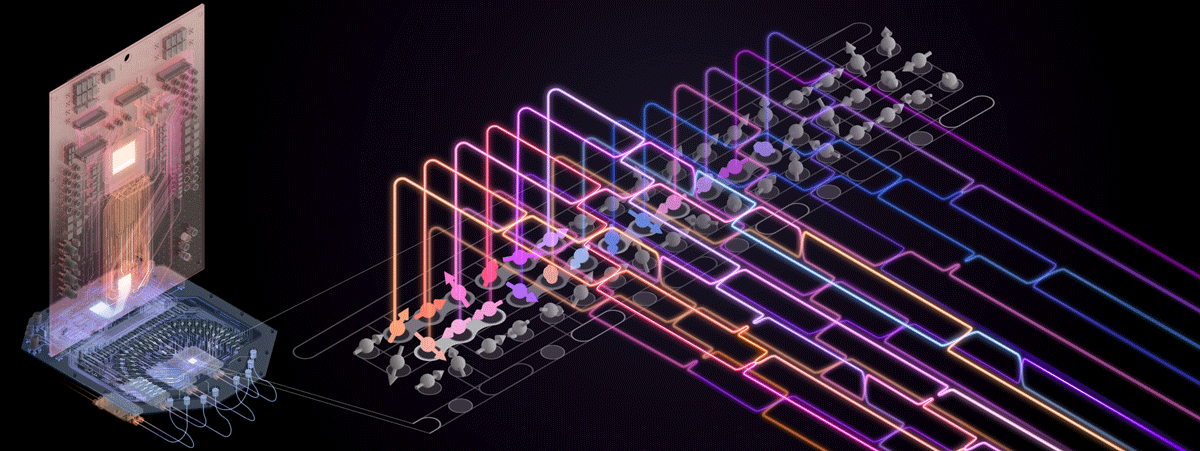
The quantum-centric supercomputing architecture unveiled by IBM integrates quantum processing units — QPUs running on superconducting qubits — alongside conventional GPU and CPU clusters within a unified computing environment orchestrated by IBM's Qiskit software framework. The key innovation is not any single hardware breakthrough but rather the systematic integration of these different processing modalities into workflows where each does what it does best: classical hardware manages data I/O, pre-processing, and error mitigation, while quantum hardware handles the specific steps in a computation where quantum properties like superposition and entanglement provide an advantage over classical approaches. IBM's Heron R2 processor, with 156 qubits and improved connectivity between those qubits, serves as the current primary quantum component; the company demonstrated that workloads previously requiring 122 hours on classical hardware now complete in 2.4 hours on hybrid quantum-classical systems.
IBM highlighted five major research milestones achieved using the new architecture in the months leading up to the announcement. Researchers from IBM, the University of Manchester, Oxford, ETH Zurich, EPFL, and the University of Regensburg used the system to create and experimentally verify a half-Möbius molecule — a topologically exotic structure with potential applications in materials science — and published the results in the journal Science. Cleveland Clinic used the hybrid system to simulate a 303-atom tryptophan-cage mini-protein, described as "one of the largest molecular models ever executed on a quantum-centric supercomputer," in work with implications for drug discovery and protein folding research. IBM and RIKEN, Japan's national research agency, demonstrated quantum simulation of iron-sulfur clusters using a Heron processor coordinated with RIKEN's 152,064-node Fugaku supercomputer — a vivid illustration of the scale-up possible when quantum and classical systems work in concert.
Jay Gambetta, IBM Research Director and IBM Fellow, said at the announcement event in New York that the architecture represents "a turning point" in the technology's development. "We have spent years building the individual components — better qubits, better gates, better software — and now we are showing how all of those pieces fit together into a system that can actually deliver advantage," Gambetta said. IBM has established an open, community-led validation process with partners including Algorithmiq, the Flatiron Institute, and BlueQubit to independently verify the first cases of quantum advantage as they emerge, with the company projecting that validated advantage demonstrations will arrive by Q4 2026. The validation framework is designed to prevent the kind of contested claims that have periodically undermined public confidence in quantum computing progress.
The announcement comes as competition in the quantum computing space intensifies. D-Wave Quantum, which focuses on a different approach called quantum annealing, announced in January 2026 that it had achieved on-chip cryogenic control of gate-model qubits — a breakthrough that reduces the wiring complexity that has historically limited the scalability of competing systems. Microsoft has made progress on topological qubits, while Google's Willow processor demonstrated significant error-correction improvements in late 2024. IBM's response with a full architectural blueprint, rather than isolated hardware milestones, suggests the company believes system-level integration — not qubit count alone — is the key differentiator as the field moves toward practical applications in chemistry simulation, logistics optimization, and financial modeling.