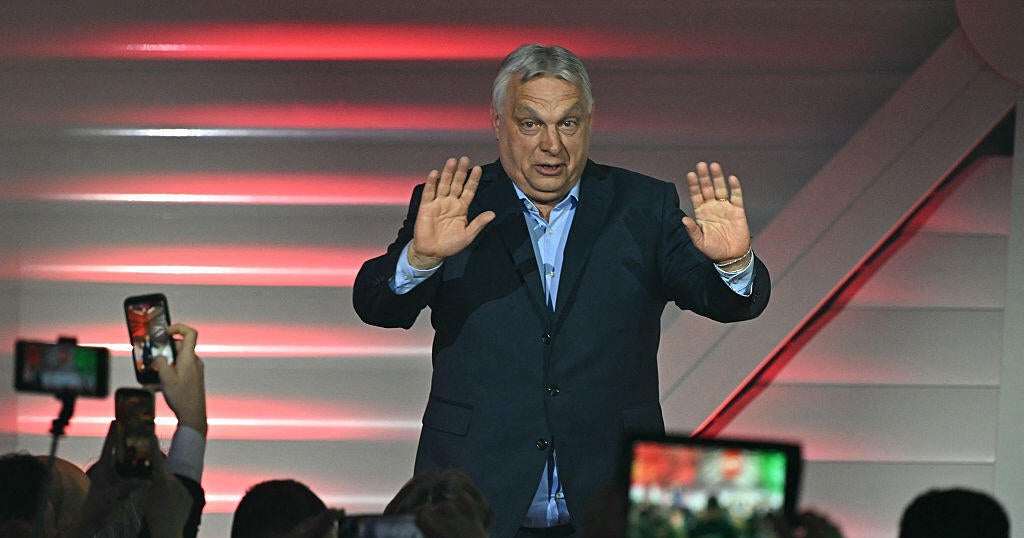
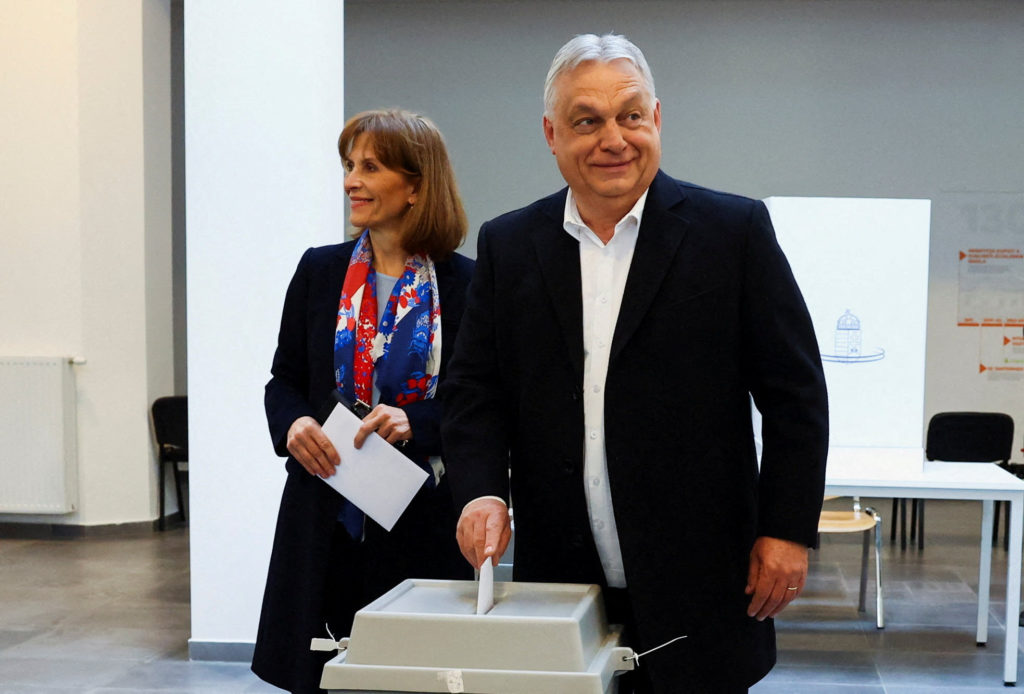
Hungary Votes Sunday as Challenger Magyar Leads Orbán 58% to 33% — 16-Year Rule at Stake
Péter Magyar's Tisza party holds a commanding polling lead over Viktor Orbán's Fidesz ahead of the April 12 parliamentary election, with consequences stretching from the EU to the war in Ukraine.

Hungary heads to the polls on Sunday for a parliamentary election that polls suggest could end Viktor Orbán's 16-year grip on power — a result that would reshape the European Union's internal politics, alter the NATO alliance's eastern flank, and reverberate across the ongoing war in Ukraine. The race pits Orbán's Fidesz party against the Respect and Freedom party, known by its Hungarian acronym Tisza, led by Péter Magyar, a 43-year-old lawyer and former Fidesz insider who broke explosively with the ruling party in February 2024 after a presidential pardon scandal.
The most recent Medián poll, conducted in the final days before Saturday's campaigning close, shows Tisza at 58% and Fidesz at 33% among decided voters — a margin that, if reflected in Sunday's actual results, would give Magyar a commanding parliamentary majority. Two other polls conducted after US Vice President JD Vance's visit to Budapest earlier this year similarly show Tisza above 50%. Hungary's party-list electoral system, however, is heavily engineered by Orbán's governments to favor the incumbent: the country has been divided and redrawn such that a ruling party can maintain dominance even with a minority of the national vote, and the state television service has provided virtually no prime-time airtime to opposition candidates.
Magyar, who is married to a former Orbán minister and whose ex-wife was briefly Hungary's president before being forced from office in the pardon controversy, has run a campaign centered on anti-corruption and EU integration. He has promised to reverse laws restricting civil society organizations, restore judicial independence, and re-engage with Brussels on the frozen EU cohesion funds — approximately €12 billion — that have been withheld from Hungary over rule-of-law violations. His events have drawn crowds of tens of thousands in cities across the country, a phenomenon unprecedented in Hungarian opposition politics.
Orbán has framed the election in stark civilizational terms, casting Magyar as a puppet of George Soros, Brussels bureaucrats, and what he describes as a globalist agenda hostile to Hungary's Christian national identity. State media has run near-continuous coverage of alleged foreign interference in the election, and Orbán's government enacted emergency powers in February that allow the interior minister to dissolve any civil society organization deemed a national security threat — a power critics say is designed to intimidate opposition activists in the final weeks of the campaign. OSCE observers from the Office for Democratic Institutions and Human Rights deployed a full monitoring mission, one of the largest ever sent to an EU member state.
The outcome will have consequences far beyond Budapest. Orbán has been the EU's most disruptive member: he has blocked Ukraine aid packages multiple times, maintained energy ties with Russia long after other EU governments severed them, and cultivated close ties with Trump and Kremlin-adjacent leaders in ways that created persistent friction within both the EU and NATO. A Magyar victory would remove the primary obstacle to unanimous EU decision-making on Ukraine support and sanctions against Russia, and would likely accelerate Hungary's reintegration into European institutions. For Trump, whose administration has courted Orbán as a model of nationalist governance, a Fidesz defeat would represent a blow to the international coalition of populist leaders the White House has cultivated. Polls close Sunday at 7 p.m. local time.