Afrika Bambaataa, Hip-Hop Pioneer and Zulu Nation Founder, Dies at 68
The South Bronx DJ who created "Planet Rock" and turned gang rivalries into the culture of hip-hop died Thursday in Pennsylvania of prostate cancer.
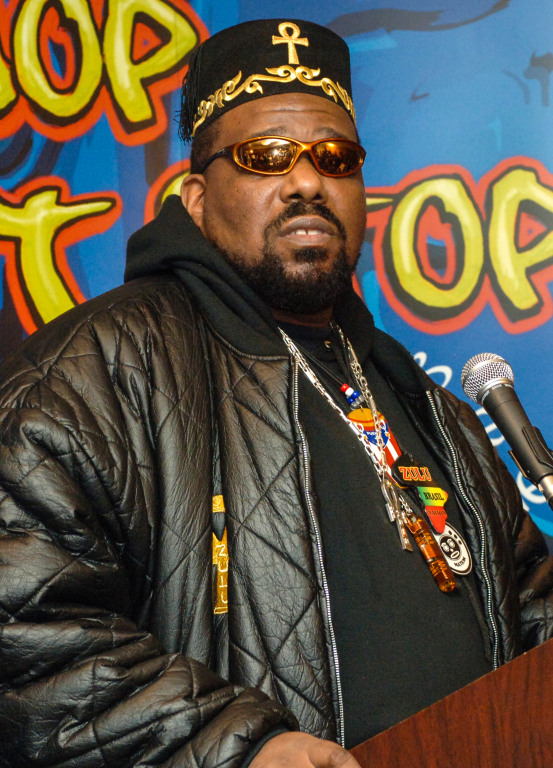
Afrika Bambaataa, one of the founding fathers of hip-hop culture and the creator of the landmark 1982 track "Planet Rock," died Thursday in Pennsylvania of prostate cancer. He was 68. Born Lance Taylor in 1957 in the South Bronx, Bambaataa transformed the street party scene of New York City in the early 1970s into the cultural movement now known as hip-hop, and his influence shaped virtually every form of electronic and dance music that followed.
Bambaataa is widely credited as one of hip-hop's three founding fathers, alongside Kool Herc and Grandmaster Flash. "When you talk about Afrika Bambaataa, Kool Herc, Grandmaster Flash, these are the three founding fathers of the whole culture," rapper Fat Joe said Thursday. Where Kool Herc is credited with inventing the DJ technique of isolating drum breaks, and Grandmaster Flash refined and extended it, Bambaataa pushed hip-hop into entirely new sonic territory — fusing it with European electronic music to create electro, the sound that would eventually become techno, house, and countless subsequent genres.
"Planet Rock," released in 1982 by Bambaataa and the Soulsonic Force, sampled Kraftwerk's "Trans-Europe Express" and "Numbers" to create a track that sold over 620,000 copies and introduced American urban audiences to synthesizers and drum machines. His adoption of the Roland TR-808 drum machine — then considered a cheap substitute for live drums — helped turn it into one of the most influential instruments in music history. His DJ sets were known for their relentless eclecticism: he might spin a James Brown record one minute and a Monkees song the next, always searching for what he called "the energy."
Beyond music, Bambaataa founded the Universal Zulu Nation, originally called the Organization, in the early 1970s. Drawing on his deep connections to the Black Spades street gang in the South Bronx, he redirected gang rivalries into hip-hop battles, DJ competitions, and cultural expression. The organization's motto — "peace, love, unity and having fun" — represented a radical vision of hip-hop as a transformative social force rather than merely an entertainment genre. The Universal Zulu Nation eventually spread internationally, with chapters on multiple continents. Producer Ellis Williams, known as Mr. Biggs, said of the music's lasting power: "At the core our music made people feel like they belong to a movement and not a moment, our music offered hope, something positive to believe in."
Bambaataa's legacy was complicated in his later years. Beginning in 2016, multiple men came forward to accuse him of sexual abuse, allegations that he denied. The Universal Zulu Nation issued an apology acknowledging that members of the organization knew of the abuse but did not disclose it. He lost a civil case by default in 2025 after failing to appear in court. His death comes as hip-hop marks more than 50 years since its emergence in the South Bronx, with the culture having grown into the dominant global popular music form. Bambaataa's contributions to that transformation — his synthesis of Black American music with European electronics, his community organizing through art, and his vision of hip-hop as universal — remain central to the story of how the genre conquered the world.