Germany Plans €10 Billion Independent Military Satellite Network, Alarming EU Partners Over Defense Fragmentation
Berlin's SATCOM Stage 4 constellation of 100+ low-orbit satellites would parallel the EU's own IRIS² program, raising fears of costly duplication in European defense architecture.
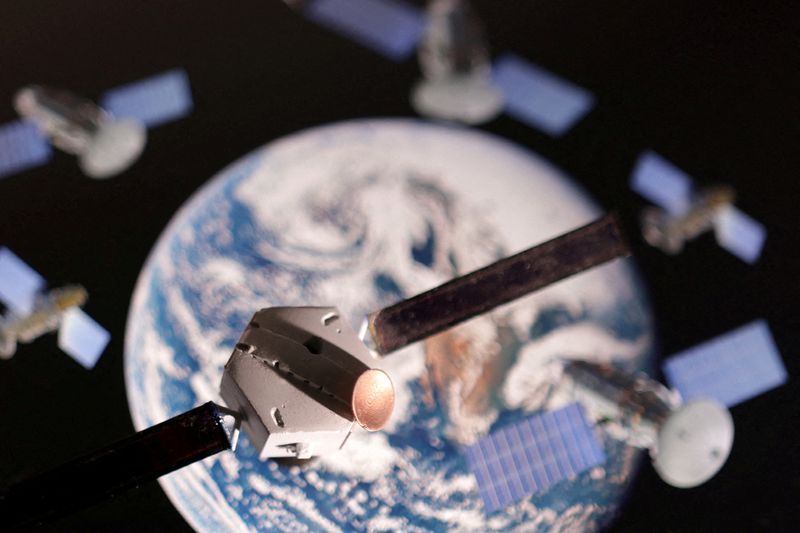
Germany announced plans Tuesday to build an independent military satellite network comprising more than 100 low-Earth-orbit satellites at an estimated cost of between €8 billion and €10 billion, in a move that has divided European defense officials and raised alarms about the fragmentation of the continent's collective security architecture. The network, officially designated SATCOM Stage 4 and intended to provide secure encrypted communications for the Bundeswehr's global operations, would be built in parallel to the European Union's own €10.6 billion IRIS² satellite constellation — triggering immediate questions about duplication, interoperability, and whether Germany's decision signals a growing preference for national strategic autonomy over EU-level defense integration.
Defense Minister Boris Pistorius announced the project as part of Germany's broader €35 billion military space investment program covering 2026 through 2030, the largest peacetime military space spending surge in German history. The SATCOM Stage 4 constellation would mirror the architecture used by the U.S. Space Development Agency, deploying satellites in low-Earth orbit for communications, missile tracking, and intelligence-sharing capabilities that Germany currently depends almost entirely on the United States to provide. Pistorius described the investment as essential to Germany's strategic autonomy following years in which Berlin had allowed critical military communications infrastructure to atrophy. "We cannot go into the next decade depending on allies to see what is happening in our own region," he said.
The announcement has exposed fault lines within the EU's embryonic defense union. EU lawmakers and officials from France, Italy, and Spain — all of whom are major backers of the IRIS² program — warned Monday that Germany's solo initiative risks "a purely national architecture that is not integrated into IRIS²," in the words of one senior EU official briefed on the discussions. IRIS², which stands for Infrastructure for Resilience, Interconnectivity and Security by Satellite, was designed as a European sovereign alternative to Elon Musk's Starlink and to reduce reliance on non-EU providers for critical connectivity. If Germany builds a parallel constellation outside IRIS², other member states may follow suit, undermining the economies of scale and interoperability that make a pan-European system worthwhile.
German defense procurement officials countered that IRIS² is running years behind schedule and that Germany's military needs — particularly in the context of the ongoing conflict in Ukraine and the Iran war's disruption of Middle Eastern logistics routes used by NATO partners — cannot wait for European bureaucratic consensus. The Bundeswehr has specific classified communications requirements, they argued, that cannot be accommodated within a shared multinational system without compromising operational security. Germany is also negotiating a consortium arrangement with defense companies Rheinmetall, OHB, and Airbus, all of which have strong domestic interests in building and operating the satellites in Germany rather than contributing components to an EU-managed system based partly in France.
The proposal also carries geopolitical symbolism beyond its technical specifications. Germany's historic postwar reluctance to build independent military capabilities — encoded in its constitution, embodied in decades of foreign policy, and reflected in years of underfunding the Bundeswehr — is rapidly giving way to a new strategic posture. The Zeitenwende, or turning point, declared by Chancellor Olaf Scholz following Russia's 2022 invasion of Ukraine has accelerated under current Chancellor Friedrich Merz, who has staked his chancellorship on rebuilding German hard power. A sovereign military satellite network, capable of providing Germany with independent intelligence and communications without relying on Washington or Brussels, is a tangible expression of that shift. Whether it coheres with European defense solidarity or undermines it is now a central question for EU leaders.