D-Wave Achieves On-Chip Cryogenic Qubit Control, Cracking the Wiring Barrier That Has Blocked Million-Qubit Machines
By operating control electronics at millikelvin temperatures alongside the qubits themselves — a breakthrough that physicists called theoretically infeasible for decades — D-Wave has demonstrated a credible path to quantum computers with hundreds of thousands of qubits.
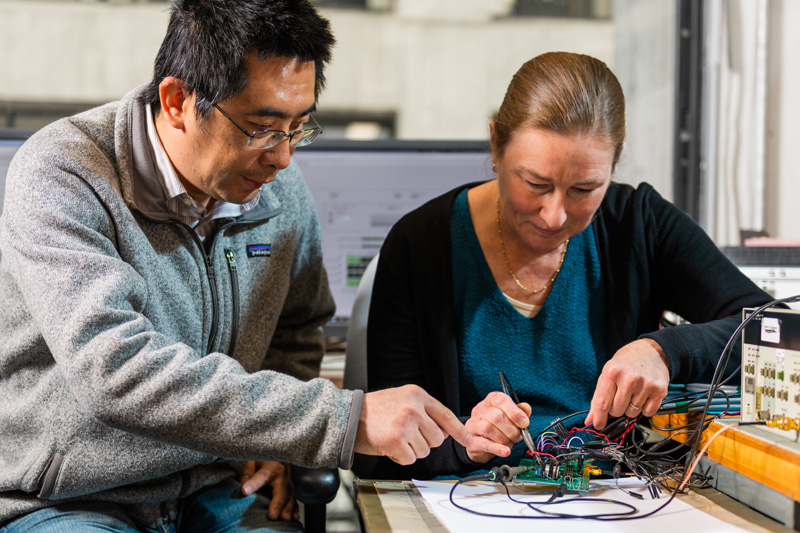
D-Wave Quantum announced in January 2026 that it had achieved a milestone physicists and engineers have been working toward for more than a decade: the first scalable on-chip cryogenic control of gate-model qubits. The breakthrough means that the electronic systems that send signals to and read states from individual qubits — the basic computational units of a quantum computer — can now operate at the same near-absolute-zero temperatures as the qubits themselves, rather than in warm rooms connected to the quantum hardware by hundreds or thousands of individual wires. That wire problem, which has been the primary practical barrier to building quantum computers with millions of qubits, may now have a viable solution.
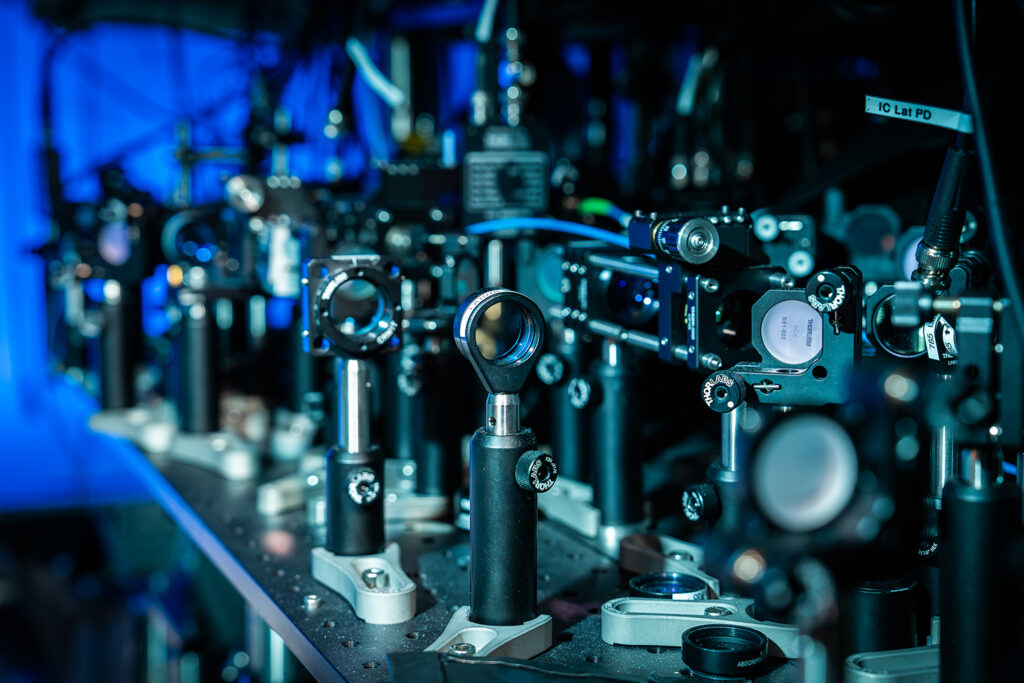
Quantum computers must operate at temperatures near absolute zero — typically around 15 millikelvin, colder than outer space — because qubits are so sensitive to environmental disturbance that even the thermal energy of a moderately cold room causes them to lose their quantum properties through a process called decoherence. Controlling those qubits requires sending precisely timed electrical signals, but the conventional approach routes those signals down from room-temperature electronics through a rat's nest of cabling that grows exponentially in complexity as qubit counts increase. State-of-the-art quantum computers with a few hundred to a few thousand qubits already require engineers to manage thousands of individual control lines; a million-qubit system using the old approach would require wiring so dense and heat-generating that it would cook the very qubits it was trying to control.
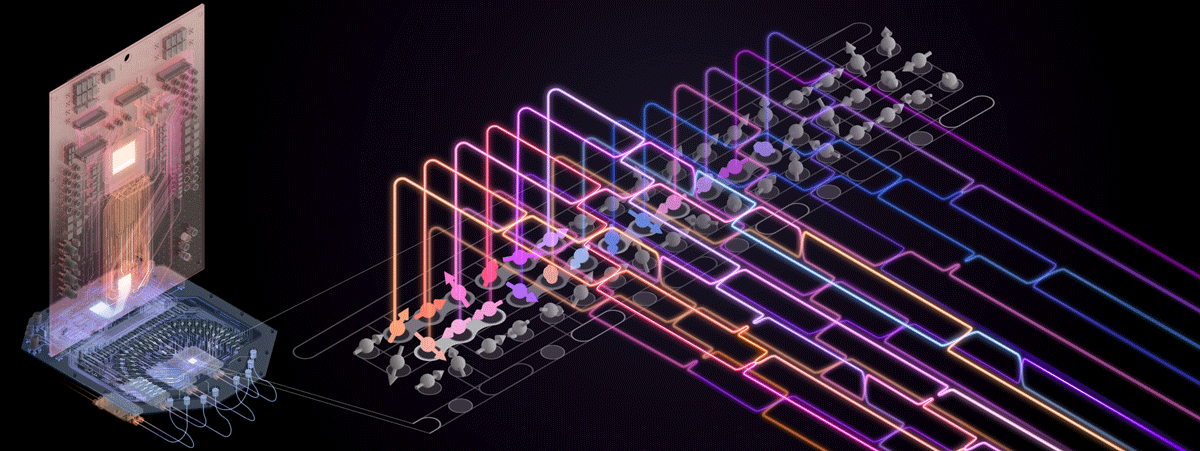
D-Wave's solution, described in a paper published in conjunction with the announcement, places the control electronics inside the cryostat itself, operating at temperatures cold enough to maintain quantum coherence. This approach — called cryo-CMOS integration — had been theorized for years but was considered practically infeasible because semiconductor electronics were thought to degrade significantly at cryogenic temperatures. D-Wave's team, working with cryo-optimized chip designs, demonstrated that control electronics could operate reliably at millikelvin temperatures without introducing heat loads that disrupted qubit performance. The company showed that the technique successfully controlled qubits without degrading their fidelity — the key figure of merit that determines whether computations produce accurate results.
The announcement drew attention from across the quantum computing industry because D-Wave's primary commercial product uses a fundamentally different approach called quantum annealing — a technique optimized for a specific class of optimization problems — rather than the universal gate-model approach that IBM, Google, Microsoft, and IonQ are pursuing. By demonstrating cryogenic control of gate-model qubits, D-Wave signaled its intention to compete directly in the gate-model space, and the technique it demonstrated could in principle be adopted by any company working on superconducting quantum systems. IBM noted in a statement that it was "aware of and interested in" the approach, though it added that IBM had its own parallel programs in cryogenic integration.
For the broader project of building practically useful quantum computers, the significance of D-Wave's milestone is difficult to overstate. The company's roadmap projects that cryo-CMOS integration could enable quantum systems with hundreds of thousands to millions of qubits within five to seven years — a scale at which quantum computers would be capable of simulating complex molecular systems with enough fidelity to design new drugs and materials, breaking certain cryptographic codes, and optimizing supply chains and financial models at speeds no classical computer could match. The path to fault-tolerant quantum computing — systems that can correct their own errors in real time, unlocking the full theoretical power of quantum mechanics — almost certainly requires qubit counts in the millions. D-Wave's breakthrough, while not yet demonstrated at commercial scale, suggests that the wiring bottleneck that has constrained quantum hardware development for years may finally be yielding to engineering solutions.