Liquids Can Shatter Like Glass Under Stress, Drexel Discovery Overturns 300 Years of Physics
Researchers heard a loud snap during a routine experiment and found that certain liquids reach a "critical stress" point where they fracture like solids — challenging the most basic definition of a fluid.

In a discovery that upends a foundational assumption of fluid mechanics, researchers at Drexel University have demonstrated that ordinary liquids — under sufficient stress — can suddenly shatter and fracture exactly like solid materials. The finding, published in Physical Review Letters on March 26, 2026, challenges centuries-old assumptions about the fundamental difference between liquids and solids and opens new possibilities in fields ranging from industrial hydraulics to biomedical engineering.
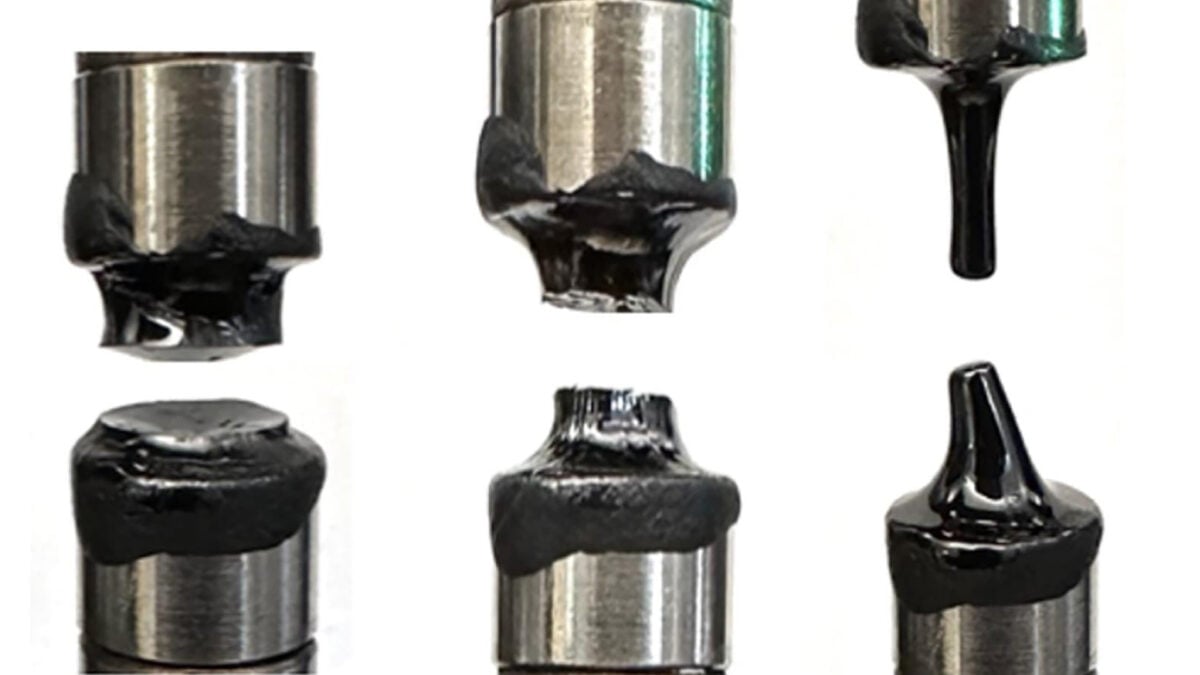
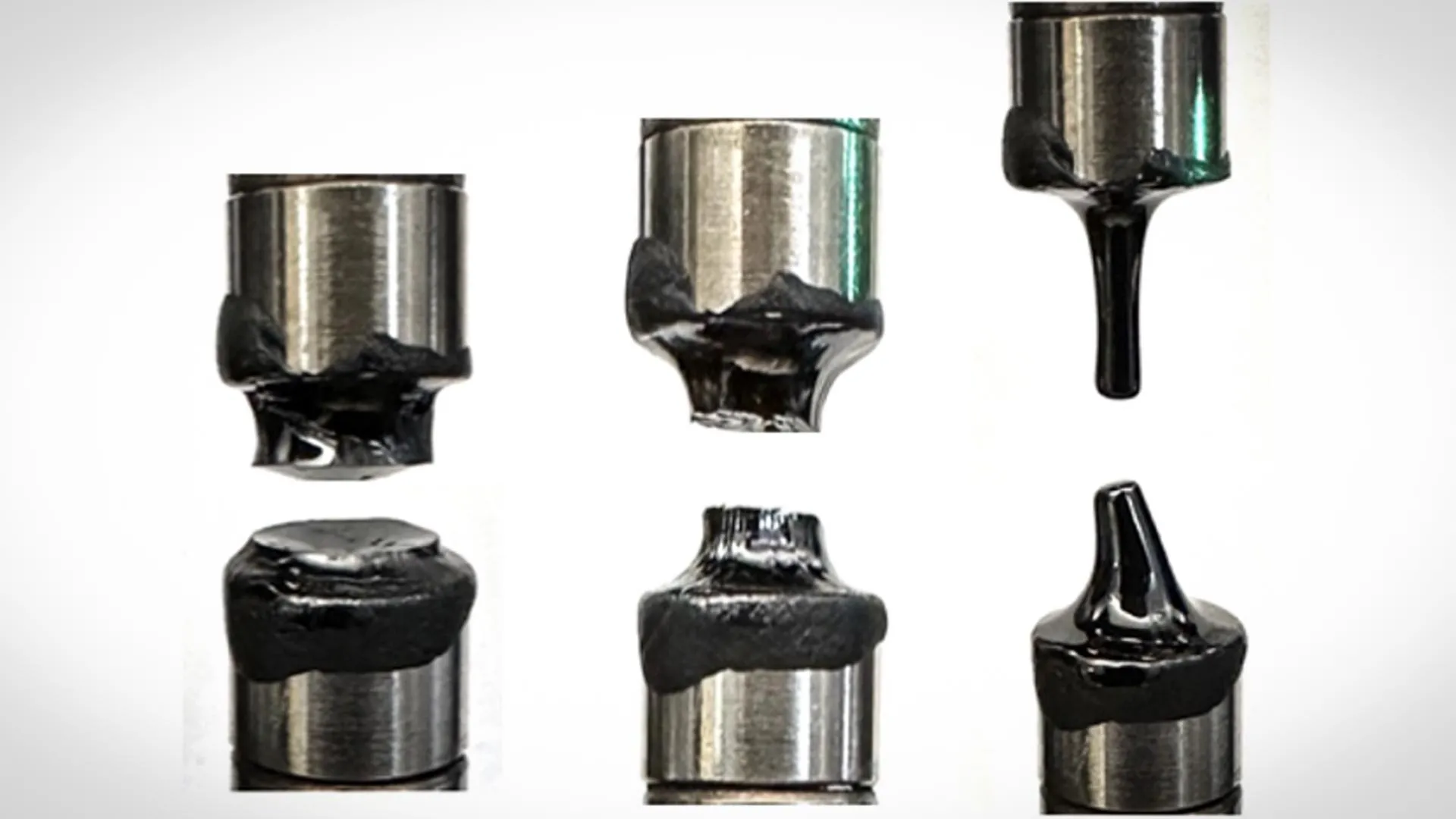
The discovery happened by accident. Assistant Research Professor Thamires Lima and Professor Nicolas Alvarez were conducting extensional rheology tests — experiments that measure the force required to pull a liquid apart — in collaboration with researchers from ExxonMobil. The liquid under study was a tar-like hydrocarbon blend. During one test, instead of stretching and gradually thinning the way honey or syrup would, the liquid suddenly snapped apart with a brittle fracture. "The fracture caused a very loud snapping noise that actually startled me," Lima recounted. "I initially thought the machine had broken."
High-speed camera recordings captured the moment: the liquid didn't thin and flow as expected but instead ruptured with a sharp, clean break identical in character to a piece of metal or glass fracturing under stress. The researchers initially assumed the effect was peculiar to their specific test liquid. But when they replicated the experiment with a styrene oligomer — a chemically different liquid with identical viscosity — the same fracture occurred, at the same critical stress threshold of two megaPascals. The result held across different temperatures and different chemical compositions, suggesting the phenomenon is governed by viscosity rather than the specific chemistry of the liquid.
This is what makes the finding so scientifically surprising. Traditional fluid mechanics holds that liquids flow — they deform continuously under any applied stress, no matter how small. Fracture, the abrupt propagation of cracks, has always been considered a property of solid materials with elastic structure. Lima's work shows that under sufficiently extreme extensional stress, viscous forces in a liquid can effectively lock it into solid-like behavior long enough for a crack to nucleate and propagate. "If pulled apart with enough force per area, a simple liquid will reach a point of 'critical stress,' when it will fracture like a solid," Lima said.
The implications span multiple industries. In hydraulic systems, understanding the breaking point of fluids could prevent catastrophic failures in high-pressure environments. In 3D printing, where liquids are extruded under controlled stress, the discovery could explain failures that have been attributed to other causes. In medicine, researchers study how blood vessels experience extensional flows during certain cardiac events — the idea that blood-like fluids could fracture under extreme conditions has implications for understanding stroke and aneurysm mechanics. The ExxonMobil collaboration also suggests immediate industrial relevance: petroleum and lubricant formulations are routinely subjected to extensional flows in pipelines, engines, and drilling operations.
The research team plans to investigate whether the fracture phenomenon appears in simpler, less viscous liquids and to build a comprehensive theoretical framework explaining precisely where the boundary between liquid flow and solid fracture lies. For physicists, the work raises deeper questions about the nature of matter itself — and whether the categories of "liquid" and "solid" are as cleanly divided as textbooks have long suggested.