Delta Force and SEAL Team Six Rescue Downed F-15 Airman from Deep Inside Iran After 48-Hour Manhunt
A US Air Force colonel evaded Revolutionary Guard hunters for nearly two days after his F-15E was shot down April 2. Civilians in Dehdasht reportedly blocked IRGC roads to buy time for the rescue.

In one of the most daring American special operations missions in a generation, Army Delta Force soldiers and Navy SEAL Team Six operators extracted a downed US Air Force colonel from deep inside Iranian territory on April 4, following a nearly 48-hour manhunt that tested the limits of American survival training, intelligence tradecraft, and military coordination.
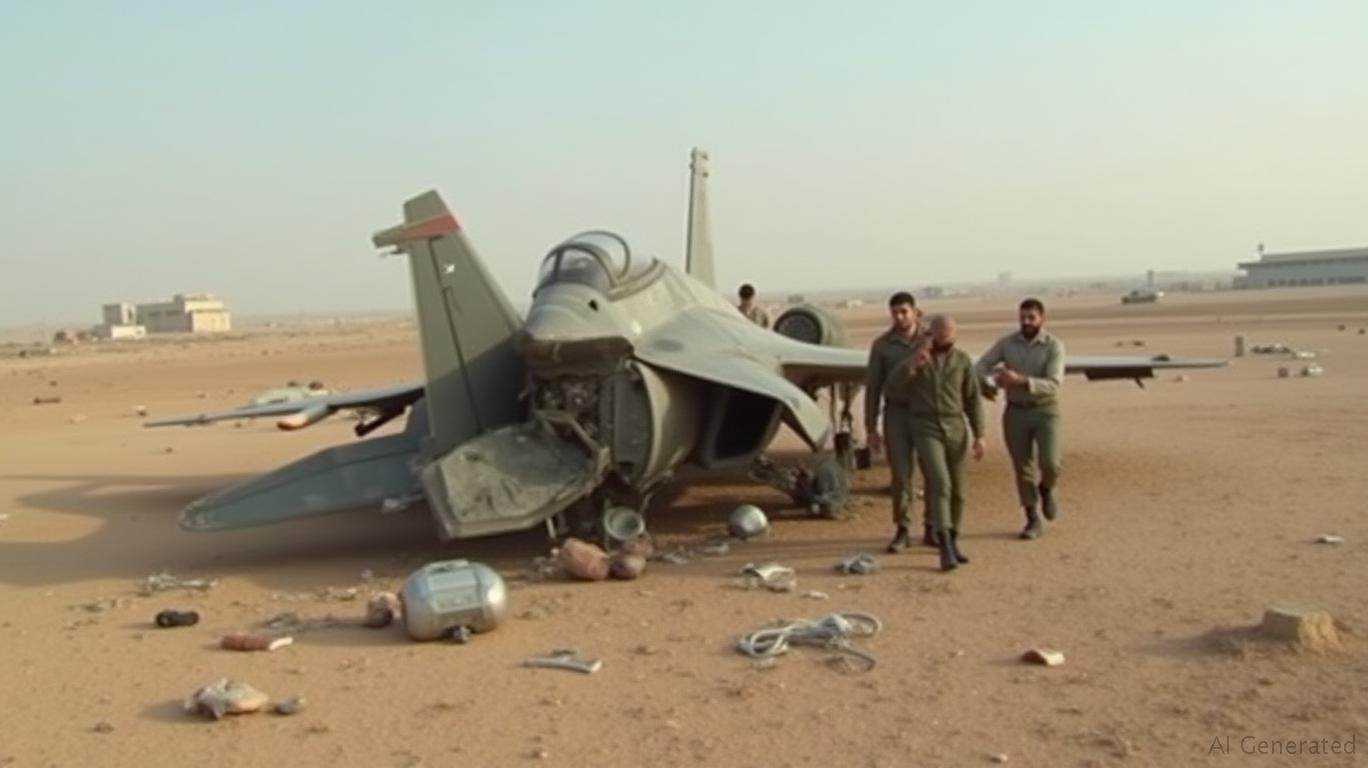
The mission began when an F-15E Strike Eagle was shot down over southwestern Iran during a night combat mission on April 2. Both crew members — the pilot and the weapon systems officer, identified as a colonel — ejected safely and immediately activated their survival protocols. Iranian Revolutionary Guard Corps units launched an intensive manhunt across the rugged terrain of the region, deploying ground forces, aerial surveillance, and local informants in pursuit of the two Americans.
What followed over the next 48 hours was an extraordinary game of cat-and-mouse. According to US Central Command, the colonel used every element of his survival training — moving at night, hiding in terrain features during daylight, and avoiding roads and population centers — to evade capture. In a detail that has drawn widespread attention, residents in the town of Dehdasht reportedly physically blocked roads and delayed IRGC convoys, effectively buying time for American forces to organize a rescue. US officials declined to comment on the circumstances surrounding the civilians' actions.
The rescue itself was executed on April 4 in the vicinity of southern Isfahan, in what CENTCOM described as "a heavy firefight." The operation involved hundreds of special operations troops and intelligence personnel, according to officials familiar with the mission's scope. A second rescue mission, also completed on April 4, retrieved the other crew member from the downed F-15E in a separate operation. US Central Command stated that no American personnel were killed or wounded in either rescue mission.
Iran disputed that characterization, with Iranian state media claiming that IRGC forces destroyed two C-130 transport aircraft, two Black Hawk helicopters, and one MQ-9 Reaper drone during the rescue operations. Iran also reported five of its personnel were killed during the fighting associated with the American extraction. The US military has not confirmed or denied the Iranian claims about aircraft losses.
The operation drew immediate comparisons to some of the most celebrated special operations missions in American history. Former defense officials described the scale and complexity of the effort — coordinating multiple rescue teams, intelligence assets, and air cover over hostile territory — as extraordinary. "Executing a rescue like this, in this environment, against an adversary with home-field advantage, required everything these units have," one retired special operations commander told reporters.
The rescue also had significant political reverberations in Washington. House Minority Leader Hakeem Jeffries had publicly opposed the deployment of US ground troops to Iran in the days prior. The revelation that Delta Force and SEAL Team Six operators had been operating inside Iranian territory — however briefly and specifically — put that position under immediate scrutiny. Jeffries' office did not immediately respond to requests for comment.
President Trump, who had been briefed throughout the rescue effort, was effusive in his praise of the special operations forces. He described the operation as "perfect" and suggested it demonstrated what American military power could accomplish "when you let the warriors do their jobs." Trump has faced growing questions from members of both parties about the strategic objectives of the Iran campaign, now in its 37th day, but the successful rescue provided him with a powerful moment to highlight American military effectiveness.
For the rescued airman and his crewmate, the ordeal — from ejecting over hostile territory to extraction in a firefight — lasted approximately 48 hours. Both are reported to be in stable condition and are receiving medical evaluation. Their identities have not been released.