Nobel Laureate David Gross Wins Special Breakthrough Prize for Six Decades of Physics Breakthroughs
The UC Santa Barbara physicist who co-discovered asymptotic freedom and built quantum chromodynamics into a pillar of the Standard Model received one of the largest individual science awards in the world at a Santa Monica ceremony Saturday.

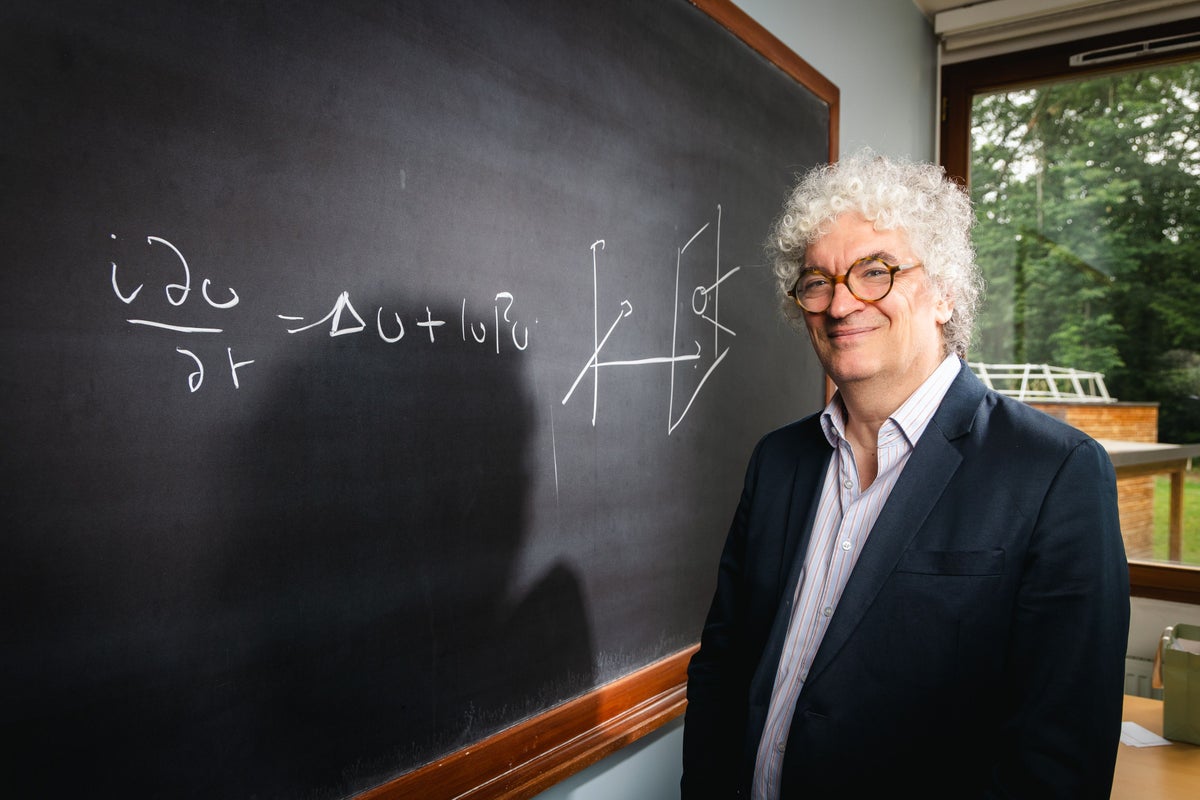
Nobel Prize-winning physicist David J. Gross received the 2026 Special Breakthrough Prize in Fundamental Physics at a gala ceremony in Santa Monica on Saturday, honored for what the award committee described as "a lifetime of groundbreaking contributions to theoretical physics, from the strong force to string theory, and for tireless advocacy for basic science worldwide." The $3 million prize, one of the largest individual science awards in the world, recognized a career spanning more than six decades at the frontier of theoretical physics — a body of work that includes one of the most consequential single discoveries in the history of particle physics.
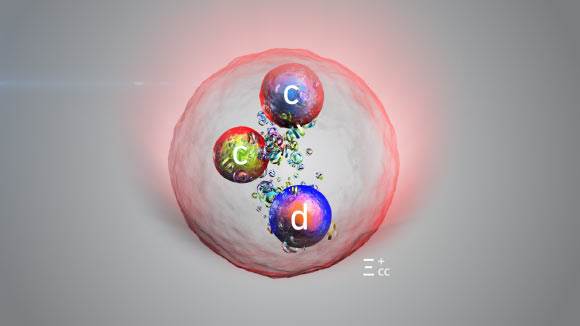
In 1973, Gross and his then-graduate student Frank Wilczek published a paper demonstrating that the strong nuclear force — the fundamental interaction that holds quarks together inside protons and neutrons — has a profoundly counterintuitive property: it grows weaker as the particles it governs come closer together, and stronger as they move apart. This property, called asymptotic freedom, explained why quarks behave almost like free particles when they are extremely close together, while becoming effectively impossible to isolate at larger separations — a phenomenon physicists call confinement. The paper provided the theoretical foundation for quantum chromodynamics, or QCD, the branch of particle physics that describes all interactions mediated by the strong force. Together with the electroweak theory developed by Glashow, Weinberg, and Salam, QCD completes the Standard Model of particle physics — humanity's best current description of the fundamental building blocks of matter.
Gross and Wilczek shared the 2004 Nobel Prize in Physics for the asymptotic freedom discovery, along with David Politzer of Caltech, who had independently derived the same result. In the decades that followed, Gross became one of the most prominent advocates for string theory — the attempt to construct a unified mathematical description of all fundamental forces, including gravity, by modeling elementary particles as one-dimensional vibrating strings rather than point-like objects. String theory remains controversial and has not yet been verified experimentally, but Gross argued throughout his career that its mathematical depth and internal consistency make it the most promising framework available for transcending the Standard Model and incorporating quantum gravity.
Beyond his research, Gross served as director of the Kavli Institute for Theoretical Physics at UC Santa Barbara for more than two decades, transforming it into one of the world's preeminent centers for theoretical physics. He has also helped establish physics research institutes in India, China, and South America; served as president of the American Physical Society; and chaired the Solvay Physics Conferences — the storied Belgian gatherings that have convened the world's leading physicists since 1911. At 84, Gross remains an active scientific voice, and his advocacy for sustained investment in basic research has taken on new urgency at a time when government funding for curiosity-driven science faces pressure from budget-cutters on multiple continents.
Accepting the prize in Santa Monica, Gross expressed concern about declining public and governmental support for fundamental research. "The greatest discoveries that have changed human civilization began as acts of curiosity about how nature works," he said. "If we starve that curiosity, we will find ourselves solving only the problems we can already see, blind to the breakthroughs we cannot yet imagine." The Special Breakthrough Prize, unlike the standard annual prizes that recognize specific recent discoveries, is awarded for exceptional cumulative lifetime achievement — a fitting recognition for a physicist whose career touched nearly every corner of the theoretical landscape and whose most celebrated work, now more than fifty years old, still undergirds the deepest understanding physicists have of the forces binding all visible matter.