Physics Legend David Gross Wins Special Breakthrough Prize for Discovering the Force That Holds Atoms Together
The Nobel laureate's discovery of asymptotic freedom, made in 1973, provided the theoretical cornerstone of quantum chromodynamics and completed the Standard Model.

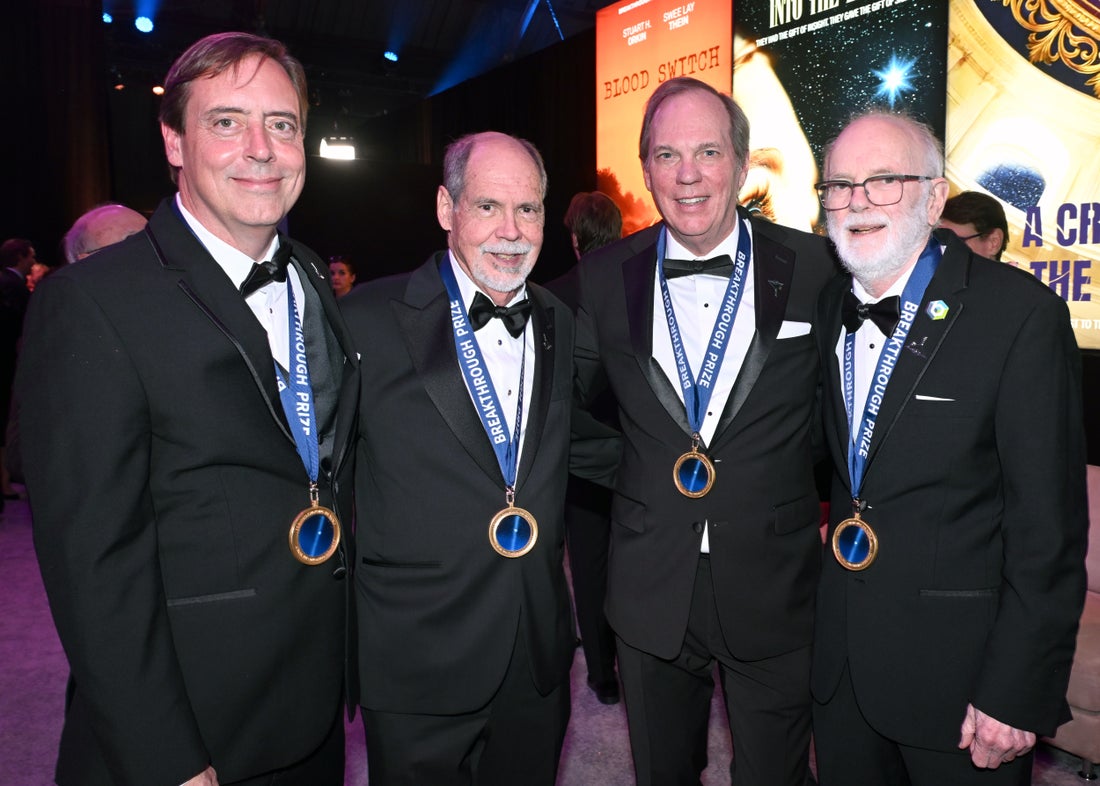
Physicist David Gross, one of three scientists who shared the 2004 Nobel Prize in Physics for the discovery of asymptotic freedom in the strong nuclear force, received a Special Breakthrough Prize in Fundamental Physics on Thursday, recognizing his five decades of contributions to quantum chromodynamics and string theory. The prize, awarded by the Breakthrough Prize Foundation at a ceremony at the SLAC National Accelerator Laboratory, carries a cash award of $3 million and was presented to Gross, 83, at the University of California Santa Barbara's Kavli Institute for Theoretical Physics, where he has been a professor since 1997.
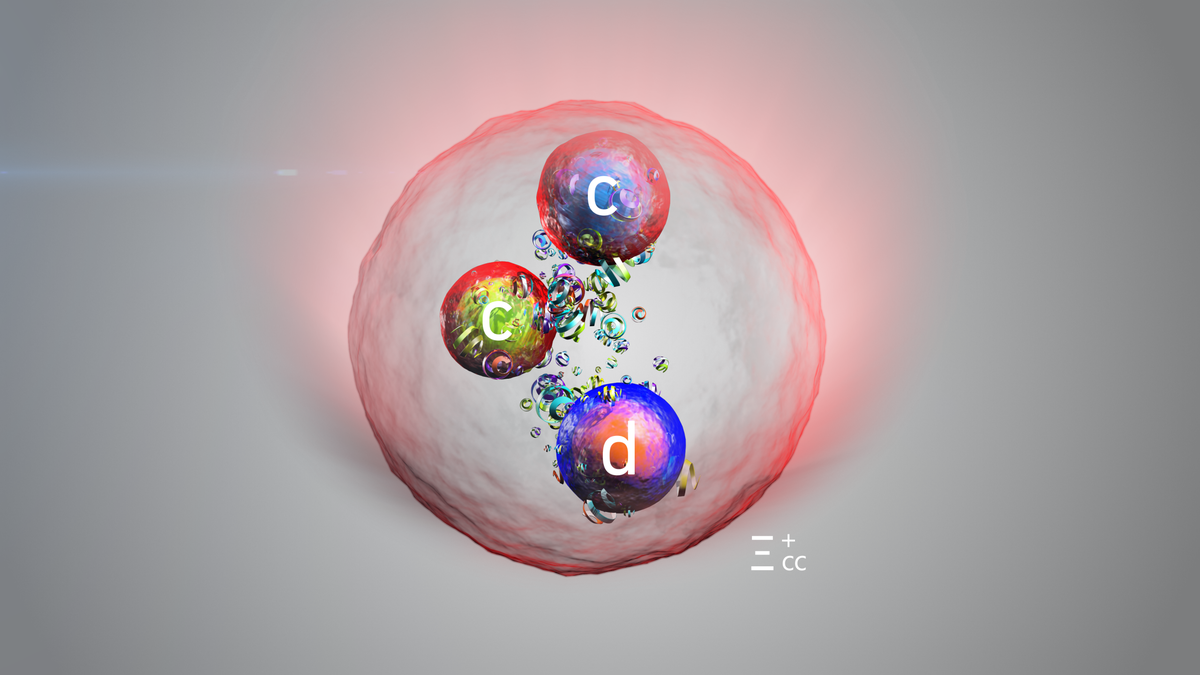
The Breakthrough Prize committee cited Gross's discovery, with colleagues Frank Wilczek and H. David Politzer, that the strong force — the fundamental interaction that holds quarks together inside protons and neutrons — becomes weaker at shorter distances. This counterintuitive property, called asymptotic freedom, explained why quarks behave almost as free particles when probed at high energies, a result that had previously seemed impossible to reconcile with the observed fact that quarks are permanently confined inside hadrons and never found in isolation. Asymptotic freedom was the key insight that made quantum chromodynamics, or QCD, the correct mathematical description of the strong force, completing the theoretical framework of the Standard Model of particle physics.
The discovery required a fundamental advance in quantum field theory — specifically, the calculation of how the coupling constant of the strong force changes with energy scale, a quantity known as the beta function. Gross and Wilczek, working at Princeton in 1973, calculated the beta function for non-Abelian gauge theories like QCD and found, to their surprise, that it was negative, meaning the force weakened at shorter distances. Politzer independently obtained the same result at Harvard. The calculation required sophisticated loop-level Feynman diagram computations that had never been done for this type of theory and confirmed a prediction made on experimental grounds but unexplained theoretically.
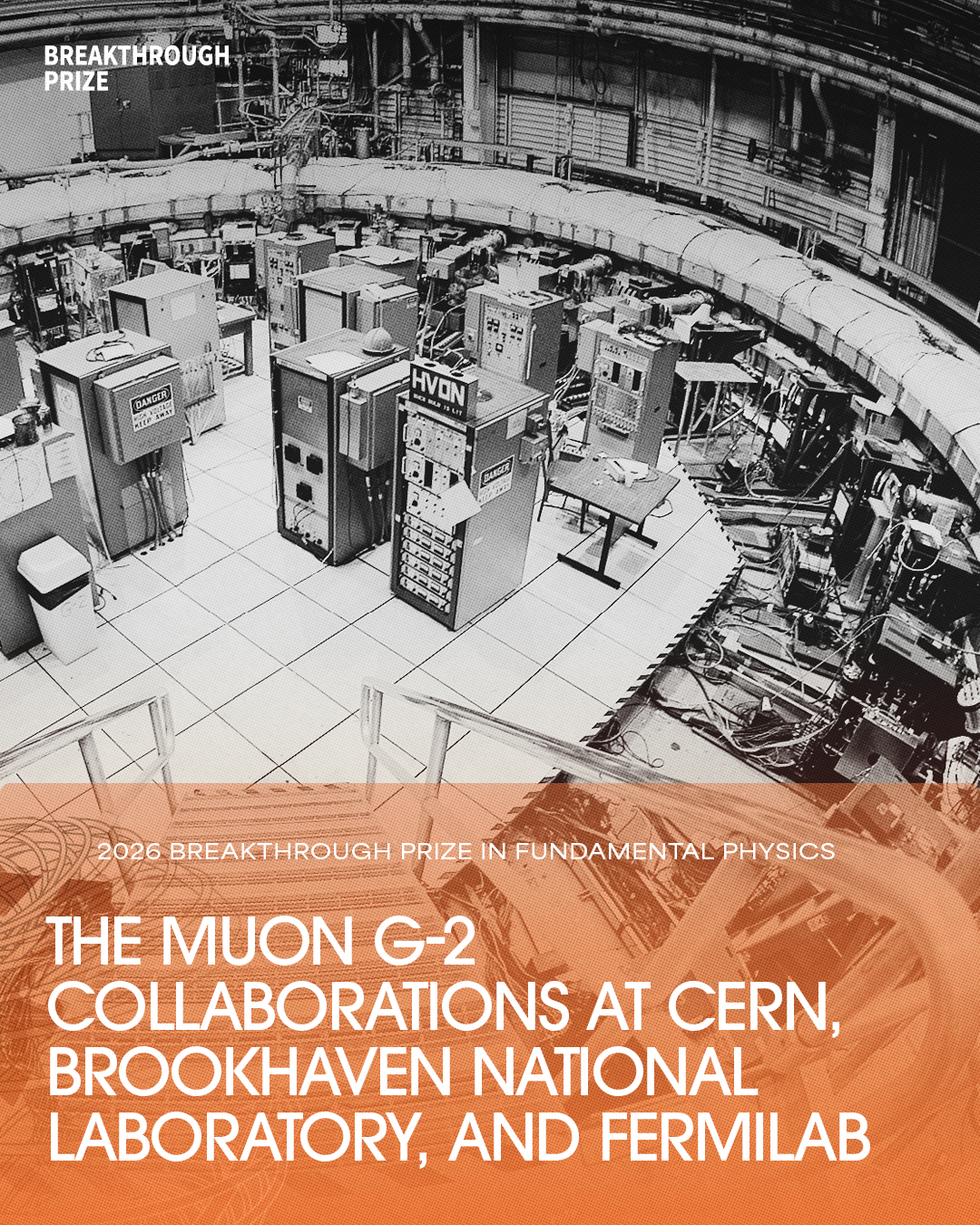
In remarks at the ceremony, Gross reflected on the state of fundamental physics more than 50 years after the asymptotic freedom discovery. He expressed cautious optimism about developments in string theory, which he had championed for decades as a framework for unifying all fundamental forces including gravity, while acknowledging that string theory had yet to produce experimentally testable predictions. He also praised the Muon g-2 experiment's recent 5.1-sigma deviation from Standard Model predictions as potentially the most promising experimental clue pointing toward physics beyond the known framework, though he cautioned that the theoretical uncertainties in the Standard Model prediction needed to be fully resolved before the significance could be definitively assessed.
The Breakthrough Prize in Fundamental Physics has been awarded since 2012 and has recognized major contributions in areas ranging from gravitational wave detection and the discovery of the Higgs boson to neutrino oscillations and the development of string theory. The Special Breakthrough Prize, a variant awarded at the foundation's discretion for exceptional lifetime contributions, has been given fewer than a dozen times and typically marks recognition of a scientist's cumulative body of work.