A Crystal That's Only a Superconductor on the Outside — and Physicists Can't Explain Why
PtBi2 defies every known rule. Its surfaces pair electrons in a six-fold pattern never seen before.
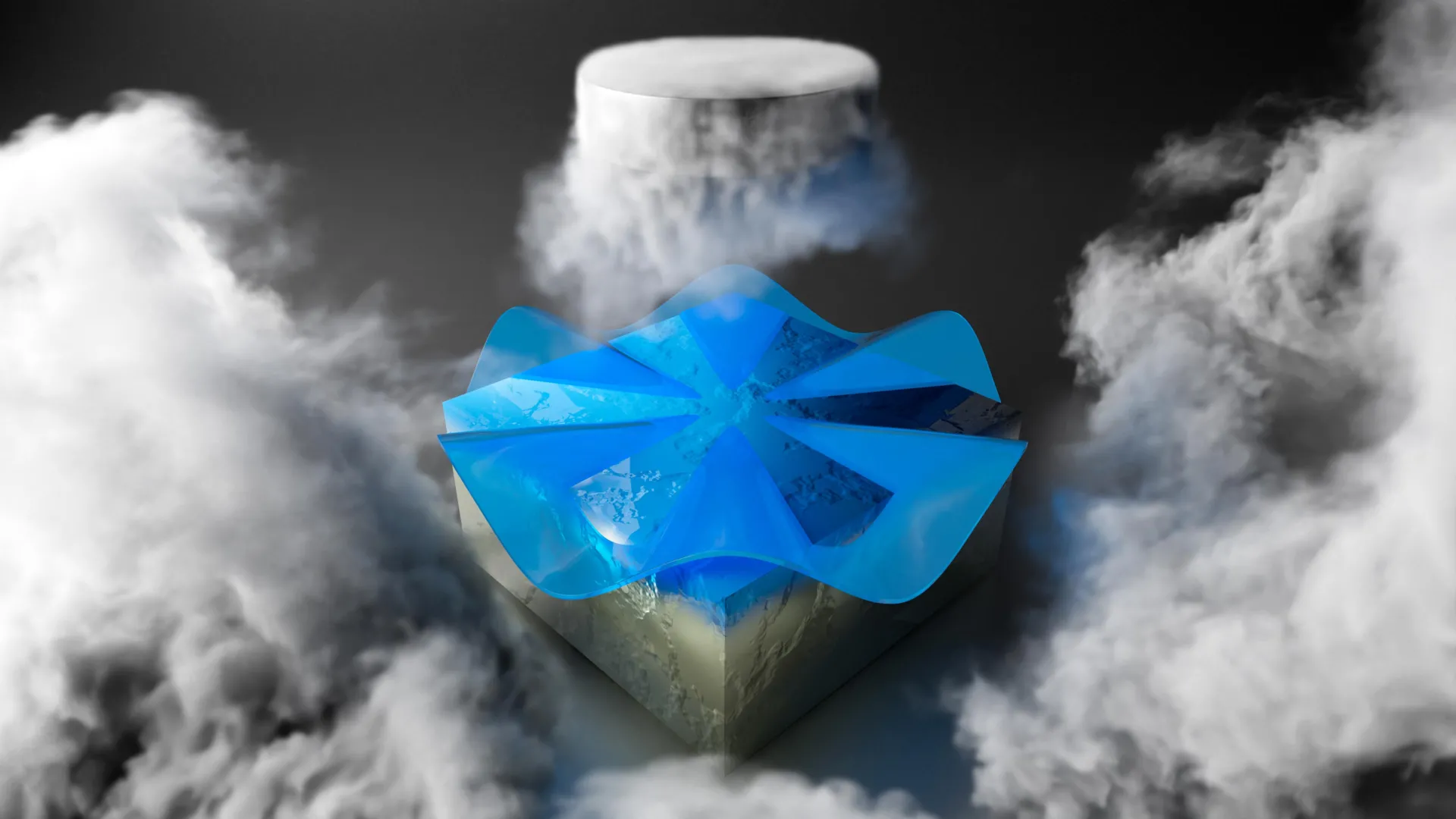
A crystalline compound of platinum and bismuth called PtBi2 is defying one of the most fundamental assumptions in condensed matter physics: it becomes a superconductor exclusively on its outer surfaces while its interior remains an ordinary, non-superconducting material. The discovery, published by a team led by Professor Yoichi Ando at the University of Cologne, has left physicists scrambling to explain a phenomenon that fits no existing theoretical framework.
Superconductivity — the ability of certain materials to conduct electricity with zero resistance — has been studied for more than a century, and in every previously known case, the property emerges uniformly throughout a material's bulk. PtBi2 shatters that paradigm. When cooled below approximately 600 millikelvin, its surfaces begin conducting electricity without resistance while instruments confirm that the interior remains completely normal. It is as if the crystal's skin has different physical laws than its core.
What makes the finding even more remarkable is the geometry of the electron pairing on the surface. In conventional superconductors, electrons pair up in patterns with two-fold or four-fold symmetry. The surface superconductivity in PtBi2 exhibits six-fold rotational symmetry — a configuration that has never been observed in any superconducting material. The hexagonal pairing pattern suggests an entirely new mechanism of superconductivity that theorists are only beginning to explore.
The practical implications could be transformative. Ando's team found that the superconducting surfaces of PtBi2 naturally host Majorana particles — exotic quantum entities that are their own antiparticles. Majorana particles have been the holy grail of quantum computing for decades because they are theoretically immune to the environmental noise that causes errors in current quantum processors. Previous efforts to create Majorana-based quantum bits required elaborate engineered structures; PtBi2 produces them spontaneously.
"This material is telling us something fundamental we don't yet understand," Professor Ando said in an interview. "We have a crystal that separates itself into two different quantum states of matter — superconducting on the outside, normal on the inside — with no external engineering whatsoever. Nature is doing something here that we haven't asked it to do, and we need to figure out what the rules are."
The research has ignited intense interest across the physics community. Teams at MIT, the Max Planck Institute, and the University of Tokyo have already begun independent studies of PtBi2 and related bismuth compounds. If the surface superconductivity can be harnessed at higher temperatures — the current requirement of near-absolute-zero cooling remains a significant practical barrier — the material could open a fundamentally new pathway toward fault-tolerant quantum computers. For now, the crystal stands as a humbling reminder that even after a century of study, superconductivity still holds profound surprises.