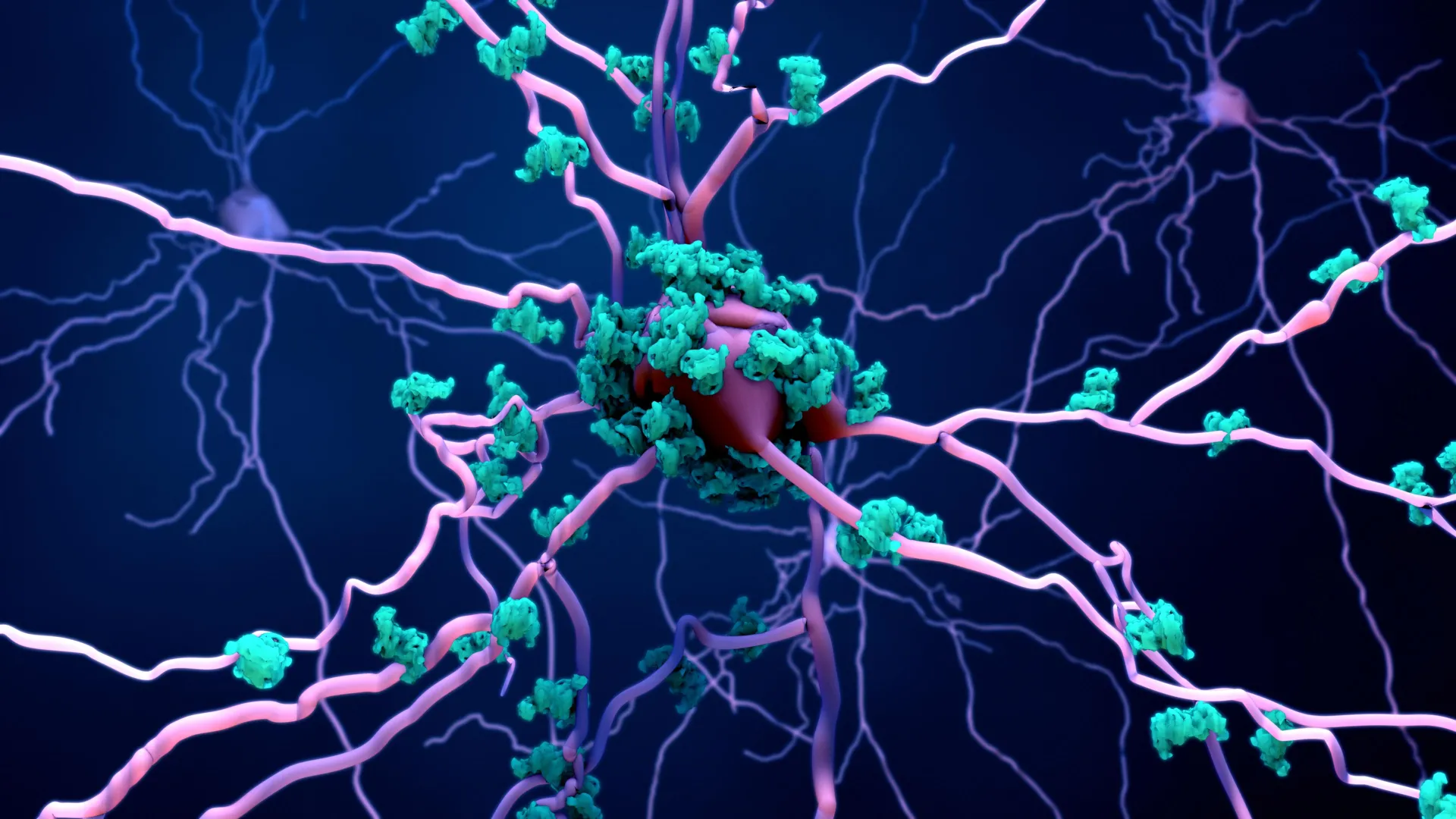
Scientists Crack the 'Black Box' of the Longevity Gene That Shields Some People From Alzheimer's
Buck Institute researchers report that neurons carrying the rare APOE2 variant accumulate less DNA damage and resist cellular aging — and that adding APOE2 protein protected high-risk APOE4 neurons too.

People who carry the APOE2 version of the apolipoprotein E gene tend to live longer and are less likely to develop Alzheimer's disease. Researchers have known that for years without knowing why. A new study from the Buck Institute for Research on Aging, published in Aging Cell, offers an answer: APOE2 neurons are simply better at protecting and repairing their own DNA.
"We've known for years that APOE2 carriers tend to live longer and have a lower risk of Alzheimer's, but the protective mechanism has been a black box," said senior author Lisa M. Ellerby, a professor at the Buck Institute. "Our work shows that APOE2 neurons are better at preventing and repairing DNA damage, and they resist the cellular aging program that drives so much of late-life decline. Our findings point to entirely new therapeutic directions."
APOE comes in three common forms — APOE2, APOE3 and APOE4 — that differ by only two amino acids but carry sharply different consequences for the aging brain. APOE4 is the strongest known genetic risk factor for late-onset Alzheimer's, the form that typically appears after 65. APOE2 has repeatedly been linked in population studies to longer life and reduced dementia risk. Until now, the gene's best-understood job was ferrying cholesterol and lipids around the brain, which never fully explained the gap.
To isolate the gene's effect, the team used human induced pluripotent stem cells engineered to be identical except at the APOE locus, then coaxed them into two neuron types: inhibitory GABAergic neurons and excitatory glutamatergic neurons. They also examined hippocampal tissue from older mice carrying the human APOE2, APOE3 or APOE4 gene. Across both systems, APOE2 neurons accumulated less DNA damage. Bulk and single-cell RNA sequencing showed APOE2 GABAergic neurons strongly activating DNA repair and damage-response pathways, while APOE4 neurons displayed gene activity patterns associated with Alzheimer's disease. Direct measurements of DNA strand breaks confirmed the difference.
The APOE2 cells also resisted senescence — the damaged, poorly functioning state cells fall into with age, and one increasingly implicated in neurodegeneration. When the researchers hit excitatory neurons with radiation or the chemotherapy drug doxorubicin, both severe DNA stressors, APOE2 neurons showed lower levels of senescence markers including p16 and CRYAB. They also had smaller nucleoli and better-preserved nuclear architecture, structural signs of cells holding their internal order together under stress.
The most therapeutically suggestive result came last. When the team added recombinant APOE2 protein to neurons carrying APOE4, those high-risk cells showed reduced DNA damage signaling after radiation exposure — an early hint that at least part of APOE2's advantage may be transferable rather than locked to the roughly one in fifteen people born with the variant. That is a long way from a drug: the experiment was done in cultured cells, not in a living brain, and delivering a protein across the blood-brain barrier at useful doses is its own unsolved problem. But it reframes APOE2 from a stroke of genetic luck into something that might, eventually, be prescribed.