Two Flowers That Can Paralyze You Just Gave Up the Six Enzymes Behind Their Poison
Researchers at Michigan State and the Czech Academy of Sciences traced how wolfsbane and larkspur build diterpenoid alkaloids, then rebuilt the pathway inside tobacco plants.
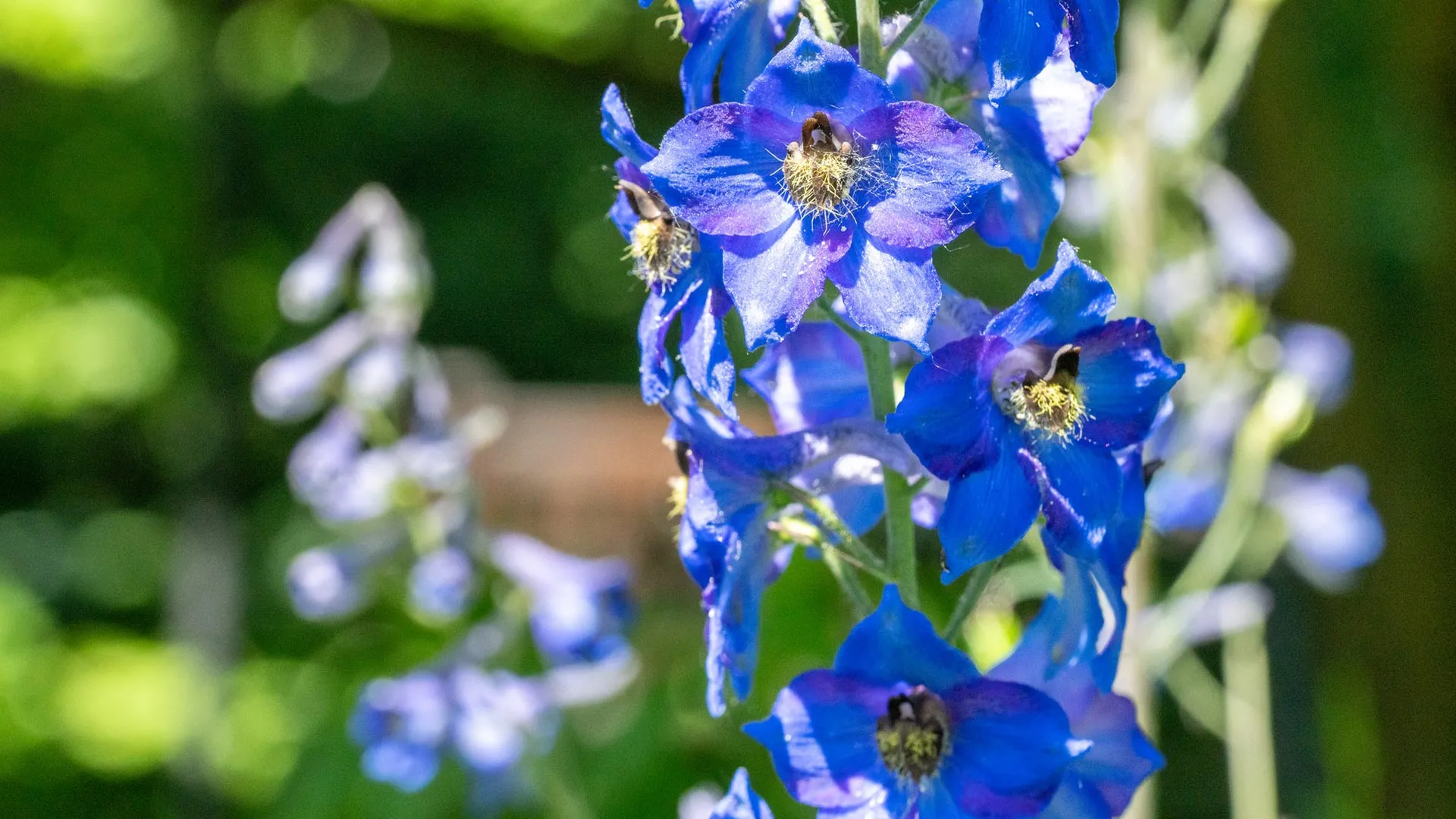
Wolfsbane and larkspur are garden flowers that will kill you. Both make diterpenoid alkaloids — compounds so neurotoxic that small doses cause paralysis, and which have been used as arrow poison for as long as anyone has written about arrow poison. The same chemistry, at the right dose and in the right form, has shown activity against pain, malaria, cancer cells and agricultural pests.
The problem has always been getting hold of the compounds. They are structurally elaborate, chemists have struggled to synthesize them in the lab, and extracting usable quantities from the plants is slow and wasteful. A team from Michigan State University and the Czech Academy of Sciences has now worked out the opening moves of how the plants themselves do it, and has published the result in Molecular Plant.
The researchers sequenced the transcriptomes of Delphinium grandiflorum, Aconitum plicatum and Aconitum lycoctonum — larkspur and two wolfsbane species — and assembled transcriptomes for four more Aconitum species from public data. A transcriptome is a readout of which genes a plant is actively using, and comparing several related species that all make these compounds narrows the field: the genes involved in the pathway should be switched on across all of them.
That comparison produced a shortlist of candidate genes, which the team then expressed in tobacco plants — a standard host for this kind of work, because tobacco grows fast, tolerates foreign genes well, and can be treated as a living test tube. Six enzymes, working in sequence, produced atisinium, a diterpenoid alkaloid. Two things about the sequence surprised the team: the enzymes are responsible for folding the molecule into its complicated final shape, and they bring in the nitrogen atom at the center of the structure from a source nobody had predicted.
"Plants are the best chemists around, upgrading their arsenal of natural compounds over millions of years to help them survive," said Björn Hamberger, the James K. Billman Endowed Professor in Michigan State's Department of Biochemistry and Molecular Biology, who led the work with Garret Miller, now at the University of Michigan-Flint, and with Lana Mutabdžija and Tomáš Pluskal at the Czech Academy of Sciences.
The practical consequence is that a pathway which previously existed only inside a slow-growing poisonous perennial can now, in part, be moved into an organism a lab can grow on demand. That is the standard route by which a plant compound becomes a drug candidate: get the pathway into yeast or tobacco, produce enough of the molecule to test, then start making variants of it that the original plant never made. Six enzymes are the entry steps rather than the whole route to the most complex members of this family, and the remaining steps are still unmapped. But the hardest conceptual part — where the nitrogen comes from and how the carbon skeleton folds — is no longer a black box.
Originally reported by ScienceDaily.