Virginia Election Turnout Plummets as Redistricting Vote Shows Significant Decline
In-person voting on Tuesday trails far behind last year's record-setting gubernatorial race, raising concerns about voter engagement in off-year elections.

Virginia's election turnout for the crucial redistricting measure vote on Tuesday showed a dramatic decline compared to last year's gubernatorial race, according to preliminary data from state election officials. The in-person voting numbers are trailing significantly behind the record turnout that marked last year's governor's race, which set a new benchmark for nonpresidential elections in the commonwealth. Election observers noted that despite the high stakes of the redistricting measure, voter participation appeared notably lower across multiple districts.
The redistricting vote carries significant implications for Virginia's political landscape, as it will determine how congressional and state legislative districts are drawn for the next decade. Political analysts had predicted robust turnout given the measure's potential impact on electoral competitiveness and representation. However, early reports from polling locations across the state suggested that many voters either were unaware of the election or chose not to participate in what some considered a technical policy matter.
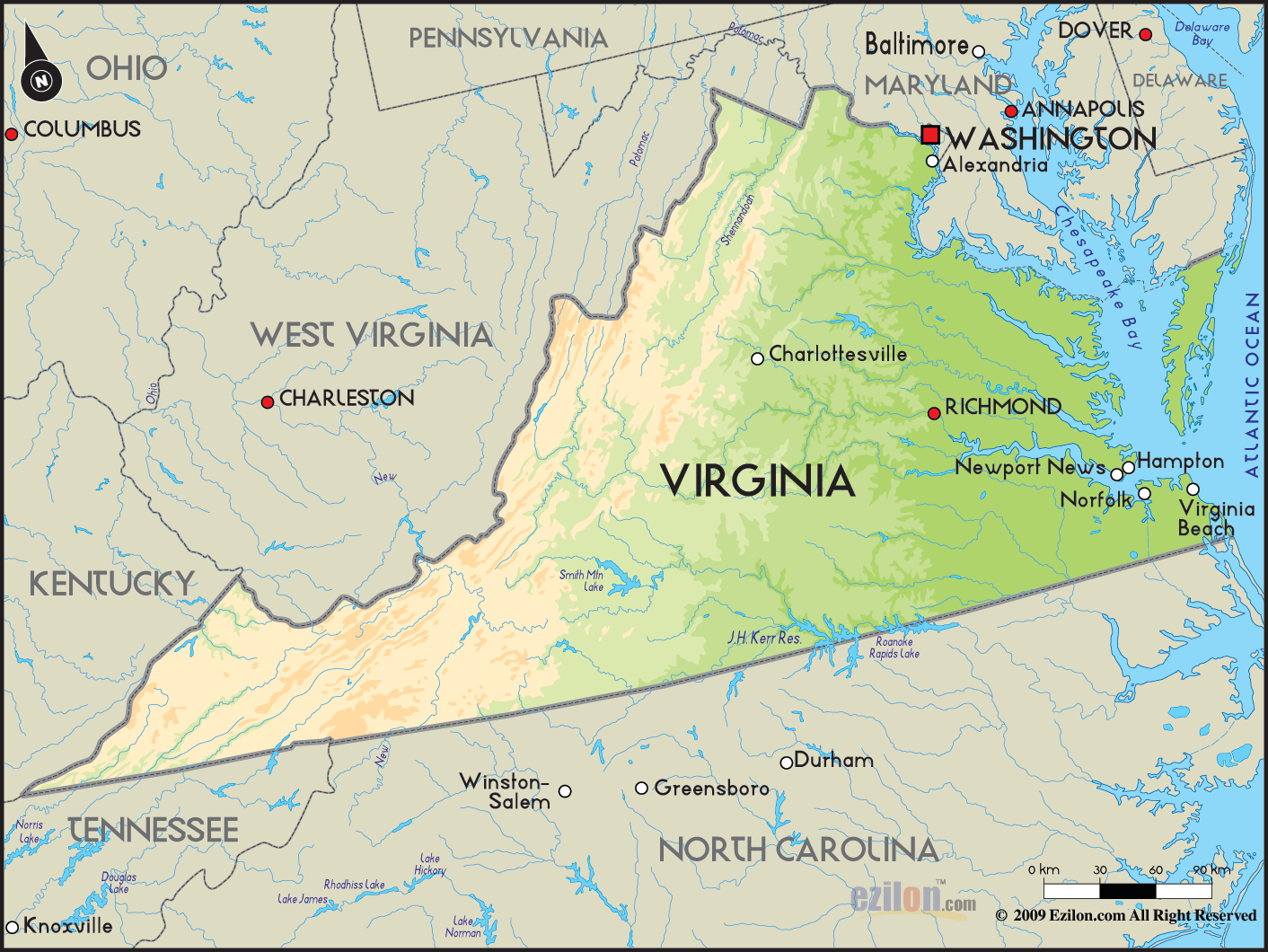
Election officials in several Virginia counties reported slower-than-expected traffic at polling stations throughout the day. Fairfax County, typically a bellwether for statewide turnout, saw particularly low numbers compared to the gubernatorial election. Richmond and Virginia Beach also reported decreased participation, with some precincts seeing turnout rates nearly 40% lower than comparable elections. The contrast was especially stark in suburban areas that had driven high participation in recent cycles.
The low turnout could potentially skew the results of the redistricting measure, as political scientists note that off-year and special elections often see different demographic participation patterns compared to major election cycles. Younger voters and those in certain demographic groups historically participate at lower rates in these types of elections. This demographic shift could influence the outcome in ways that might not reflect broader public opinion on redistricting reform.
The Virginia redistricting vote represents a critical test case for electoral reform efforts nationwide, as other states watch to see how voters respond to direct democracy on redistricting issues. The final turnout numbers and results will provide important data for political strategists and reform advocates planning similar initiatives in other states. Election officials expect to release preliminary turnout figures later this week, with certified results following standard verification procedures.