Trump Says He Will Order T.S.A. Agents Paid as Funding Deal Stalls
President announces emergency order to pay Transportation Security Administration agents as Department of Homeland Security funding talks falter and airport lines grow.

President Trump announced late Wednesday that he would issue an emergency order directing the Department of Homeland Security to pay Transportation Security Administration agents, as congressional negotiations over a funding deal to end the partial government shutdown continued to stall and airport disruptions intensified across the country.
The announcement, made via a post on Truth Social, came hours after the Senate passed a bipartisan bill to fund most DHS operations but the House showed no signs of taking it up. Trump said he was acting because TSA agents are essential to national security and should not be forced to work without pay because of congressional dysfunction. He did not specify the legal mechanism for the payments or when agents could expect to receive them.
The move drew immediate questions about its legality. The Antideficiency Act prohibits federal agencies from spending money that Congress has not appropriated, and legal scholars said executive workarounds are limited in scope and have never been used for an agency-wide payroll. The White House counsel's office is reportedly exploring whether the president can invoke emergency spending authorities under the Economy Act or direct the Treasury Department to advance funds against future appropriations.
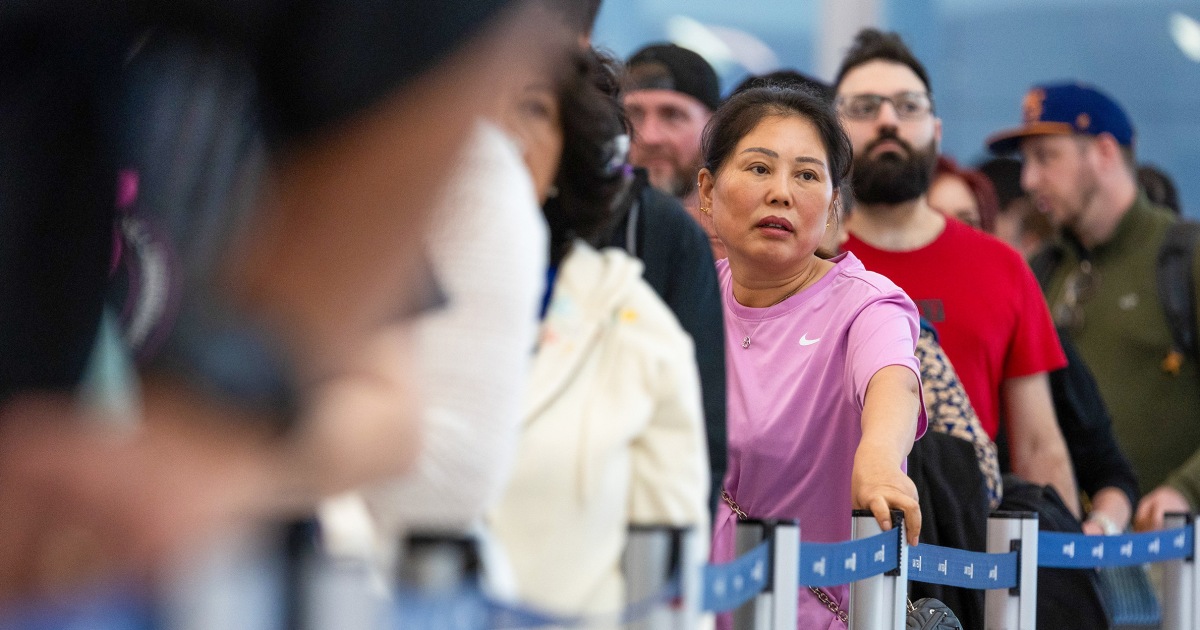
At airports nationwide, the effects of more than five weeks without pay for TSA workers have become impossible to ignore. At John F. Kennedy International Airport in New York, security wait times exceeded two and a half hours on Wednesday morning, causing several international carriers to delay departures. At Denver International, only 8 of 22 screening lanes were open during the morning rush. Miami International closed one of its three terminals entirely due to insufficient screening staff.
The TSA union said more than 360 agents have formally resigned since the shutdown began, with the pace of departures accelerating in recent days. Thousands more have been calling in sick at rates far above normal, a pattern that union officials attributed to financial stress and demoralization rather than organized job actions. Many agents, who earn between $40,000 and $55,000 annually, have taken second jobs or applied for positions with private employers.
Airlines are feeling the financial sting. Delta Air Lines disclosed in a filing that it has incurred approximately $180 million in additional costs from flight delays, cancellations, and rebooking expenses attributable to the checkpoint slowdowns. United Airlines said it has proactively canceled more than 400 flights at its Chicago and Newark hubs to prevent cascading delays. The industry trade group Airlines for America estimated total carrier losses at more than $800 million.
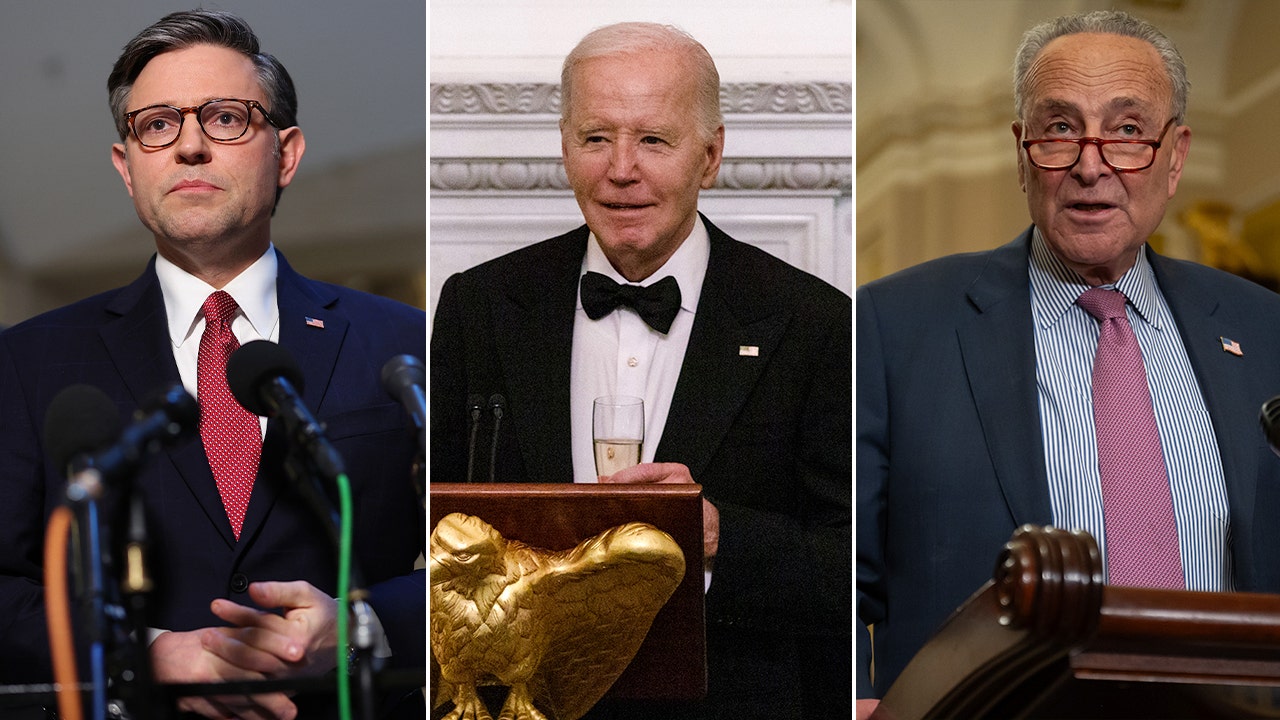
House Speaker Mike Johnson reiterated his opposition to the Senate's partial funding approach, which would restore pay for TSA, Coast Guard, FEMA, and other DHS components while excluding ICE and Border Patrol. Johnson said the exclusion was designed to undermine the president's immigration enforcement agenda and that the House would only consider a bill that funds the entire department. Several moderate House Republicans have broken with leadership, calling for a vote on the Senate bill.
Democrats accused the president of creating the crisis and then claiming credit for a partial fix. Senate Minority Leader Chuck Schumer said the shutdown could end immediately if the president signed the bipartisan Senate bill or if the House Speaker allowed a vote. He called the emergency pay order a political stunt designed to obscure the administration's role in prolonging the impasse.
Former DHS officials from both parties warned that the staffing crisis poses genuine security risks beyond inconvenience to travelers. Reduced screening throughput means fewer bags are being checked and secondary screening rates have dropped significantly, creating potential vulnerabilities that adversaries could exploit.