Russia's Nuclear Battlecruiser Admiral Nakhimov Enters Final Sea Trials After 27 Years
Rebuilt over a quarter-century at a cost approaching $2.7 billion, the Kirov-class giant is bristling with 176 vertical launch cells for Kalibr, Oniks and Zircon missiles as it nears a return to the Russian fleet.
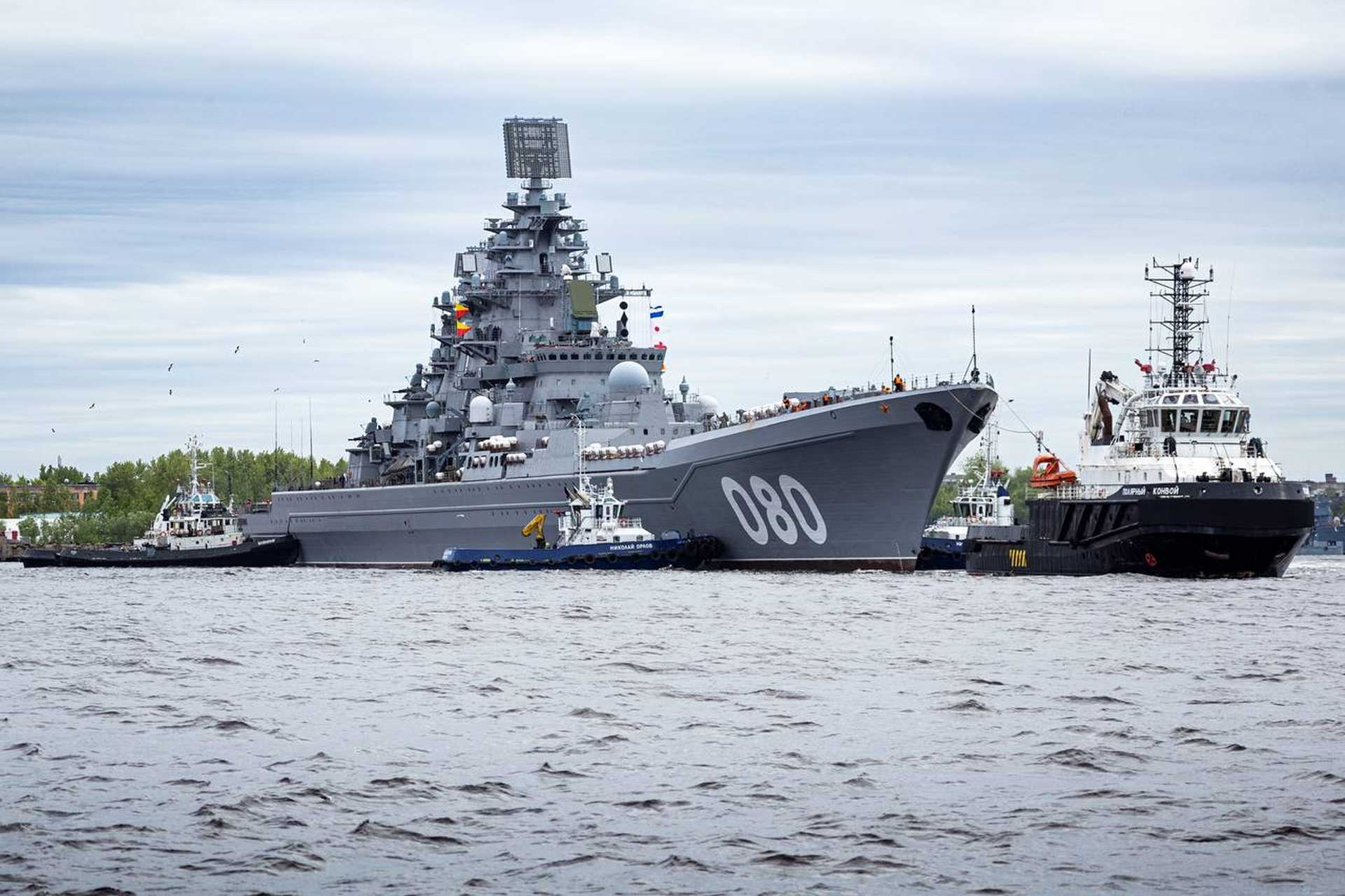
Russia's nuclear-powered battlecruiser Admiral Nakhimov has entered the final phase of its sea trials, marking a milestone in one of the longest and most expensive warship overhauls in modern naval history. The vessel departed the Sevmash shipyard in late May, and Russian officials confirmed in early June that the giant cruiser was undergoing its concluding round of testing before a planned return to service.
The Nakhimov is a Kirov-class battlecruiser, a class of heavily armed surface combatants built in the final years of the Soviet Union. Commissioned as Kalinin on Dec. 30, 1988, the ship effectively vanished from operational service after entering refit preparations in 1997 and arriving at Sevmash in 1999. By the time it formally rejoins the fleet, nearly 27 years will have elapsed between its arrival at the shipyard and its reactivation — a timeline that has made the project a symbol of both Russia's naval ambitions and its persistent shipbuilding delays.
The modernization stripped out the ship's Cold War-era weapons and replaced them with a modern strike and air-defense suite. Reports describe a vessel now fitted with as many as 176 vertical launch cells capable of firing Kalibr cruise missiles, Oniks anti-ship missiles and hypersonic Zircon missiles, along with an upgraded air-defense network and new combat-management systems. The nuclear-and-steam propulsion plant generates roughly 140,000 horsepower, giving the cruiser a top speed of about 32 knots.
The price tag ballooned over the life of the program. A modernization contract signed in 2013 was reportedly valued at around 50 billion rubles, roughly $667 million, with the ship initially expected back in service by 2018. Instead, costs eventually swelled toward 200 billion rubles — on the order of $2.7 billion — as the schedule slipped year after year.
Defense analysts are divided on what the refreshed Nakhimov actually buys Moscow. Its heavy missile load makes it a formidable platform on paper, and Russian commentators have framed its return as a way to challenge the U.S. Navy, including in the Arctic. Skeptics counter that a single, hugely expensive surface ship — however well armed — may already be a vulnerable and somewhat dated centerpiece in an era of long-range precision strike, drones and submarine warfare. Either way, its return will give the Russian Navy one of the most heavily armed surface warships afloat.