Robert Mueller, FBI Director Who Led Russia Probe, Dies at 81 — Trump Says 'I'm Glad He's Dead'
Mueller, who served as FBI director for 12 years and later as special counsel investigating Russian interference in the 2016 election, died Friday night in Charlottesville, Virginia; President Trump posted on Truth Social that he was "glad" about the death.
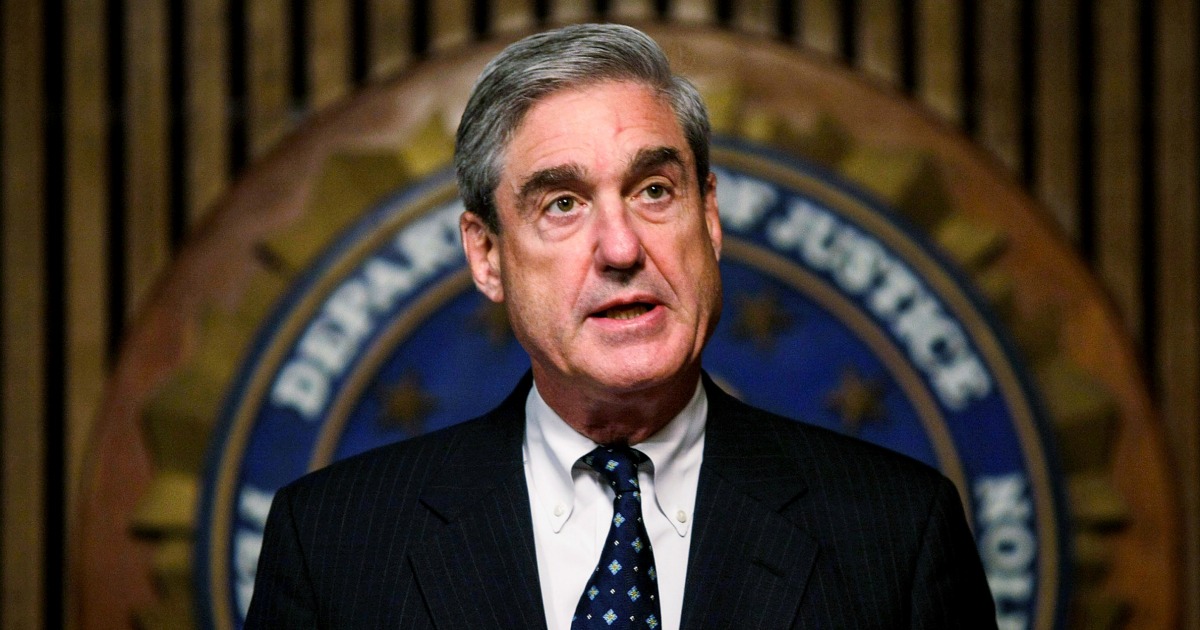
Robert S. Mueller III, the decorated former FBI director who spent more than a decade leading the nation's top law enforcement agency and later oversaw the most consequential political investigation of a generation, died Friday night in Charlottesville, Virginia. He was 81. His family announced the death Saturday morning, saying in a statement, "With deep sadness, we are sharing the news that Bob passed away last night." The cause of death was not immediately disclosed, though Mueller had been battling Parkinson's disease since at least 2021, when the condition had already begun to visibly affect his speech and mobility.
Mueller served as FBI director from 2001 to 2013 — the second-longest tenure of any FBI chief in history, surpassed only by J. Edgar Hoover. His appointment came exactly one week before the September 11, 2001 terrorist attacks, and he immediately transformed the bureau from a primarily crime-fighting organization into the country's frontline counterterrorism agency. He overhauled its intelligence capabilities and oversaw the creation of fusion centers that now form the backbone of domestic terror prevention. President George W. Bush appointed him; President Barack Obama extended his term by two years, an unusual act requiring congressional authorization, and the Senate confirmed him a second time by a vote of 100-0.
Before joining the FBI, Mueller had spent decades as a federal prosecutor and U.S. attorney, building a reputation as meticulous, non-partisan, and relentlessly committed to the facts over politics. He served as a Marine Corps officer during Vietnam, earning a Bronze Star with valor and a Purple Heart for wounds sustained in combat — experience that shaped his understated, duty-first approach to public service. He was born in New York City in 1944 and educated at Princeton University and the University of Virginia School of Law.
Mueller's second defining act on the national stage came in May 2017, when Deputy Attorney General Rod Rosenstein appointed him special counsel to investigate Russian interference in the 2016 presidential election. The appointment came days after President Donald Trump fired then-FBI Director James Comey in circumstances that raised obstruction concerns. Mueller spent 22 months conducting the probe, charging 34 people and three companies, securing convictions or guilty pleas from several close Trump associates including campaign chairman Paul Manafort, national security adviser Michael Flynn, and political operative Roger Stone. His final 448-page report, released in April 2019, documented extensive contacts between the Trump campaign and Russian operatives and detailed 10 potential instances of obstruction of justice — but Mueller declined to render a verdict on obstruction, citing Justice Department guidance that sitting presidents cannot be indicted.
The reaction to his death broke sharply along partisan lines. President Trump posted on Truth Social within minutes: "Robert Mueller just died. Good, I'm glad he's dead. He can no longer hurt innocent people!" The statement drew immediate criticism from across the political spectrum. Republican Senator Thom Tillis of North Carolina said Mueller "deserved more respect" and that Trump "shouldn't say that." Former President Obama called Mueller "one of the finest directors in the history of the FBI," praising his work to transform the bureau after 9/11 and save countless lives. Former President George W. Bush said Mueller "led [the FBI] effectively" through a period of unprecedented challenges. Former FBI Director James Comey wrote: "A great American died today, one I was lucky enough to learn from and stand beside."
Mueller is survived by his wife of nearly 60 years, Ann Cabell Standish, two daughters, and five grandchildren. He had stepped back almost entirely from public life in recent years as Parkinson's eroded his once-formidable precision. His final public testimony — a 2019 congressional hearing on his Russia report — was marked by halting answers that became political fodder but were later understood in the context of a disease already advancing rapidly. For the millions of Americans who watched him navigate two defining national crises with quiet resolve, his death marks the end of an era in American law enforcement and public service.