Putin Vows to Bolster Air Defenses After Ukrainian Drones Strike St. Petersburg
Russia said it intercepted hundreds of drones as Kyiv's long-range strikes reached deep inside the country, casting a shadow over Putin's showcase economic forum in his hometown.

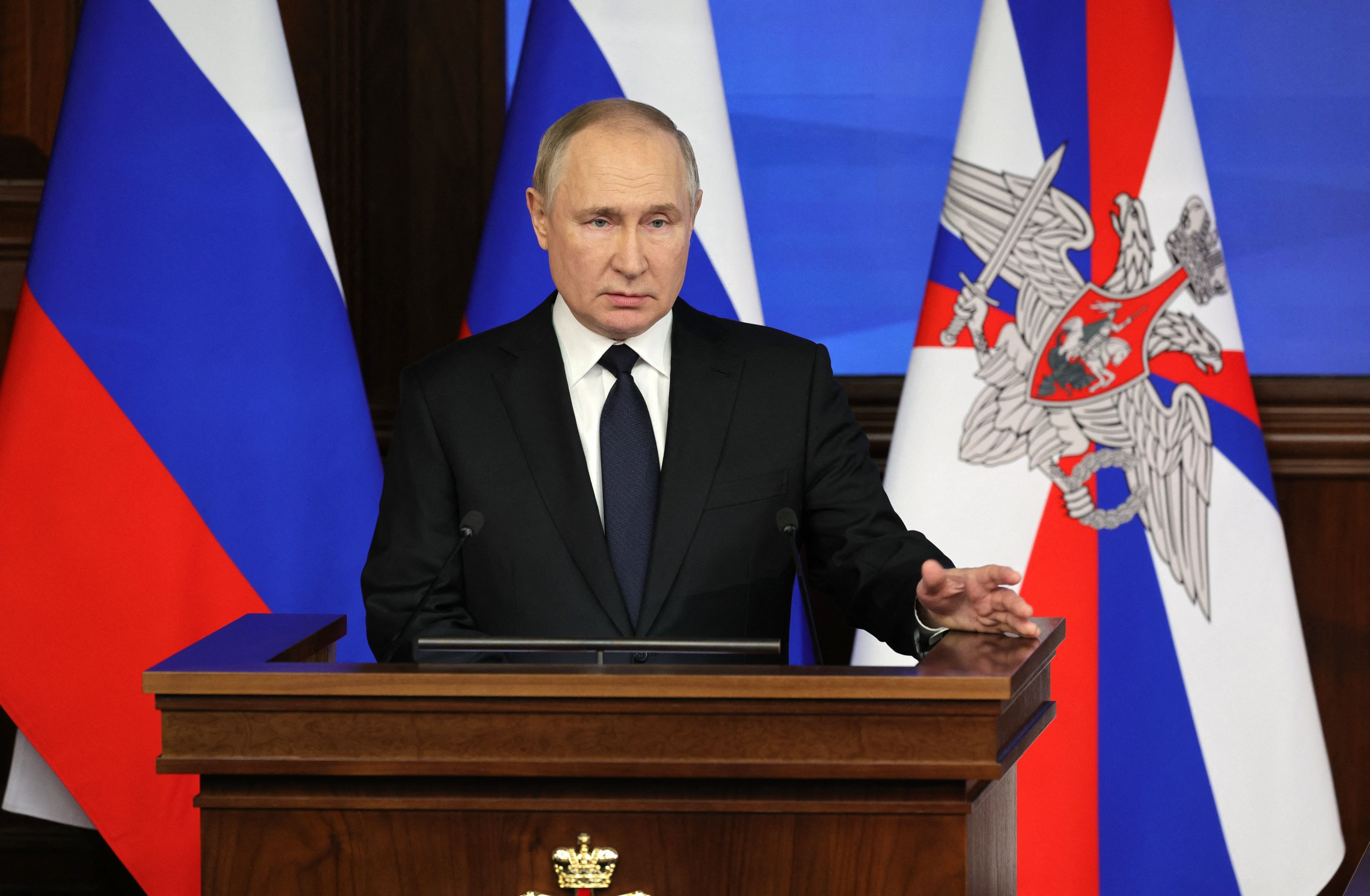
President Vladimir Putin said Russia will strengthen its air defenses in response to a wave of Ukrainian drone attacks that have reached deep inside Russian territory, after long-range strikes targeted his hometown of St. Petersburg and cast a shadow over a showcase economic forum he was hosting there.
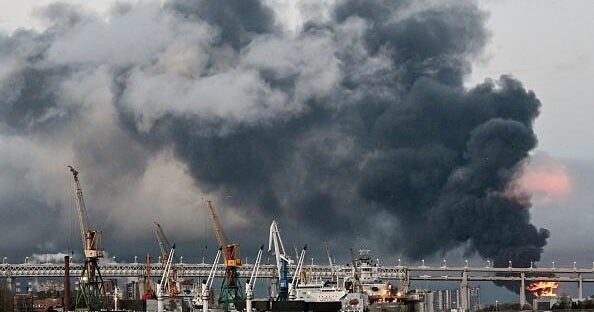
Ukraine launched one of its most ambitious drone assaults of the war this week, striking St. Petersburg and other cities and claiming hits on a naval warship and key infrastructure. Ukrainian President Volodymyr Zelenskyy reported "positive results" from the long-range operations, which he said struck "key targets" including a St. Petersburg oil terminal, one of the largest oil transshipment complexes in northwestern Russia and a crucial node for Russian fuel exports.
Russia's Ministry of Defense said its air defenses intercepted and destroyed more than 350 Ukrainian drones over areas near the border and deeper inside the country, including the Leningrad region and the western city of Novgorod. In subsequent waves, officials put the total number of drones downed at 376 across multiple regions, an unusually high figure that pointed to the growing scale and reach of Ukraine's domestically produced strike fleet.
The attacks disrupted Putin's St. Petersburg International Economic Forum, an annual gathering meant to project Russian economic resilience and draw thousands of international attendees. Authorities restricted airspace over St. Petersburg's airport, delaying around two dozen flights, and cut mobile internet service in an effort to disrupt incoming drones. Officials said the airport resumed normal operations Wednesday afternoon after the disruptions.
Speaking at the forum, Putin sought to project calm, vowing that Russia would reinforce its layered air defenses to blunt the deep strikes that have increasingly penetrated the country's interior. The Ukrainian campaign has shifted the war's geography, bringing the conflict to Russian cities far from the front and challenging the Kremlin's narrative that life at home remains undisturbed.
The escalation came after Putin rejected an offer from Zelenskyy for direct talks, and Ukraine signaled it would keep targeting Russian energy and military assets. For Kyiv, the long-range strikes are an attempt to impose costs on Moscow's war economy and to demonstrate that no Russian city is beyond reach. For the Kremlin, they are a mounting embarrassment unfolding in Putin's own backyard, even as he insists Russia's defenses will hold. Western military analysts say the deep strikes reflect Ukraine's growing investment in domestically produced long-range drones, a capability that has let Kyiv reach targets once considered safely beyond the front. As the war grinds into another summer with no negotiated settlement in sight, both sides appear to be betting that punishing strikes far from the battlefield can shift the balance where ground offensives have stalled.