Portugal Grinds to a Halt as General Strike Over Labor Reforms Cancels Flights and Shuts Schools
The country's largest union federation walked out against a government plan to ease dismissals and loosen working-hour limits, disrupting trains, metros and hospitals nationwide.
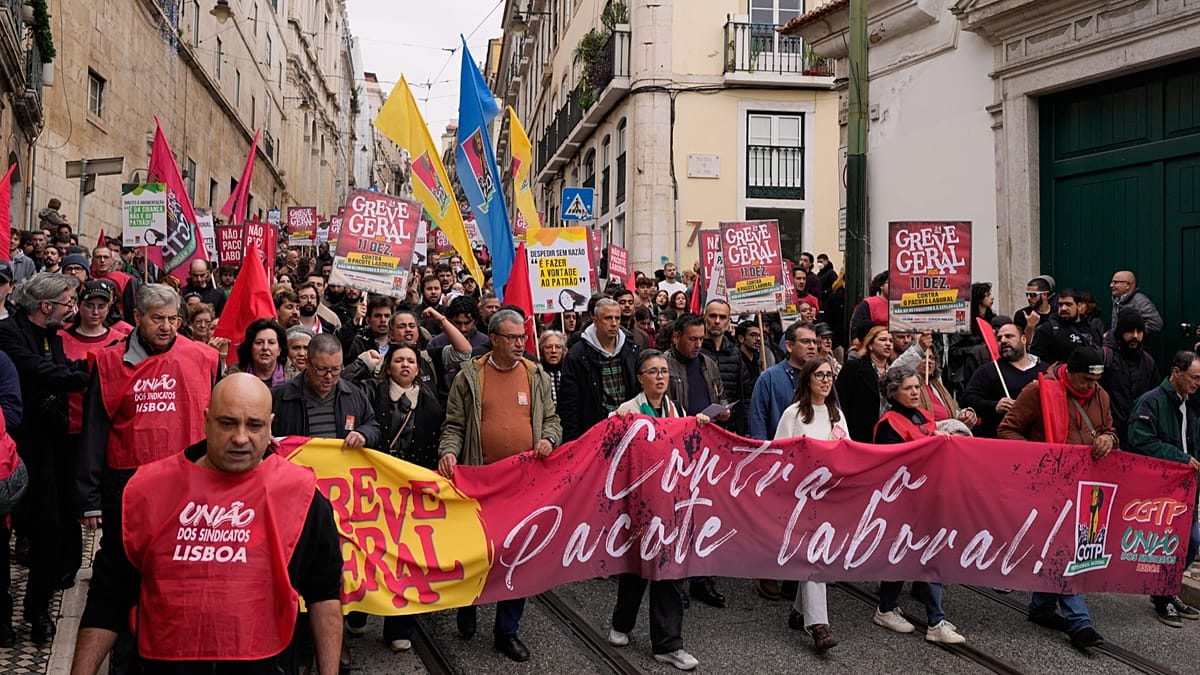
Portugal was brought to a near standstill on Wednesday as workers staged a nationwide general strike against the government's proposed overhaul of the country's labor laws, halting trains, grounding hundreds of flights and closing schools across the nation.
The walkout, called by the CGTP, Portugal's largest trade union confederation, disrupted daily life from Lisbon to Porto. Up to 500 flights were affected, the Lisbon and Porto metros and the national CP rail network ran skeletal schedules or shut down entirely, and hospitals, public transport and schools faced major disruption as unions across multiple sectors joined the action.
At the heart of the dispute is a package of reforms that would amend more than 100 articles of Portugal's labor code. Unions say the plan would make it easier for companies to dismiss employees, loosen limits on outsourcing — including to non-unionized and overseas workers — and deregulate working hours, while curbing the right to strike and weakening parental protections. The CGTP has framed the measures as an attempt to entrench precarious employment and roll back hard-won worker protections.
The minority center-right government argues that the changes are necessary to boost productivity and spur economic growth, and it is expected to push the bill through parliament with the support of the far-right Chega party after negotiations with unions collapsed. Government officials have cast the reforms as a modernization of rigid rules they say deter hiring and investment.
The breadth of participation underscored the strike's cross-sector character. Unions representing health workers, teachers, public-transport staff and intercity rail crews all backed the stoppage, lending it a scale not often seen in recent Portuguese labor actions. International labor groups, including the World Federation of Trade Unions, issued statements of solidarity.
For travelers and commuters, the day brought cascading delays. Airlines warned passengers to check flight status before heading to airports, and metro stations in the two largest cities saw shuttered gates and sparse service. Schools across the country canceled classes, and many public services operated only with legally mandated minimum staffing.
The strike represents one of the most significant challenges yet to the government's economic agenda, and a barometer of public tolerance for measures pitched as pro-growth but seen by many workers as an erosion of their rights. With the labor bill still advancing through parliament, union leaders signaled the one-day walkout may be only the opening move in a longer confrontation over the future of work in Portugal.