Michigan Ends 37-Year Drought, Defeats UConn 69-63 for 2026 NCAA Championship
Elliot Cadeau scored 19 points and was named Most Outstanding Player as the Wolverines claimed their first national title since 1989, ending the Big Ten's 26-year championship drought.
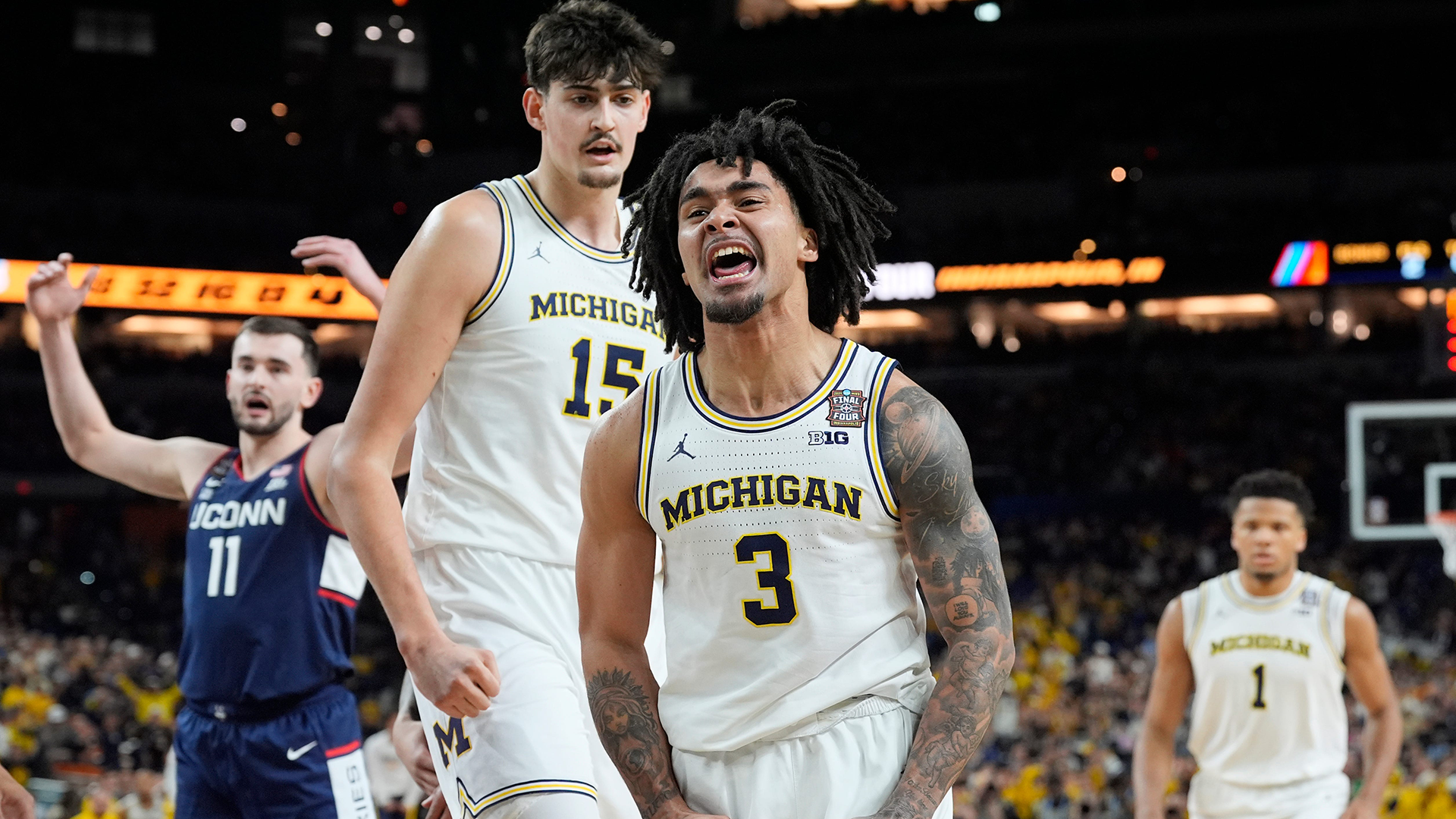
Michigan ended a 37-year championship drought Monday night, defeating UConn 69-63 at Lucas Oil Stadium in Indianapolis to claim the 2026 NCAA Division I men's basketball title — the program's first national championship since 1989 and the Big Ten conference's first since Michigan State won it all in 2000.
Point guard Elliot Cadeau led the Wolverines with a game-high 19 points and was named the Final Four's Most Outstanding Player. Despite a slow shooting start — Michigan missed its first nine attempts from beyond the three-point arc — Cadeau delivered the moment that swung the game for good, drilling the Wolverines' first three-pointer to give Michigan its first double-digit lead with 12 minutes and 56 seconds remaining. From that point, the Wolverines never looked back.
Michigan's victory was built on defense and a remarkably disciplined performance at the free throw line. The Wolverines made 25 of 28 free throws in the game, at one point connecting on more than 20 consecutive attempts. That efficiency at the stripe offset an otherwise cold shooting night from distance; Michigan finished just 2-for-15 from three-point range. UConn, meanwhile, went a staggering 0-for-11 from beyond the arc in the second half after entering the game as one of the tournament's best three-point shooting teams. The Huskies finished 9-for-33 from deep for the night.
"We knew it was going to be a grind," Michigan head coach Dusty May said after cutting down the nets. "These guys believed in each other from day one and never panicked. That's what champions do." Cadeau, who transferred to Michigan ahead of the season, capped a remarkable tournament run by carrying his team on his back in its biggest moments.
For UConn, the loss denied the program a third national championship in four seasons after its back-to-back titles in 2024 and 2025. Forward Alex Karaban, playing his final college game, went just 2-for-13 from three-point range over the tournament's final two games. Solo Ball, battling an ankle injury from Saturday's semifinal, was limited to 17 minutes of action. Despite those limitations, UConn stayed within striking distance throughout, trailing by only six points with under five minutes to play before Michigan's free throw precision sealed the result.
Michigan finished the season 37-3, winning each of its first five NCAA tournament games by double digits — the seventh-highest tournament winning margin ever recorded for a national champion. The Wolverines' 541 total tournament points rank second among all championship teams, trailing only UNLV's legendary 1990 run.
Perhaps the most remarkable aspect of the title was its construction. Michigan's starting five is composed entirely of transfer portal additions, making the Wolverines the first team in NCAA history to win a championship with an all-transfer starting lineup — a milestone that underscores the transformative effect of the transfer portal on college basketball recruiting in the post-NIL era. Yaxel Lendeborg contributed 13 points despite playing through significant physical discomfort following a knee contusion suffered in the semifinal. His performance earned widespread praise from coaches and analysts who called it one of the gutsiest efforts in recent title game memory.
For Michigan fans who endured decades of near-misses, injuries, coaching changes, and program upheaval, Monday's championship delivered a catharsis that transcended sports. The 1989 title team, led by Glen Rice, had produced the last banner to hang in Ann Arbor. Now, 37 years later, a new generation of Wolverines — built entirely through the transfer portal, united under a first-year head coach, and dismissed by most preseason forecasters — has written a new chapter in program history. It is, by any measure, one of the most improbable championship stories in the modern era of college basketball.