LaGuardia Crash Leaves Two Pilots Dead After Fire Truck Collision
Air Canada Express jet collided with emergency vehicle on Sunday night, injuring dozens of passengers in deadly ground accident.

Two pilots were killed and dozens of passengers injured on Sunday night when an Air Canada Express regional jet collided with a fire truck while taxiing at LaGuardia Airport in New York, authorities said. The accident, one of the deadliest ground incidents at an American airport in recent memory, has prompted a major investigation into airport safety procedures.
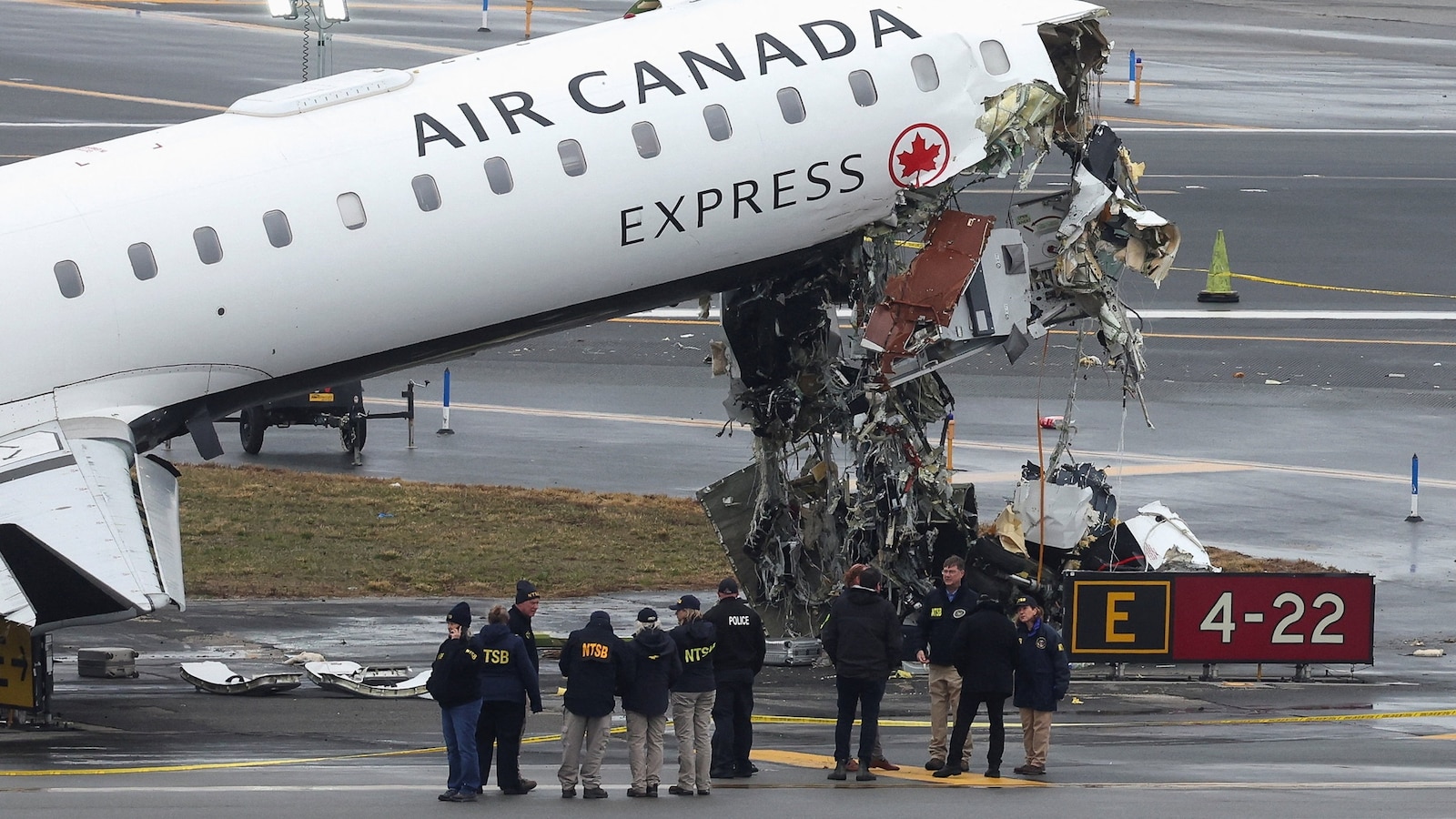
The collision occurred at approximately 9:15 p.m. as the Bombardier CRJ-900 aircraft, operating as Air Canada Express Flight 8637 from Montreal, was being directed along a taxiway toward its assigned gate after an otherwise routine landing. A Port Authority fire truck crossed the taxiway and struck the aircraft's cockpit section, according to preliminary information from the National Transportation Safety Board.
Both the captain and first officer were killed in the impact. The cockpit area of the regional jet sustained catastrophic structural damage, while the passenger cabin remained largely intact. Of the 73 passengers on board, 28 were transported to local hospitals with injuries ranging from minor to moderate. No passengers suffered life-threatening injuries, and all have since been released or are expected to recover fully.
The fire truck had been responding to an alarm that was later determined to be a false alert at a maintenance facility on the airport grounds. Investigators are examining why the vehicle was crossing an active taxiway and whether proper communication protocols were followed between the fire crew, ground control, and the aircraft.
The NTSB dispatched a full Go Team to the scene within hours of the accident, and the investigation is expected to take months to complete. Board member Michael Graham, who is leading the probe, said investigators would examine every aspect of the incident including airport ground traffic management, communications records, vehicle and aircraft speeds, and visibility conditions.
LaGuardia Airport has long been known for its constrained layout and complex ground traffic patterns. The airport, which sits on a relatively small footprint in the Queens borough of New York City, handles hundreds of flights daily through a network of taxiways that intersect with service roads used by emergency vehicles, fuel trucks, and other ground equipment.
Pilots and aviation safety advocates have previously raised concerns about the potential for conflicts between aircraft and ground vehicles at busy airports. The Aviation Safety Reporting System, a voluntary reporting program operated by NASA, contains numerous accounts of near-miss incidents involving aircraft and ground vehicles at airports across the country.
Air Canada Express, which is operated by Jazz Aviation under a regional partnership with Air Canada, grounded all CRJ-900 flights for inspection as a precautionary measure, though there was no initial indication that any mechanical issue with the aircraft contributed to the accident. The airline said it was cooperating fully with investigators.
The Port Authority of New York and New Jersey, which operates LaGuardia, said it had implemented enhanced ground traffic procedures in the wake of the accident, including additional requirements for coordination between emergency vehicles and air traffic control when crossing active taxiways.
Transportation Secretary Sean Duffy said the Department of Transportation would conduct its own review of airport ground safety procedures nationwide, separate from the NTSB investigation. He said the incident raised important questions about whether current safety standards adequately addressed the risk of vehicle-aircraft conflicts.
The Federal Aviation Administration issued a safety bulletin to all U.S. airports reminding operators of existing protocols for coordinating ground vehicle movements near active taxiways and runways. The bulletin urged airports to review their procedures and ensure all personnel were properly trained.