Kurti's Party Wins Kosovo's Third Election in 18 Months, but Falls Short of Majority
Prime Minister Albin Kurti's Vetevendosje took about 43% of the vote on record-low turnout, leaving the Balkan nation still mired in the political deadlock that has stalled its push toward the EU and NATO.
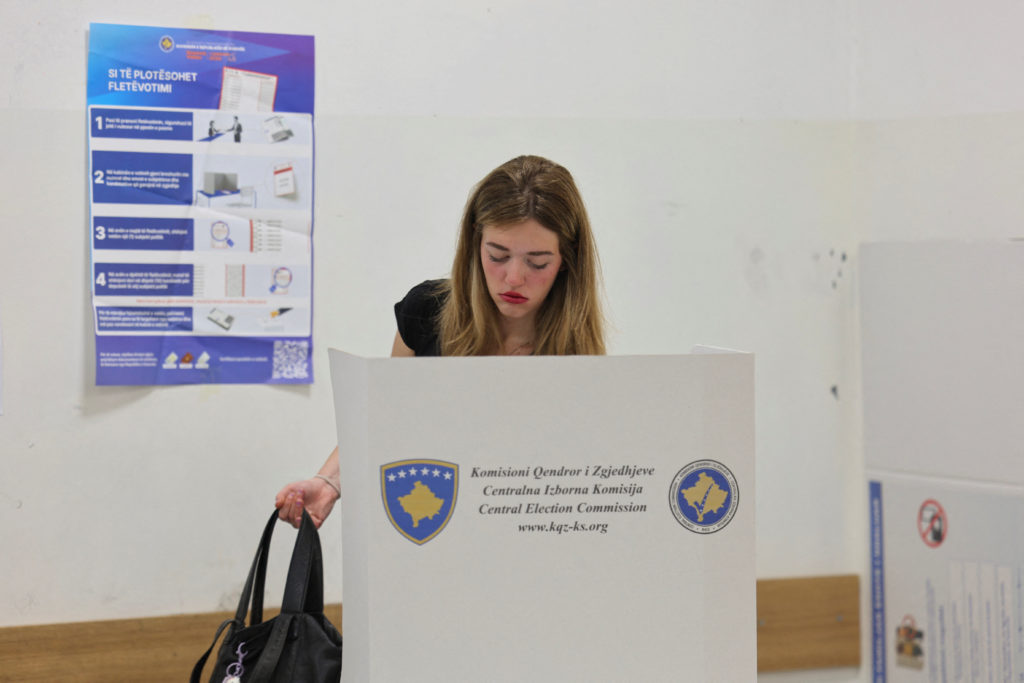
Kosovars returned to the polls on Sunday for the third parliamentary election in roughly 18 months, and initial results showed Prime Minister Albin Kurti's left-nationalist Vetevendosje party again finishing first — yet still short of the majority needed to break a prolonged political crisis. With nearly 90% of ballots counted, Vetevendosje had won about 43% of the vote.
The opposition trailed well behind. The Democratic Party of Kosovo (PDK) took roughly 21.7% and the Democratic League of Kosovo (LDK) about 18%, according to the preliminary tally. The final result still hinges in part on some 100,000 votes cast by Kosovars living abroad, which can shift seat allocations at the margins and complicate any coalition arithmetic.
Turnout told its own story of public exhaustion. Just 36.3% of eligible voters cast ballots on Sunday, down from nearly 45% in the previous election in December. Analysts read the slump as a sign of deepening disillusionment with a political class that has kept the small Balkan country lurching from one snap vote to the next without producing a stable government.
The repeated elections trace back to a months-long deadlock in which rival parties failed to agree on a candidate for president, paralyzing the assembly and forcing fresh polls. Each contest has returned a similarly fragmented parliament, and Sunday's outcome — a Kurti plurality without a governing majority — threatens to extend rather than resolve the impasse unless he can assemble a coalition or win over enough smaller parties and minority representatives.
The stakes reach beyond domestic politics. Kosovo, which declared independence from Serbia in 2008 and is still not recognized by Belgrade or several EU members, is seeking to advance its bids for European Union membership and NATO partnership. Continued instability and the strained, EU-brokered dialogue with Serbia have slowed that progress. For voters weary of returning to the ballot box, the central question after Sunday is whether their leaders can finally form a durable government — or whether Kosovo is headed for yet another round of paralysis.