Iran Drones Hit Kuwait's Largest Oil Refinery for Second Day, Setting Gulf Energy War Ablaze
Iranian drones struck the Mina Al-Ahmadi refinery — processing 730,000 barrels per day — for the second consecutive day as explosions lit the sky over Dubai during Eid, confirming Iran's pivot to systematically destroying Gulf energy infrastructure.
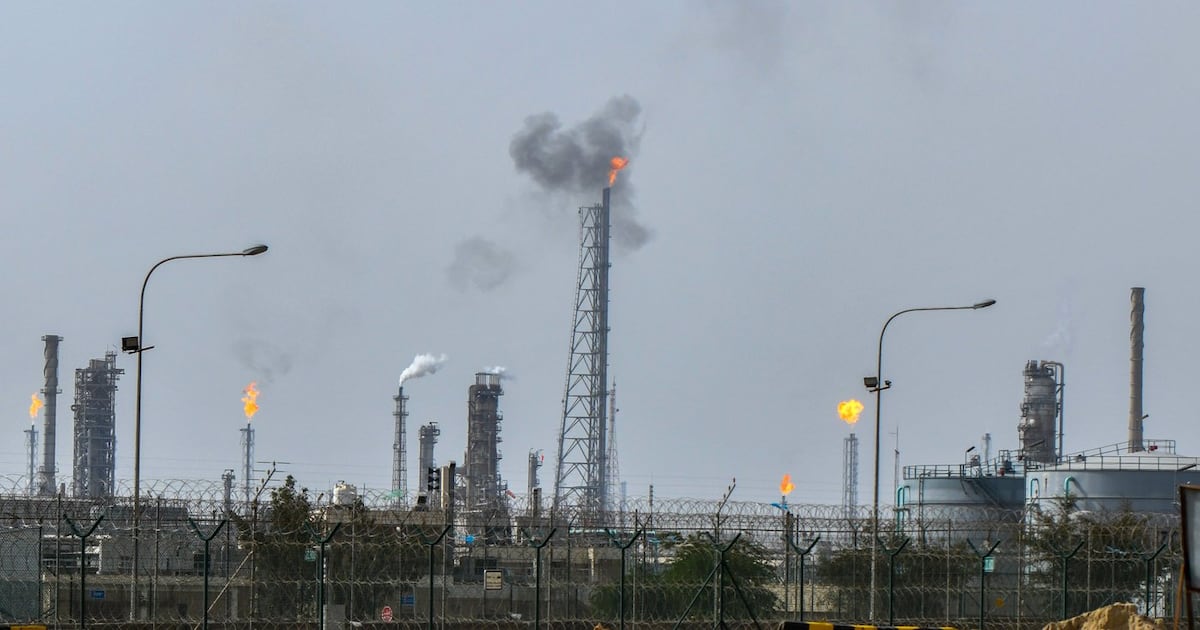
Iranian drones struck Kuwait's Mina Al-Ahmadi oil refinery for the second consecutive day on Friday, setting fire to multiple production units at the facility and marking a significant escalation in Iran's campaign to target Gulf energy infrastructure and extract an economic price from Arab nations that have provided logistical support to U.S. and Israeli military operations.
The refinery, which sits on the coast of Kuwait Bay about 30 miles south of Kuwait City, is the country's largest and can process approximately 730,000 barrels of crude oil per day — about 45 percent of Kuwait's total refining capacity. Kuwait's state oil company, Kuwait Petroleum Corporation, confirmed that drone impacts sparked fires in at least three production units. Firefighters were working to contain the blazes. Production was suspended, and an indefinite timeline was given for repairs.
The attack is part of a widening Iranian strategy. In the three weeks since U.S. and Israeli forces launched strikes against Iran on February 28, Tehran has shifted from retaliating directly against Israeli and American military targets — a campaign that has proven costly and largely unsuccessful against superior air defense systems — toward attacking the economic infrastructure of Gulf states that have tacitly or overtly supported the anti-Iran coalition. The logic is straightforward: by burning refineries, pipelines, and LNG terminals, Iran can drive up global energy prices, strain the economies of Gulf allies, and create political pressure on Washington to negotiate.
That strategy is working, at least partially. The International Energy Agency said Friday that the current supply disruption represents the largest in the history of the global oil market, exceeding the combined impact of the 1973 Arab oil embargo and the 1979 Iranian Revolution. Oil production from Kuwait, Iraq, Saudi Arabia, and the UAE collectively fell by at least 10 million barrels per day as of March 12, as companies took precautionary measures amid the attacks. Brent crude eased slightly to $108 per barrel on Friday after Trump's comments about winding down military operations, but analysts said the market remains in an acute state of concern.
Also on Friday, UAE air defenses shot down multiple Iranian drones over Dubai — a striking scene given that the city was in the midst of Eid Al-Fitr celebrations. Explosions lit up the night sky over the Burj Khalifa district, sending panicked residents into the streets. The UAE government confirmed the interceptions and said there were no casualties and no significant infrastructure damage, but the psychological impact on one of the world's major financial hubs was considerable. Dubai International Airport briefly suspended operations to conduct threat assessments, stranding thousands of passengers.
Saudi Arabia's Eastern Province — home to the ARAMCO facilities that produce the bulk of Saudi crude — has been on the highest security alert since the conflict began, with the kingdom deploying Patriot missile batteries, F-15 fighter jets, and an unprecedented number of coastal patrol vessels. An earlier Iranian strike on a Saudi pipeline caused limited damage but demonstrated that even Saudi Arabia's hardened infrastructure is not fully immune.
Israel, meanwhile, conducted additional strikes on Tehran on Friday morning as Iranians marked Nowruz, the Persian New Year. Israeli Prime Minister Benjamin Netanyahu separately confirmed that his forces killed Ali Mohammad Naini, the spokesperson for Iran's Islamic Revolutionary Guard Corps, in a targeted strike Thursday night. "Iran's ability to threaten its neighbors and project power has been fundamentally degraded," Netanyahu said in a statement, though independent analysts noted that Iran's core military capability remains intact after three weeks of strikes.
The combination of energy infrastructure attacks and oil market disruption has drawn calls from the World Economic Forum, the International Monetary Fund, and several major central banks for an emergency diplomatic initiative to de-escalate the conflict before global energy markets suffer irreversible damage. So far, those calls have produced no tangible diplomatic movement.