Guinea Votes in First Parliamentary Elections Since 2021 Coup, but Low Turnout Fuels 'Electoral Farce' Claims
Nearly 7 million Guineans were called to choose a new National Assembly and local councils in a ballot meant to complete the return to constitutional rule under Gen. Mamadi Doumbouya — but many stayed home.
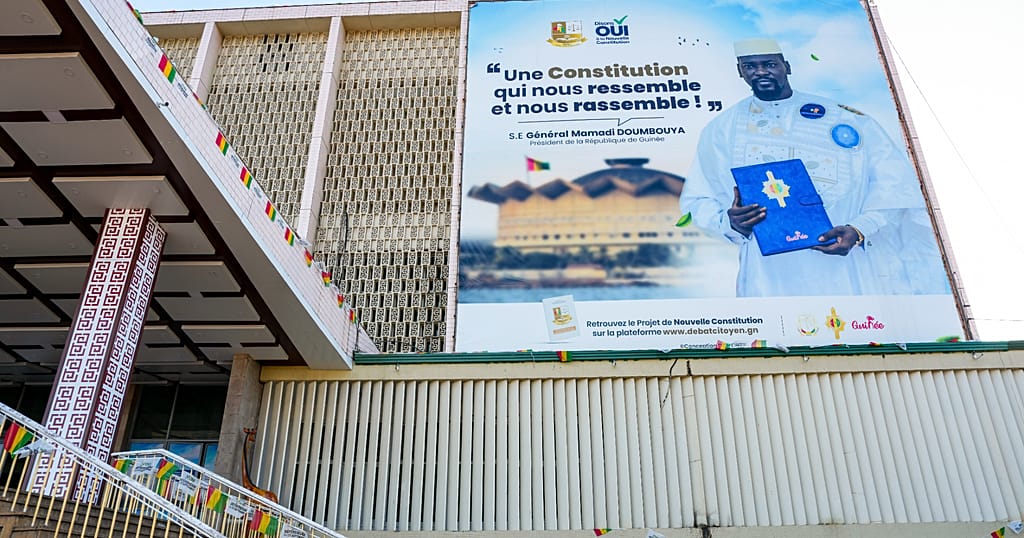
Vote counting was under way in Guinea after nearly 7 million people were called to the polls for legislative and municipal elections billed as the final step in the West African nation's long-delayed return to constitutional order. But low turnout and opposition cries of an "electoral farce" cast a shadow over the exercise.
The double ballot was held to fill the 147 seats of the country's future National Assembly as well as municipal councillors across Guinea's 375 local authorities. It came roughly five months after the presidential election of December 28, 2025, and was presented by authorities as completing the transition from military rule that began with the September 2021 coup led by Gen. Mamadi Doumbouya in the former French colony.
While the vote unfolded without major incident, observers reported sparse crowds at polling stations. Several analysts of Guinean political life attributed the weak participation partly to the timing — the election fell just days after Tabaski, the Muslim feast of sacrifice, which Guineans typically celebrate with family in their home villages. Many voters, they noted, may not yet have returned to the constituencies where they were registered.
Critics offered a harsher interpretation. Opposition figures and civil-society groups denounced what they called an "electoral farce," arguing that the process was engineered to entrench the power of the transitional authorities rather than to deliver a genuine democratic mandate. They pointed to the muted campaign and the absence of meaningful competition in many districts.
For Doumbouya, who consolidated control after seizing power nearly five years ago, the elections are meant to lend democratic legitimacy to a government born of a coup. International partners have pressed Guinea, like other Sahel and West African states that have experienced military takeovers, to restore civilian institutions and hold credible votes. The region has been rocked by a wave of coups over the past five years — in Mali, Burkina Faso, Niger and Guinea — that have strained relations with the West African bloc ECOWAS and drawn several juntas closer to Russia.
Doumbouya, a former French legionnaire who once commanded Guinea's elite special forces, has followed a familiar script: promising a swift handover, repeatedly extending the timeline, and ultimately running for and winning the presidency himself in the December vote. This week's parliamentary and local elections were cast as the capstone of that process, the moment Guinea formally exits transitional rule. Critics counter that a legislature elected amid apathy and boycotts will function as a rubber stamp rather than a check on a leader who already dominates the state.
Whether this week's ballot achieves that goal will depend heavily on the final turnout figures and on how opposition parties and outside observers judge the count. A National Assembly and local councils elected on a thin mandate could struggle to command authority, leaving Guinea's promised return to constitutional rule looking more like a formality than a genuine reset.