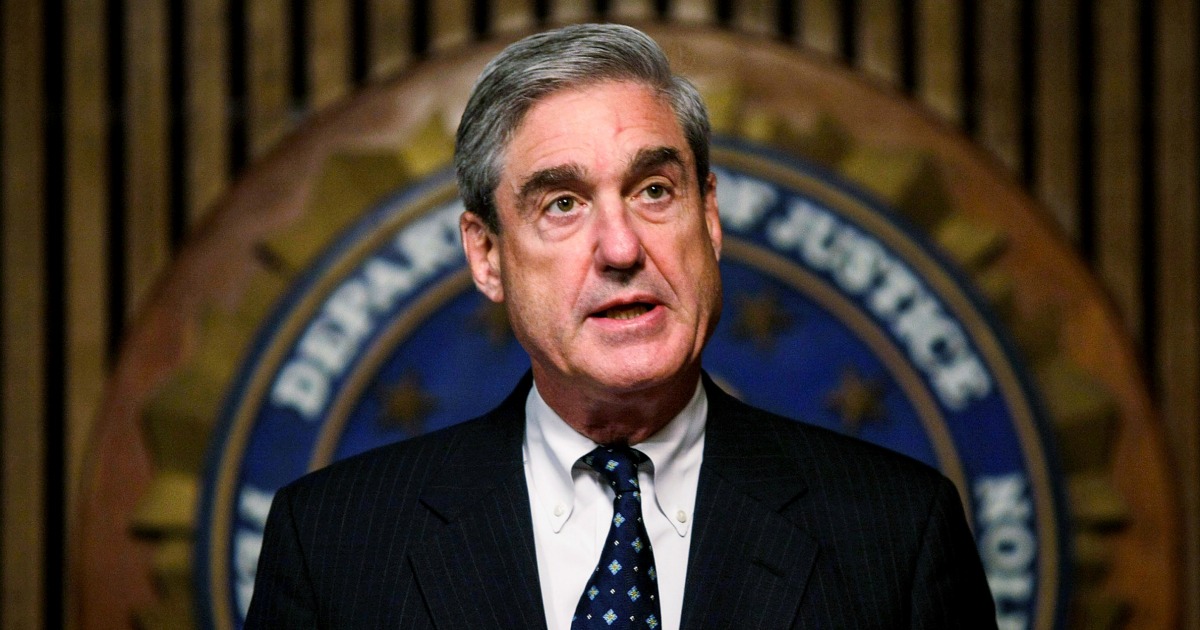
Former FBI Director Robert Mueller Dies at 81, Drew Trump's Ire After Russia Investigation
Mueller led the most significant FBI overhaul in history and later concluded Russia interfered in the 2016 election. Trump responded to his death saying 'Good, I'm glad.'

Robert S. Mueller III, the former FBI director who oversaw the bureau's transformation in the wake of the September 11 attacks and later led the investigation into Russian interference in the 2016 presidential election, died on Friday at the age of 81. His death was confirmed by his family, who said he passed away at his home in Washington after a period of declining health.
Mueller's career in public service spanned more than five decades, including combat service in Vietnam, a long tenure as a federal prosecutor, and twelve years leading the FBI through one of the most consequential periods in its history. Appointed as FBI director by President George W. Bush just one week before the September 11 attacks, Mueller presided over the most significant restructuring of the bureau in its history, shifting its primary focus from traditional law enforcement to counterterrorism and intelligence gathering.
His tenure at the FBI, which was extended by two years under President Barack Obama with bipartisan congressional approval, was widely regarded as a period of institutional modernization and professionalization. Mueller imposed strict ethical standards, expanded the bureau's technological capabilities, and built relationships with international intelligence agencies that proved critical in disrupting terrorist plots.
Mueller became a household name in 2017 when he was appointed as special counsel to investigate Russian interference in the 2016 presidential election and possible coordination between the Russian government and the Trump campaign. The investigation, which lasted nearly two years, concluded that Russia had engaged in a systematic effort to interfere in the election through social media manipulation and the hacking of Democratic Party communications. On the question of coordination with the Trump campaign, the report stated that the investigation did not establish that members of the campaign conspired with Russia, while noting that it could not fully resolve the question due to encrypted communications, deleted messages, and other evidentiary gaps.
The report's treatment of potential obstruction of justice by President Trump was particularly consequential. Mueller documented ten episodes in which Trump's conduct raised obstruction concerns but declined to make a traditional prosecutorial judgment, citing a longstanding Justice Department policy against indicting a sitting president. The decision drew criticism from both sides: Democrats said Mueller should have been more explicit in his conclusions, while Republicans argued that the investigation itself was unjustified.
Trump's response to Mueller's death was characteristically blunt. The president was quoted as saying he was glad about the news, a reaction that drew condemnation from legal professionals and former law enforcement officials across the political spectrum. Former attorneys general from both parties issued statements praising Mueller's dedication to public service and the rule of law.
Mueller's legacy extends well beyond the special counsel investigation that dominated his final years in public life. As FBI director, he navigated the bureau through the anthrax attacks of 2001, the Boston Marathon bombing investigation, and the evolution of domestic terrorism as a major security threat. His insistence on institutional integrity and nonpartisan professionalism earned him respect from career FBI agents who worked under his leadership.
Born in New York City in 1944, Mueller attended Princeton University before enlisting in the Marine Corps, where he earned a Bronze Star, a Purple Heart, and other decorations for his service in Vietnam. He later earned a law degree from the University of Virginia and spent years as a federal prosecutor before being appointed FBI director in 2001.
Mueller is survived by his wife, Ann, and their two daughters. Memorial services were being planned in Washington, with former colleagues describing him as a man of uncommon integrity who dedicated his life to public service.