Chinese Tanker Defies US Naval Blockade, Sails Through Strait of Hormuz as Beijing Calls Move 'Dangerous'
In a direct challenge to President Trump, the sanctioned vessel Rich Starry became the first ship to breach the American naval blockade of Iranian ports, raising fears of a US-China confrontation at the world's most critical oil chokepoint.
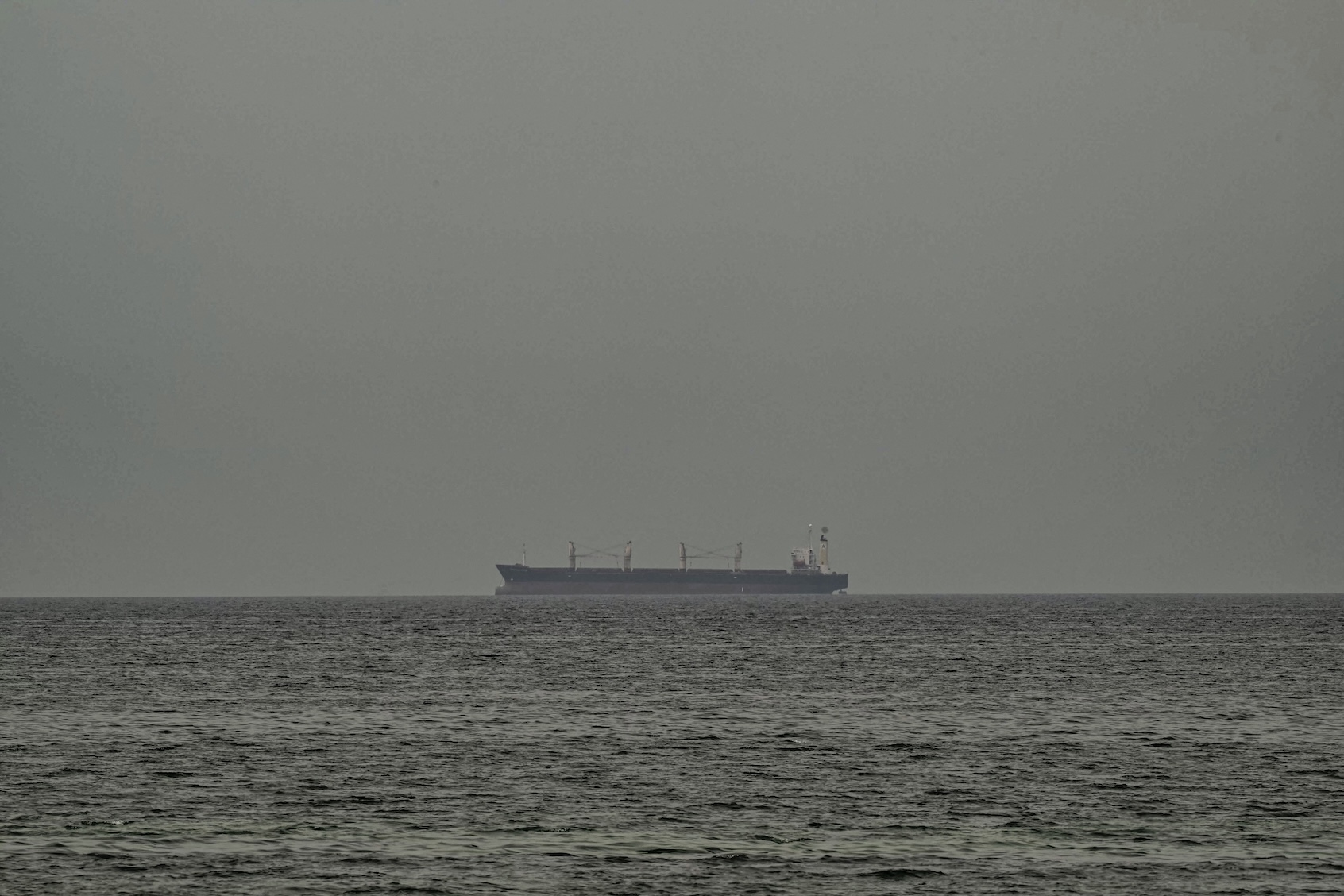
A Chinese-owned tanker became the first vessel to defy the United States' new naval blockade of Iranian ports on Tuesday, sailing through the Strait of Hormuz in a direct challenge to President Trump and raising the prospect of a confrontation between the world's two largest economies at the world's most critical oil chokepoint.
The medium-range tanker Rich Starry, owned by Shanghai Xuanrun Shipping Co. and flying a Malawi flag, initially appeared to reverse course after the blockade took effect Monday at 10 a.m. Eastern time, then completed its transit of the strait on Tuesday. The vessel, carrying roughly 250,000 barrels of methanol and listed as having departed from Hamriyah in the United Arab Emirates, is under U.S. Treasury sanctions imposed in March 2023 for prior dealings with Iran. A second sanctioned vessel, the tanker Elpis, was also tracked by MarineTraffic passing through the waterway.
China's Foreign Ministry condemned the blockade in stark terms. Spokesperson Guo Jiakun said the move "will only aggravate confrontation, escalate tension, undermine the already fragile ceasefire and further jeopardize safe passage through the Strait of Hormuz," calling it "a dangerous and irresponsible move." Beijing has long supported Tehran diplomatically and financially, and stands as Iran's largest crude oil customer. According to financial firm Nomura, roughly 38 percent of oil and 23 percent of liquefied natural gas that typically transits the strait is bound for Chinese ports — approximately half of China's seaborne oil supply.
The blockade was imposed after weekend peace talks in Islamabad collapsed without a deal, marking a significant escalation in the six-week-old conflict. U.S. Central Command announced Monday that all vessels entering or departing Iranian ports without authorization are subject to interception, diversion, and capture. Within 36 hours, CENTCOM said the operation was fully implemented, with more than 10,000 service members, a dozen warships, and over 100 surveillance and fighter aircraft engaged in enforcement. Six ships complied with U.S. directives and turned back; the Rich Starry and Elpis were the apparent exceptions.
U.S. officials gave conflicting accounts of the incident. CENTCOM initially said no ships had breached the blockade in the first 24 hours; shipping data reported by Reuters and MarineTraffic suggested otherwise. The discrepancy underscores the difficulty of enforcing a blockade in one of the world's busiest waterways without triggering incidents that could escalate quickly.
The Strait of Hormuz is the transit route for roughly 20 million barrels of oil per day and one-fifth of global LNG shipments. China's Defense Minister Dong Jun stated that the Strait of Hormuz is open to China, signaling Beijing's intent to maintain trade flows regardless of American naval pressure. Analysts noted that the Hormuz blockade is as much about China as Iran, with Trump's primary goal appearing to be pressuring Beijing to use its leverage over Tehran to secure a permanent ceasefire and end Iran's nuclear enrichment program.
The U.S. has proposed a 20-year moratorium on Iranian enrichment; Iran has countered with a five-year pause, and new talks may resume as early as this week in Pakistan. But the fundamental dynamic — with a Chinese vessel having tested the blockade and Beijing publicly declaring the strait open to its shipping — represents a qualitative escalation of the crisis. Any direct confrontation between U.S. and Chinese naval forces, even a minor boarding or interception, would carry implications far beyond the immediate Iran standoff.
The International Monetary Fund on Tuesday released its April World Economic Outlook cutting global growth projections to 3.1 percent for 2026, citing the Iran conflict as a key driver of higher energy prices and reduced trade. Crude oil prices, which surged to $104 per barrel Monday, pulled back slightly Tuesday on hopes of resumed talks. But the prospect of a prolonged US-China standoff over the strait threatens to deepen one of the most severe global energy crises since the 1970s.