WestJet's 4,400 Flight Attendants Walked Out Over Unpaid Ground Work, Grounding More Than 300 Flights
The strike hit Canada on a three-day holiday weekend and shut down the airline's entire Boeing 737 and 787 schedule. At issue is whether time spent working on the ground counts as work.
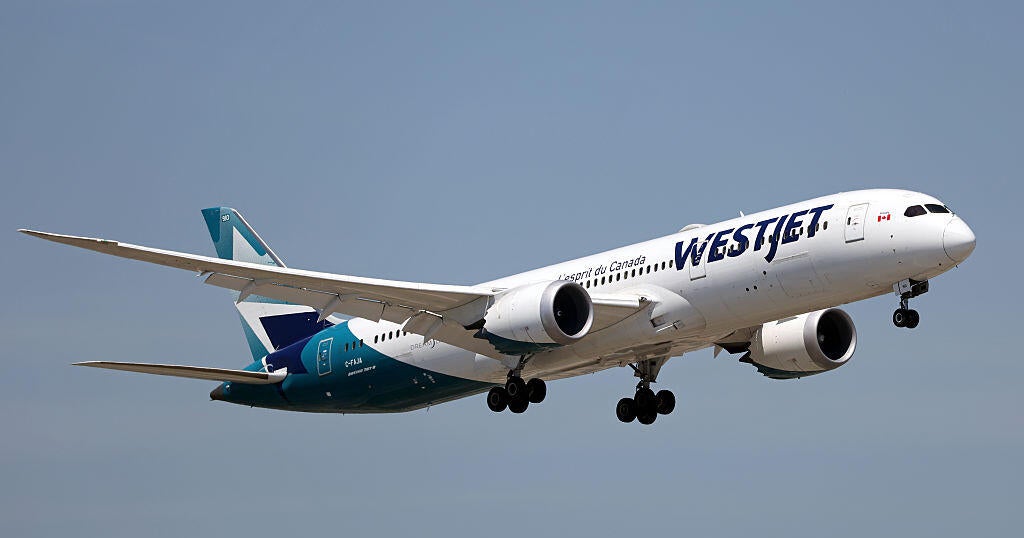
WestJet's 4,400 flight attendants walked off the job on Sunday, Aug. 2, stranding travelers across Canada at the peak of a three-day holiday weekend and forcing the cancellation of more than 300 flights by early in the day.
The stoppage took out the airline's entire mainline operation. Every scheduled Boeing 737 and 787 flight was affected — the aircraft that carry the overwhelming majority of WestJet's passengers and all of its long-haul routes. Flights operated by WestJet Encore, the regional subsidiary flying De Havilland Q400 turboprops, continued running, as did flights sold by WestJet but operated by code-share partners. For travelers, that distinction mattered little: the surviving routes are short regional hops that cannot absorb mainline demand.
The dispute is not primarily about hourly wages. It centers on a question that has become the defining labor fight in North American aviation: whether flight attendants are paid for the hours they work on the ground. Cabin crew spend substantial time boarding passengers, running safety checks, handling delays and sitting through turnarounds — work performed before the aircraft door closes. The Canadian Union of Public Employees, which represents the WestJet crews, argues that a significant share of that ground time goes uncompensated.
WestJet disputes the characterization. The airline says its crews are paid through a "credit hour" system rather than a straight hourly rate, and that the credit-hour structure is designed to fold ground duties into overall compensation rather than leave them unpaid. Unions across the industry have attacked that model as an accounting device that obscures how many hours are actually worked, and several U.S. carriers have moved toward boarding pay in recent contracts under exactly that pressure.
Chief Executive Alexis von Hoensbroech said the company had gone further than any Canadian carrier. "We presented a proposal that would have set a new standard for cabin crew in Canada," he said. The union's response was blunt. WestJet's offer "did not go far enough," said union president Alia Hussain.
WestJet is Canada's second-largest airline after Air Canada, and its network is heavily concentrated in Western Canada, where in many markets it is the dominant or only carrier. That concentration magnifies the disruption: passengers on affected routes often have no realistic alternative airline to rebook onto, and rival carriers have limited spare capacity in the middle of the summer peak.
The walkout follows a run of aggressive contract fights among North American cabin crews. Air Canada's flight attendants struck in 2025 over the same ground-pay question, and United Airlines flight attendants ratified a contract in May with raises of 31%. Each settlement has raised the benchmark the next union brings to the table.
Originally reported by CBS News.