Ukraine Hurls Largest-Ever Drone Swarm at Moscow, Killing Four and Setting Fire at Capital Oil Refinery
Russia's defense ministry says 556 drones were destroyed overnight as Volodymyr Zelensky calls the strike 'entirely justified,' adding pressure on Kremlin air defenses.
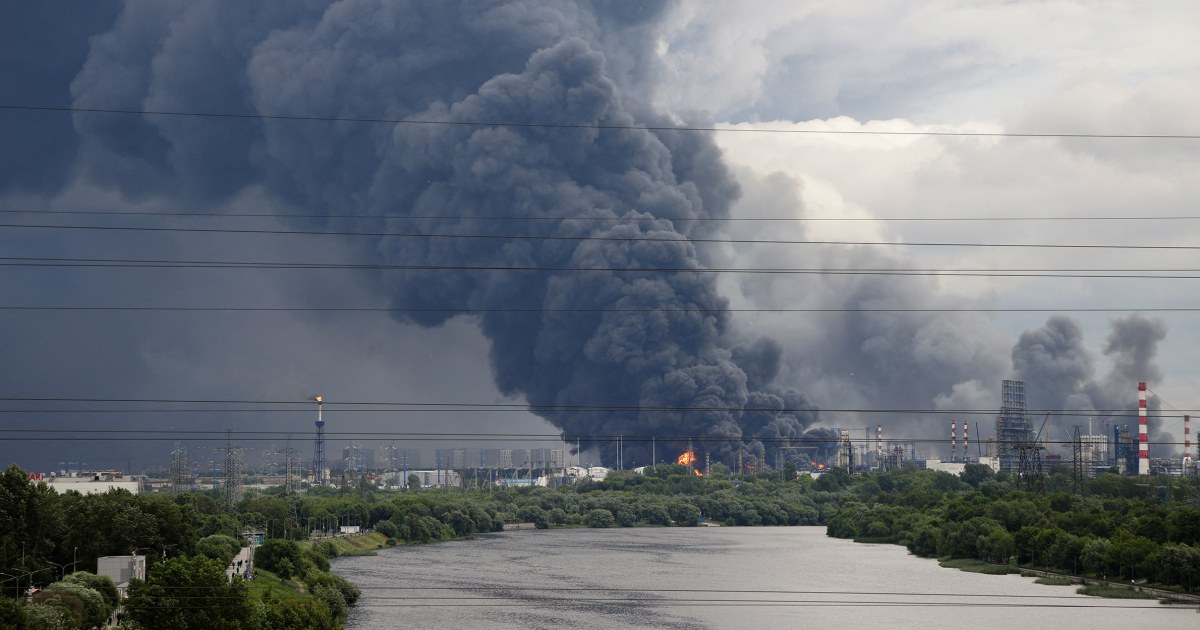
Ukraine launched one of its largest long-range drone attacks of the war Saturday night and into Sunday, sending swarms toward the Russian capital that killed at least four people, wounded 12 and ignited an unspecified fire near a Moscow oil refinery, according to Russian regional officials and a statement from the Russian defense ministry. The Russian defense ministry said Sunday morning that air-defense crews destroyed 556 drones overnight, including 81 inbound toward Moscow, and by midday local time the figure had climbed past 1,000 drones intercepted or jammed across Russian territory in 24 hours.
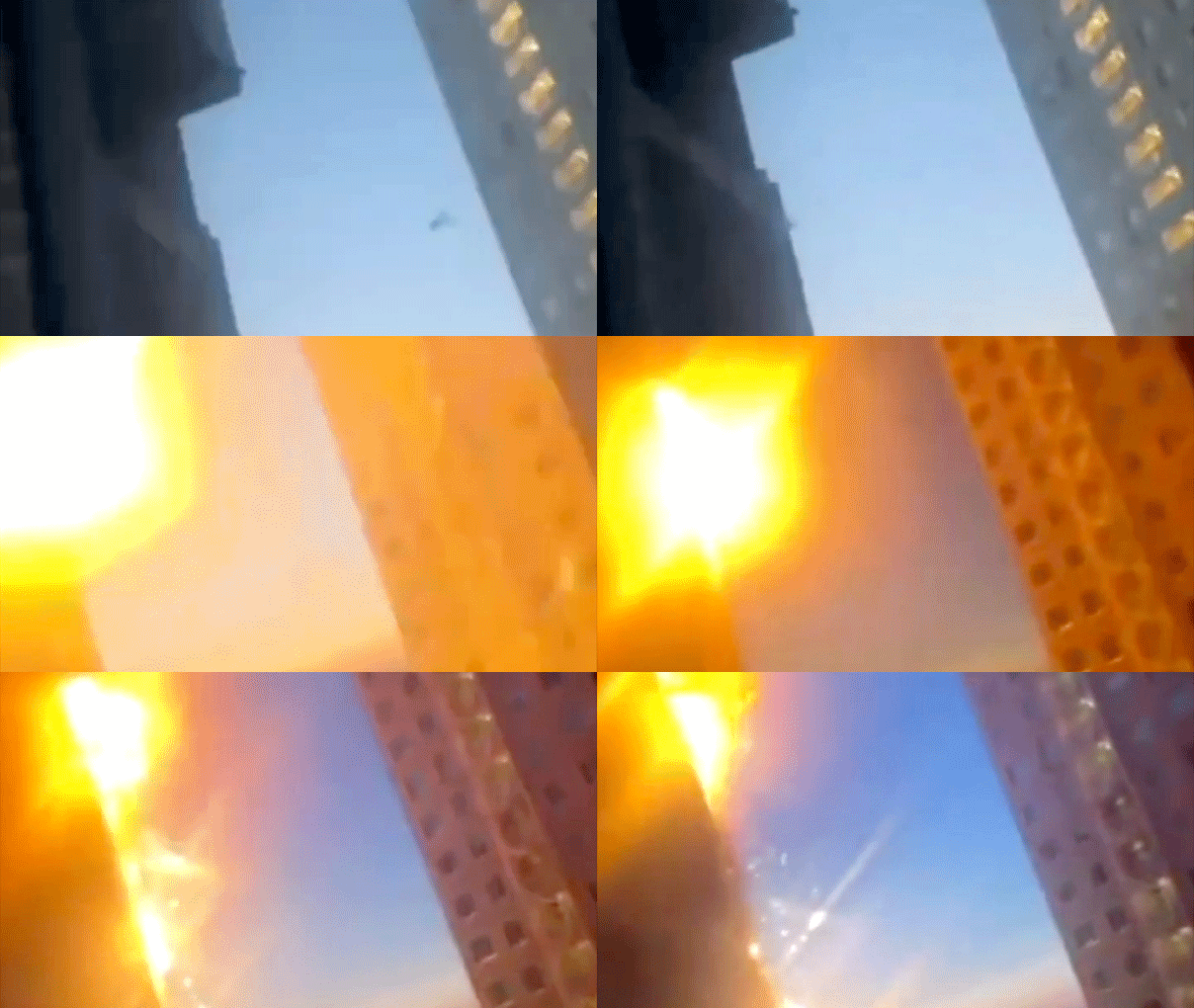
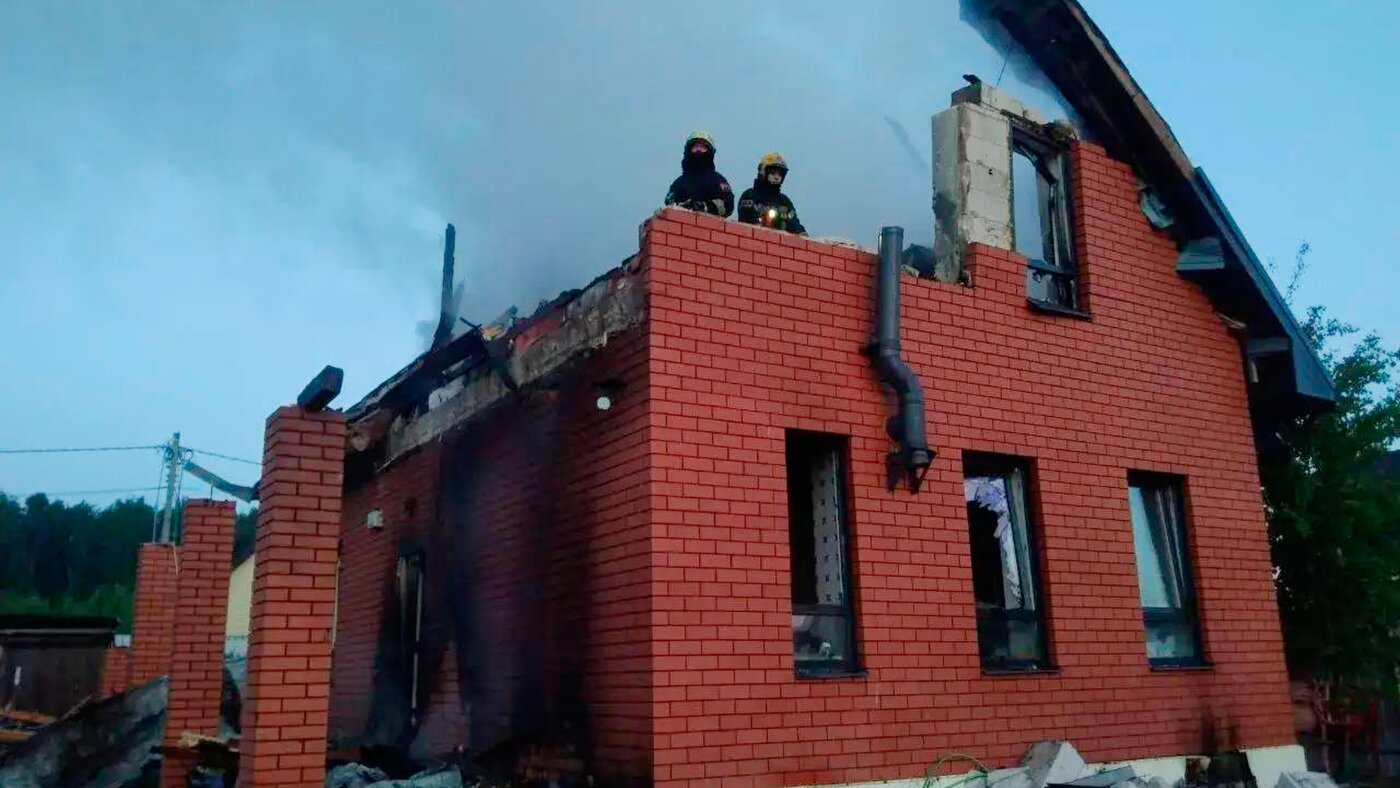
In Khimki, a city of 250,000 directly northwest of Moscow, a woman was killed when a drone struck her residence shortly after midnight, regional governor Andrei Vorobyov said on his Telegram channel. Two men died in the village of Pogorelki, roughly 10 kilometers north of the capital, when debris from a downed drone fell on a residential road. A fourth man was killed when a drone struck a truck in Belgorod region near the Ukrainian border. The bulk of injuries — 12 people — occurred at the entrance to the Moscow Oil Refinery in the city's southeast, where security cameras captured a fireball that lit up the predawn sky. Russian authorities did not detail damage to the refinery, the largest in the Moscow region.
Ukrainian President Volodymyr Zelensky confirmed the strikes Sunday morning in his nightly video address, saying they were "entirely justified" and a direct response to ongoing Russian missile attacks on Ukrainian cities. "Russia must understand that the war it chose has consequences inside its own borders," Zelensky said. Ukrainian military intelligence officials, speaking on condition of anonymity, said the operation involved more than 1,500 long-range strike drones produced domestically over the past 18 months, primarily the Liutyi and AN-196 "Lyutyi-Bober" platforms that have a range of more than 1,000 kilometers and can carry payloads of up to 75 kilograms.
The attack, the largest aimed at Moscow itself since Russia began its full-scale invasion on February 24, 2022, comes at a moment when the war has otherwise become a grinding stalemate along the eastern Donbas front. Western military analysts at the Institute for the Study of War said the swarm appeared designed to overwhelm Russia's S-400 and Pantsir-S1 air-defense batteries, which have struggled to track and intercept the slow, low-altitude wooden-bodied drones that Ukraine has begun deploying in mass formations. The strikes also delivered a political message ahead of European Union foreign-ministers talks in Brussels on Tuesday, where Kyiv has pressed for additional Patriot missile-defense batteries.
Moscow residents reported a night of disrupted sleep with air-defense systems firing audibly across multiple districts and three of the capital's four major airports — Vnukovo, Domodedovo and Sheremetyevo — temporarily suspending flights. Bloomberg reported that Russian commodities markets opened sharply weaker Monday on concerns that further attacks on energy infrastructure could disrupt diesel exports. Zelensky said Ukraine intends to expand drone production capacity to four million units in 2026, more than double the 2025 output, with the Lviv-based Skyeton consortium and a network of dispersed manufacturers in central Ukraine driving the expansion.