Robot Breaks Human Half-Marathon Record in Stunning Athletic Feat
An advanced running robot completed the 21.1-kilometer distance faster than any human ever has. The achievement marks a new milestone in robotics and artificial athleticism.
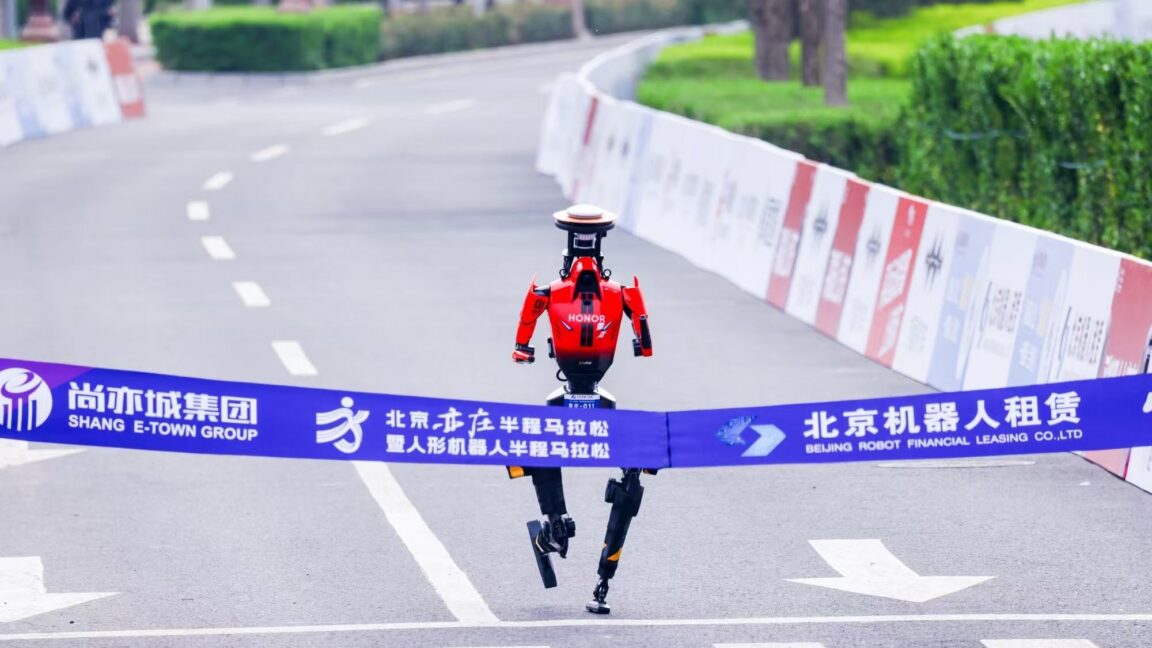
A sophisticated running robot has shattered human half-marathon performance records, completing the 21.1-kilometer distance in a time that surpasses the best human athletes in the sport. The robotic achievement represents a significant milestone in the development of advanced locomotion systems and demonstrates the rapidly evolving capabilities of artificial athletic performance. The robot's success highlights the potential for machines to excel in activities traditionally dominated by human physical prowess.
The current human half-marathon world record stands as one of the most prestigious achievements in distance running, representing the pinnacle of human endurance and speed over the challenging 13.1-mile distance. Elite human runners typically complete the distance in slightly over one hour, with the world record requiring years of training, optimal conditions, and exceptional genetic capabilities. The fact that a robot has now exceeded this benchmark suggests significant advances in mechanical engineering, power systems, and locomotion algorithms.
Robotic running systems face unique engineering challenges that differ significantly from human biomechanics. Unlike humans, who rely on complex muscle systems, flexible joints, and sophisticated neural control mechanisms, robots must achieve efficient locomotion through mechanical components, motors, and computer algorithms. The successful robot likely incorporates advanced materials, precision control systems, and optimized gait patterns that allow it to maintain high speeds over extended distances while managing energy consumption and mechanical stress.
The achievement has significant implications for robotics research and practical applications beyond athletic performance. Robots capable of efficient long-distance running could prove valuable for search and rescue operations, military applications, delivery services, and exploration missions where sustained mobility over varied terrain is essential. The locomotion technologies developed for high-performance running could also benefit other robotic systems requiring agility, endurance, and speed.
While the robot's record-breaking performance represents a triumph of engineering, it also raises questions about the future relationship between human and artificial athletic capabilities. As robots continue to exceed human performance in various physical tasks, sports organizations and society more broadly may need to consider how to preserve the value and meaning of human athletic achievement. The development nevertheless stands as a testament to the rapid advancement of robotics technology and its potential to push beyond traditional limitations of mechanical performance.