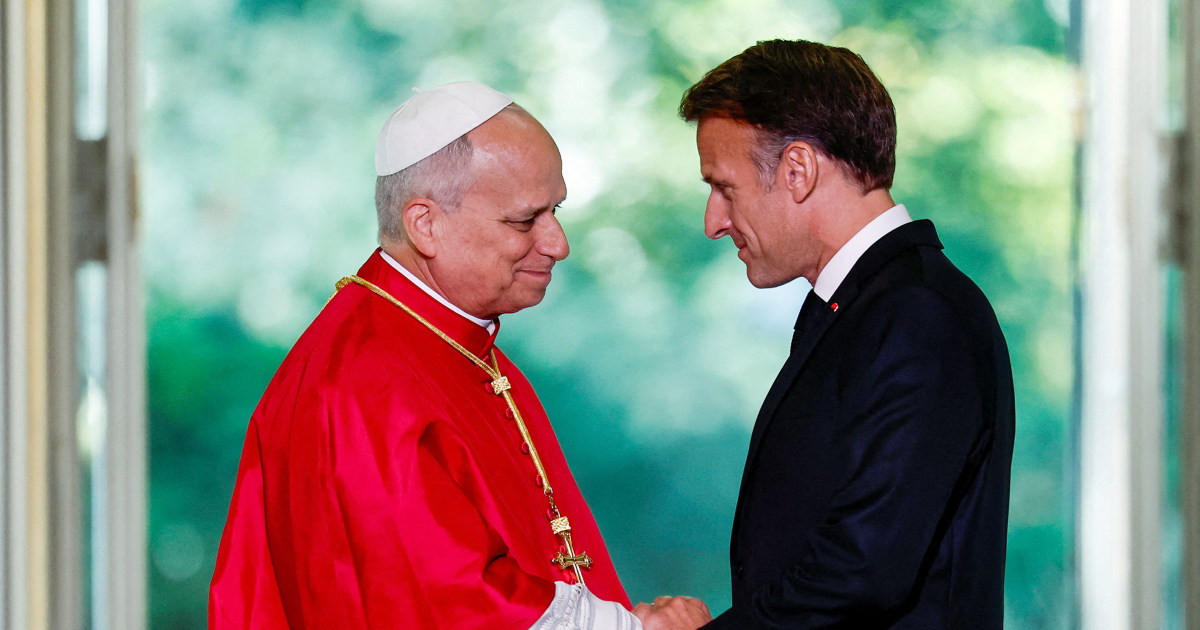
Pope Leo XIV Signs First Encyclical, 'Magnifica Humanitas,' Confronting AI as Defining Moral Crisis
Catholic Church's most consequential statement on technology in a century echoes 1891's 'Rerum Novarum' and calls for binding AI rules, mandatory labeling and protections for displaced workers.
Pope Leo XIV is preparing to release the first encyclical of his pontificate, a sweeping document on artificial intelligence titled "Magnifica Humanitas" — "Magnificent Humanity" — that the Vatican has positioned as the Catholic Church's most consequential statement on technology in more than a century. The encyclical, which the Holy See Press Office said the pope signed privately on Friday at his Castel Gandolfo residence, is expected to be published in late May after translations are completed.
The document deliberately echoes the legacy of Pope Leo XIII, whose 1891 encyclical "Rerum Novarum" recast Catholic teaching on labor, capital and the rights of workers in the depths of the Industrial Revolution. Leo XIV, the first American to lead the Roman Catholic Church, has spoken repeatedly of seeing artificial intelligence as the defining challenge of a new industrial revolution, and aides said he chose to sign "Magnifica Humanitas" exactly 135 years after his namesake signed "Rerum Novarum." The document was originally scheduled to appear on May 22, the precise anniversary, but Vatican officials said the rollout had been pushed back to allow more time for diplomatic outreach to governments and tech companies.
Drafts circulated to bishops in recent weeks describe AI as a technology that "must remain subordinate to the human person, never the other way around," and call for binding international regulation of generative models, mandatory labeling of AI-produced content, and strong protections for workers facing displacement. "By simulating human voices, faces, emotions and relationships, the systems known as artificial intelligence not only interfere with information ecosystems, but encroach upon the deepest level of communication — that of human relationships," the pope wrote in a companion message for the 2026 World Day of Social Communications, which the church marks on May 17. He went on to argue that "the challenge is not technological, but anthropological."
Leo XIV, the former Cardinal Robert Prevost of Chicago, has built his early papacy around the AI question. In February he instructed Catholic clergy worldwide to refrain from using generative AI to compose homilies or pursue engagement on social media. In April he hosted senior executives from Google, Microsoft, OpenAI and Anthropic at the Vatican for what aides described as a frank exchange of views on safety, copyright and labor displacement. "Content generated or manipulated by AI must be clearly labeled and distinguished from content created by humans," the pope has written. "Authorship, ownership and copyright must be protected."
Reaction inside Silicon Valley to the leaked drafts has been mixed. Several executives privately told reporters they welcomed a serious moral framework for the technology, while others warned that calls for binding international rules could fracture along jurisdictional lines. Italian Prime Minister Giorgia Meloni, who has made AI governance a central plank of her G7 agenda, praised the pope's intervention as "a moral compass at a moment when the technology is racing ahead of our institutions." Within the church, conservative cardinals have privately questioned whether the new pope is moving too quickly to commit the institution to a position on a technology that is still evolving, but advisers close to Leo XIV said he is unbowed: "He believes the church has a duty to speak now, before the world has been remade without us."