OpenAI Officially Takes Codex Beyond Coding with Revolutionary Plugins Feature
The new plugins system expands Codex capabilities beyond programming, closing the gap with competitors and opening new applications.
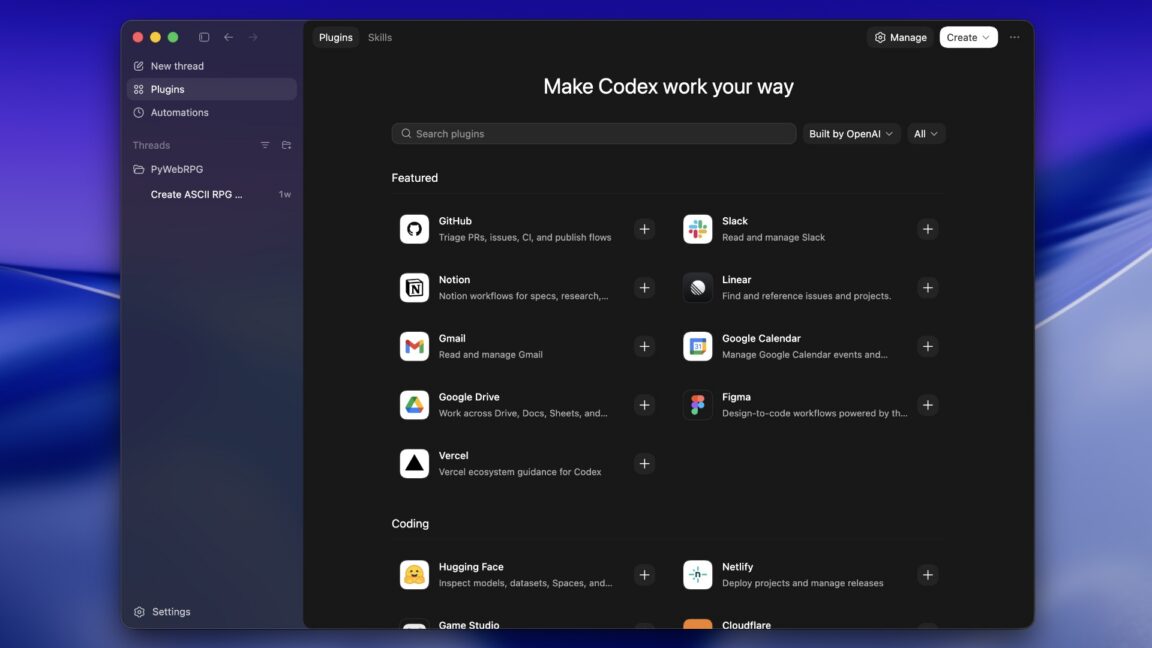
OpenAI announced Thursday that its Codex platform — originally launched as a system for generating and debugging software code — has been expanded into a general-purpose intelligent agent framework through a new plugins feature that allows Codex to connect with external services, execute multi-step workflows, and complete complex tasks across domains far beyond software development. The announcement positions Codex as a direct competitor to enterprise automation platforms and marks a significant strategic expansion of how OpenAI is commercializing its most capable models outside of the consumer ChatGPT product.
The plugins system allows businesses and developers to build connectors that give Codex access to internal databases, communication platforms, third-party APIs, and web services. In demonstrations provided to journalists and enterprise customers ahead of the announcement, Codex handled tasks including autonomously drafting and scheduling social media campaigns, preparing financial summaries from live data feeds, managing customer support ticket workflows, and coordinating multi-department project planning across calendar and document management tools. OpenAI chief operating officer Brad Lightcap described the expansion as transforming Codex 'from a specialized developer tool into an enterprise-grade intelligent layer that sits across your entire operation.'
The move intensifies competition in the rapidly evolving enterprise AI agent market, where Salesforce's Agentforce platform, Microsoft's Copilot ecosystem, and a growing number of startups including Anthropic, Cohere, and Writer have been competing for corporate contracts. Analysts said OpenAI's advantage lies in its brand recognition and the underlying capability of its o3 and GPT-5 series models, while its disadvantage is a sales organization that is still maturing relative to incumbents like Salesforce and Microsoft, which have decades of enterprise relationships. 'OpenAI has the best models, but selling to the enterprise is not just about models,' said Bern Elliot, an analyst at Gartner. 'It's about security, compliance, integration, and support. Those things take time to build.'
Privacy and data governance advocates quickly raised concerns about the expanded capability, particularly around the question of what data Codex-powered agents would access and retain as they execute complex cross-application workflows. OpenAI said the plugins architecture includes enterprise-grade access controls and that customer data processed through Codex plugins would not be used to train future models unless customers specifically opted in. The company also announced that it was pursuing SOC 2 Type II certification for the Codex platform, though that process was not yet complete.
For the software development use case that originally defined Codex, OpenAI also announced significant capability improvements: the platform can now generate functional full-stack web applications from natural language specifications in under two minutes in benchmark tests, and includes a new 'autonomous debugging mode' that can identify and fix errors in existing codebases without human guidance through iterative testing and correction cycles. OpenAI's head of product for Codex, Aliisa Rosenthal, said the company had seen 'extraordinary adoption' among enterprise development teams and that the expanded plugins capability had been the top-requested feature from enterprise customers since the platform's commercial launch. Pricing for the enterprise tier starts at $30 per user per month, with usage-based pricing for API access.