Nine Killed in Pakistan-Administered Kashmir as Protesters March on Muzaffarabad
Clashes between security forces and supporters of a banned rights movement left seven civilians and two officers dead in Poonch, deepening a monthslong revolt over prices and political representation.
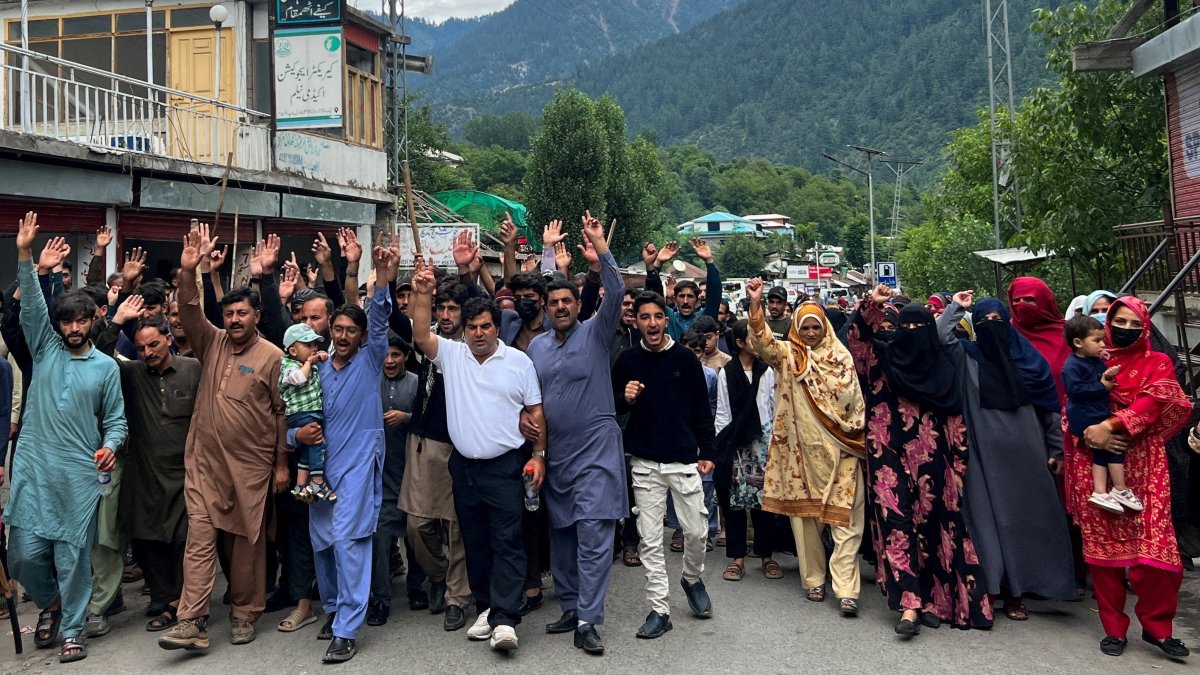
At least nine people were killed and about a dozen wounded in fresh clashes between security forces and supporters of a banned protest movement in Pakistan-administered Kashmir, officials said, as demonstrators pressed a long-threatened march on the regional capital, Muzaffarabad. The violence erupted on Tuesday and marked one of the bloodiest days in a revolt that has simmered for weeks over the cost of living and political representation.
Seven of the dead were civilians and protesters, while a paramilitary soldier and a police officer were also killed, according to Sardar Waheed, the top civilian official in Poonch district, the epicenter of the unrest. The confrontations followed a government ban imposed in June on the Jammu Kashmir Joint Awami Action Committee under anti-terrorism laws, a move that only hardened the movement's resolve.
The committee, known as the JAAC, emerged in 2023 as a coalition of traders, transporters, lawyers and civil-society groups initially focused on high electricity tariffs and the price of wheat flour. It has since broadened into a wider campaign for economic relief and governance reforms, drawing large crowds despite official warnings and repeated crackdowns that residents say have grown steadily more violent.
Among the movement's central demands is the abolition of 12 seats in the local legislature reserved for people who migrated from the Indian-administered portion of Kashmir. The JAAC argues that major Pakistani political parties use those reserved seats, held largely by people who reside outside the region, to tilt the composition of the local parliament in their favor and blunt the influence of local voters.
The latest bloodshed adds to a mounting toll. Earlier clashes after the June ban killed 22 people, according to official figures, and the region has cycled through waves of strikes, road blockades and internet shutdowns. Authorities have deployed paramilitary reinforcements and imposed restrictions on movement, but organizers vowed to continue their march toward Muzaffarabad in defiance of the orders.
The unrest poses a delicate challenge for Islamabad, which administers the territory and has sought to portray it as stable even as it presses its case over the disputed Himalayan region internationally. Rights groups have called for restraint and an independent inquiry into the deaths, while residents brace for further confrontations in a standoff that shows little sign of easing.
The territory, which Pakistan calls Azad Jammu and Kashmir, sits along the heavily militarized Line of Control that divides the Himalayan region between Pakistan and India, and both countries claim Kashmir in full. That sensitive geography has made Islamabad wary of any sustained instability there, even as protest leaders insist their grievances are economic and administrative rather than tied to the broader territorial dispute. Analysts say the movement's durability reflects deep frustration over inflation, power shortages and a sense that local voters have little say in how the region is governed.