U.S.-Nigeria Strike Kills ISIS Second-in-Command Abu-Bilal al-Minuki in Lake Chad Basin Raid, Pentagon Says
President Trump announced that joint American and Nigerian forces eliminated the global Islamic State's chief operating officer in a complex air-and-land assault on a compound near Metele, a blow U.S. Africa Command called the most significant in West Africa in a decade.
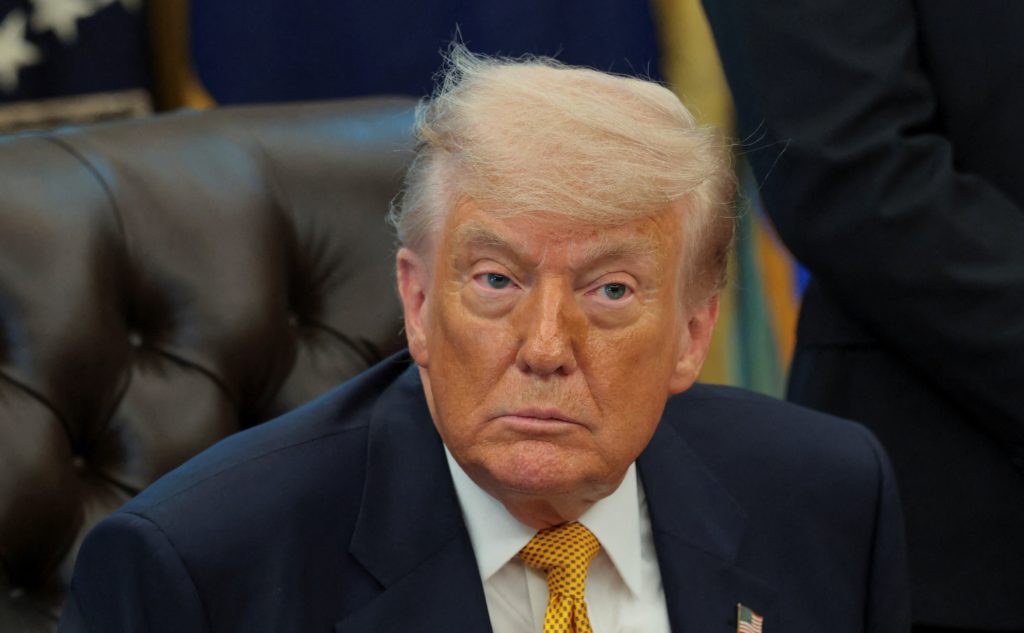
WASHINGTON — President Donald Trump announced Saturday that a joint U.S.-Nigerian military operation in the Lake Chad Basin had killed Abu-Bilal al-Minuki, whom the Pentagon identified as the second-in-command of the Islamic State globally and the architect of the terrorist group's worldwide finance, weapons and media operations.
In a Truth Social post and a brief Oval Office statement Saturday afternoon, Trump said "brave American forces and the Armed Forces of Nigeria flawlessly executed a meticulously planned and very complex mission to eliminate the most active terrorist in the world from the battlefield." U.S. Africa Command later confirmed that al-Minuki and "several senior ISIS lieutenants" were killed in an air-and-land assault on a compound near Metele, in Borno State, between midnight and 4 a.m. local time Saturday. No U.S. service members were harmed.
Al-Minuki, born in 1982 in the village of Mainok in northeastern Nigeria, was a former Boko Haram commander who pledged allegiance to the Islamic State in 2015 and rose to lead the group's West Africa Province before being elevated to the position of "Emir of the General Directorate of Provinces" — effectively the chief operating officer of the global Islamic State network. AFRICOM described him as a "key strategic figure" who provided guidance on "media operations, economic warfare and the manufacture of weapons and explosives, including drones" to Islamic State affiliates from Mozambique to the Philippines.
Defense Secretary Pete Hegseth, who released a short black-and-white surveillance video of the strike, said the operation involved U.S. special-operations forces working alongside Nigeria's 7th Division and that the final assault was preceded by a precision airstrike on the compound's perimeter. "The most active terrorist in the world is dead, and the Islamic State's global pipeline is broken tonight," Hegseth told reporters at the Pentagon. He declined to specify the U.S. aircraft used in the strike or whether any Islamic State fighters had been taken alive for interrogation.
Nigerian President Bola Tinubu, in a statement issued from Abuja, called the operation "a decisive blow against a man who has bled this nation for two decades" and credited U.S. intelligence-sharing under an expanded counterterrorism agreement the two governments signed in March. The Nigerian army said it had recovered "a substantial quantity" of weapons, communications equipment and documents from the compound. The Lake Chad Basin, where Nigeria, Niger, Chad and Cameroon meet, has been the operational heart of Islamic State West Africa Province, or ISWAP, since 2016.
Counterterrorism analysts cautioned that the killing, while a major operational setback, was unlikely to dismantle the group. "ISWAP has shown it can reconstitute its leadership within months," said Vanda Felbab-Brown, a senior fellow at the Brookings Institution, noting that the group has weathered the loss of three previous emirs since 2018. The U.S. military estimates ISWAP fields between 3,500 and 5,000 fighters across the basin, where it controls revenue from a thriving fish-and-cattle taxation racket. Trump said additional U.S. and Nigerian operations would follow "in the days ahead."