Boston Dynamics' Robot Dog Now Reads Industrial Gauges Using Google's AI
Advanced robotic system can interpret analog instruments and thermometers, expanding autonomous capabilities in industrial settings.
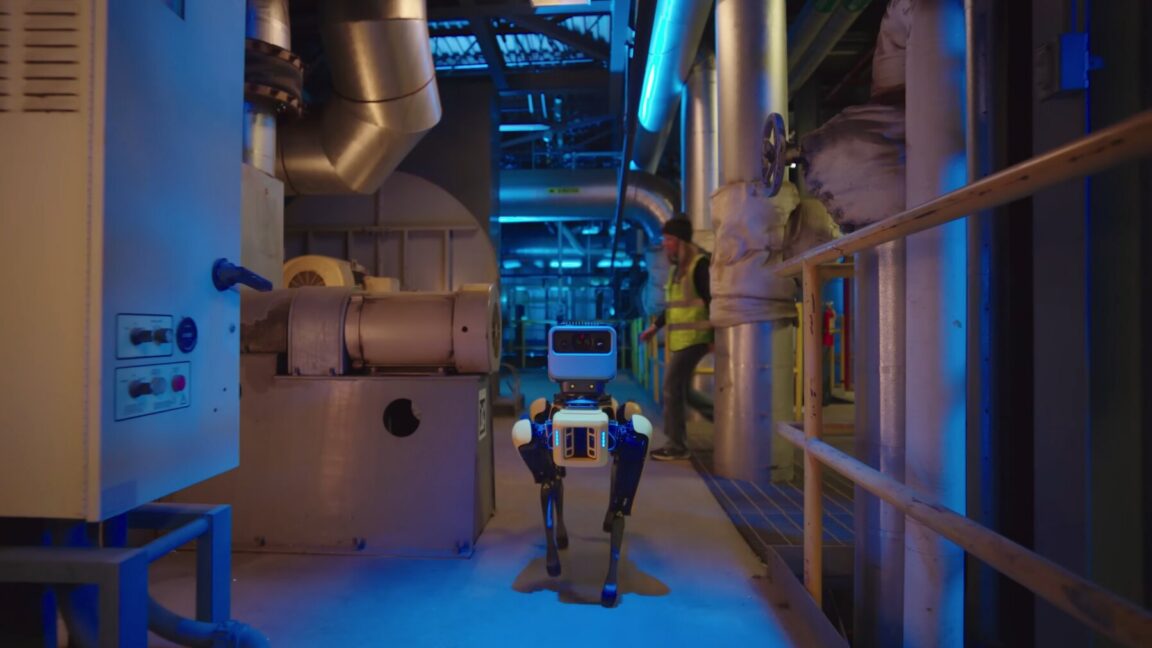
Boston Dynamics has integrated Google's artificial intelligence capabilities into its robotic quadruped platform, enabling the machines to read analog gauges, thermometers, and other industrial instruments autonomously. The collaboration represents a significant advancement in robotic perception technology, allowing the four-legged robots to gather and interpret data from traditional analog systems that have long required human oversight.
The integration of Google's Gemini AI system provides the robot dogs with sophisticated visual recognition capabilities that can identify numerical readings, interpret gauge positions, and understand various measurement scales across different industrial environments. This advancement addresses a critical gap in industrial automation, where many facilities still rely on analog instruments that were previously incompatible with automated monitoring systems.
Industrial applications for the enhanced robots include routine inspections of manufacturing facilities, power plants, and chemical processing centers where human workers traditionally perform regular rounds to check instrument readings. The robots can now navigate these environments independently, recording precise measurements and identifying potential anomalies that might indicate equipment malfunctions or safety concerns.
The AI-powered perception system represents a convergence of several technological advances, combining Boston Dynamics' proven mobility platform with Google's machine learning algorithms specifically trained on industrial instrumentation. The robots can adapt to different lighting conditions, viewing angles, and instrument types without requiring extensive reprogramming for each new environment.
This development signals a broader trend toward more autonomous industrial monitoring systems that can reduce human exposure to hazardous environments while maintaining high accuracy standards. Companies are increasingly seeking robotic solutions that can integrate with existing infrastructure rather than requiring complete system overhauls, making the gauge-reading capability particularly valuable for industrial adoption.