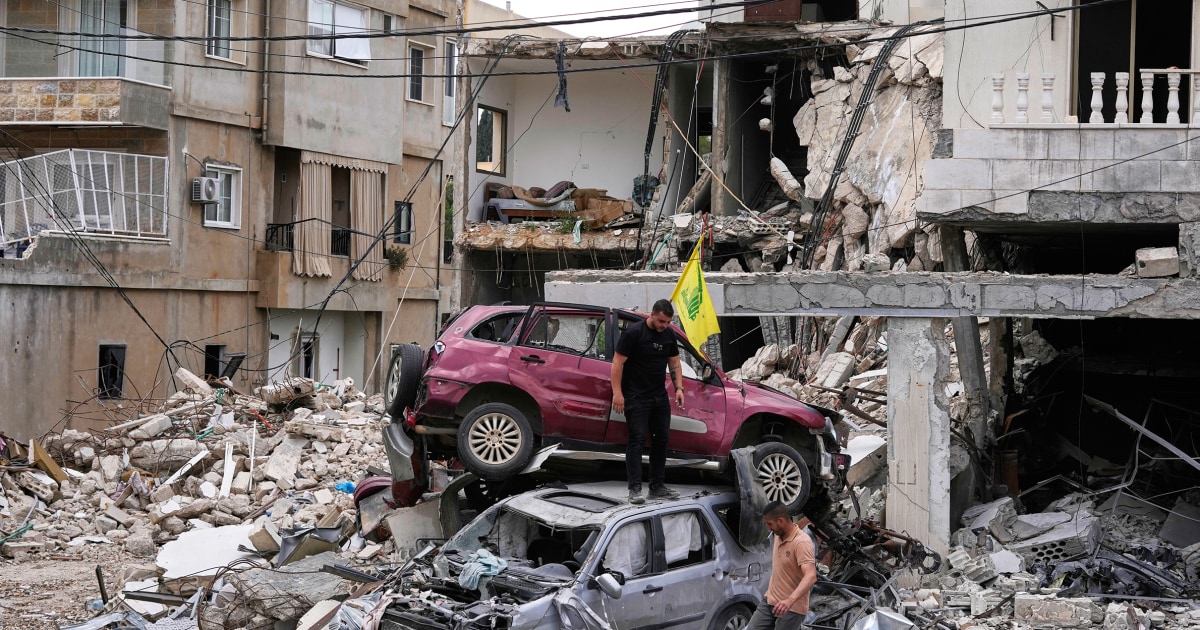
Israel and Lebanon Reach Framework to Pull Troops From Two 'Pilot Zones' in the South
After two days of U.S.-brokered talks in Rome, the sides agreed on how Israeli forces will withdraw and the Lebanese army will move in — a first test of a fragile new order.

Israel and Lebanon concluded two days of U.S.-mediated talks in Rome this week with an agreement on the structure and guidelines for withdrawing Israeli forces from two "pilot zones" in southern Lebanon, in what negotiators cast as an early but significant test of a fragile new order along the volatile frontier.
Under the arrangement, Israeli troops will begin pulling out of the designated zones in the coming days, with the Lebanese Armed Forces deploying into the vacated areas, a U.S. official said. The two sides clarified the sequence and conditions for the pullback, the deployment of the Lebanese army, the disarmament of Hezbollah, and the verification of the Lebanese state's effective control over the territory.
The pilot project is designed to gauge whether the Lebanese military can hold the ground, dismantle militant infrastructure and prevent Hezbollah from re-establishing a presence before the mechanism is expanded to other parts of the south. "The sides agreed on the structure and guidelines for the pilot zone process," the U.S. official said, adding that negotiations were now moving into a technical phase aimed at a comprehensive agreement.
This was the sixth round of talks between the two countries and the first since a framework agreement was signed in Washington on June 26. Israel has signaled that it will withdraw from the pilot zones but intends to remain, for now, in broader "security zones" it considers essential to protecting its northern communities — a caveat that underscores how far the two sides remain from a full settlement.
The diplomacy is unfolding against a turbulent regional backdrop, with the U.S.-Iran war reverberating across the Middle East and Hezbollah, Iran's most powerful regional proxy, weakened but not eliminated after its last confrontation with Israel. Analysts cautioned that the pilot zones could collapse if the Lebanese army proves unable to assert control or if Hezbollah refuses to disarm.
Still, the Rome talks represented incremental progress on one of the region's most dangerous fault lines, and both governments described the discussions as "productive." Whether that momentum survives contact with the realities on the ground in southern Lebanon will become clear in the coming days, as the first Israeli units begin to pull back. For residents of the border villages on both sides — many of whom fled during the fighting and have yet to return — the outcome of the experiment will determine whether they can finally go home, or whether the frontier remains a militarized no-man's-land patrolled by rival armies.