Bitcoin Volatility Stays Flat as Iran Conflict Roils Traditional Markets
Implied volatility gauges for equities, oil, and bonds have spiked sharply, but crypto options markets signal unusual calm

Three weeks into the armed conflict between Iran, the United States, and Israel, traditional financial markets remain gripped by fear — but bitcoin traders appear largely unfazed, according to options-market data that underscores a striking divergence between crypto and conventional asset classes.
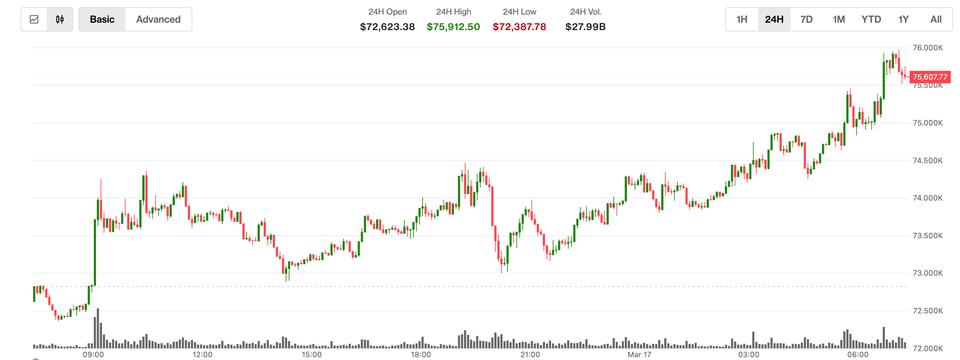
Bitcoin's 30-day implied volatility index, known as BVIV, has held in a narrow band between 55% and 60% since hostilities broke out on February 28, TradingView data shows. Implied volatility is a proxy for demand for options contracts, and its stability indicates that crypto traders have not rushed to buy protective puts against a price decline. Bitcoin itself has rallied roughly 10% over the past two weeks to approximately $74,000, reinforcing the picture of a market that has absorbed a major geopolitical shock without panic.
Traditional markets tell a starkly different story. The CBOE Volatility Index, or VIX, which measures expected 30-day swings in the S&P 500, jumped from a pre-conflict average just above 20% to more than 32% on March 6 and remained elevated near 26% on Monday. The CBOE crude oil volatility index, OVX, surged from 64% to above 100% as damage to Middle Eastern oil infrastructure and disrupted tanker flows rattled energy markets. The MOVE index, which tracks U.S. Treasury volatility, climbed from 73% to as high as 95% before settling near 85%. Even gold's volatility gauge held above 30%, though the metal's haven status kept its price action relatively orderly.
Analysts point to an important contextual factor: crypto markets had already endured significant turbulence before the Iran conflict began. Bitcoin plunged from an all-time high above $126,000 in October 2025 to the low $60,000s in subsequent months, a drawdown that flushed out leveraged longs and prompted extensive hedging well ahead of the war. Traditional equities and oil, by contrast, were trading near record levels or in calm conditions when hostilities erupted, leaving those markets more vulnerable to a sentiment shock. Research from bitcoin-focused financial services firm River supports the broader thesis, finding that bitcoin has averaged double-digit returns over 60-day windows during multiple geopolitical events since 2020.
The divergence carries implications for portfolio construction and the evolving narrative around bitcoin's role in a multi-asset portfolio. Volatility metrics are often considered a cleaner gauge of investor sentiment than raw prices, which can be distorted by erratic flows. By that measure, crypto participants appear to view the current crisis as manageable — or at least as already priced in — while equity, energy, and fixed-income traders continue to scramble for downside protection. Whether bitcoin's calm persists will depend on whether the conflict escalates further and how the Federal Reserve responds at its upcoming policy decision, with markets already pricing in the potential for rate adjustments tied to war-driven economic uncertainty.