Supreme Court Lets Louisiana Redistricting Ruling Take Effect Immediately, Forcing State to Cancel May 16 Primary
The 6-3 Voting Rights Act decision will reshape congressional maps across the South before November, after a bitter exchange between Justices Alito and Jackson over the Court's accelerated timeline.
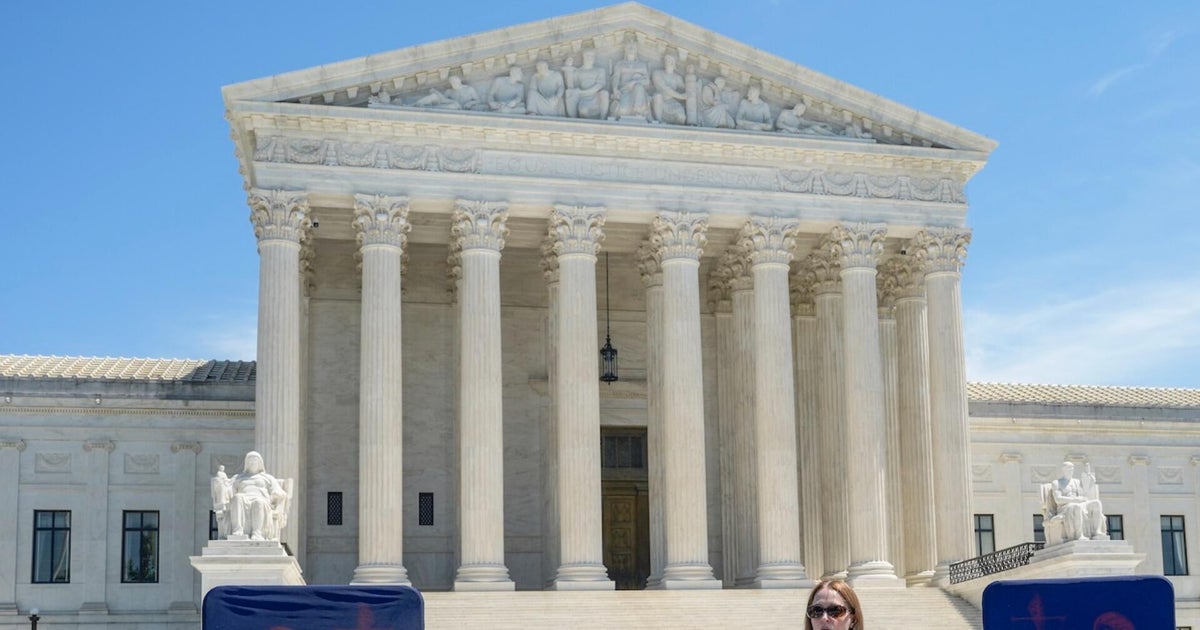
The Supreme Court on Monday night allowed its bombshell Voting Rights Act ruling in Louisiana v. Callais to take effect immediately, bypassing the customary 32-day waiting period and forcing Louisiana to cancel its scheduled May 16 congressional primary while state lawmakers scramble to redraw the map. The order, issued without a written majority opinion, triggered a remarkable public exchange between Justices Samuel Alito and Ketanji Brown Jackson that laid bare the deepening ideological warfare on the Court.
The April 29 decision, by a 6-3 vote, struck down Louisiana's 2024 congressional map — which contained two majority-Black districts — as an unconstitutional racial gerrymander, narrowing the reach of Section 2 of the Voting Rights Act of 1965. The map had been drawn under court order after a separate Section 2 ruling found the state's previous lines diluted Black voting power. Monday's follow-up order eliminates the only remaining procedural obstacle to redrawing the lines before the November midterm elections, in which Republicans currently hold four of Louisiana's six U.S. House seats but could pick up one or two more under a redrawn map.
In a sharply worded dissent from the immediate-effect order, Justice Jackson called the move "unwarranted and unwise" and accused her colleagues of allowing political considerations to dictate the Court's calendar. "And just like that, those principles give way to power," Jackson wrote, urging the conservative majority to "stay on the sidelines" to "avoid the appearance of partiality." Justice Alito, joined by Justices Clarence Thomas and Neil Gorsuch, fired back in a concurrence that called Jackson's bias accusations "baseless and insulting." "What principle has the Court violated?" Alito asked, dismissing the dissent's rhetoric as "groundless and utterly irresponsible."
The political consequences are already cascading across the South. Within hours of the order, Louisiana Secretary of State Nancy Landry suspended the scheduled May 16 House primary. Alabama Gov. Kay Ivey and Tennessee Gov. Bill Lee both convened special sessions of their state legislatures to begin redrawing their own congressional maps, which had been frozen pending the Callais decision. House Minority Leader Hakeem Jeffries told reporters in New York that Democrats would respond by reopening New York's bipartisan commission map, while Stacey Abrams said the ruling amounted to "a demolition of the Voting Rights Act." Republican National Committee Chair Michael Whatley called the ruling "the most consequential redistricting decision since Shaw v. Reno."
Civil rights groups, who lost the case, warned the immediate-effect order would compress redistricting fights into a few chaotic weeks. "There is no way to draw a fair map in the timeline the Court has now imposed," NAACP Legal Defense Fund President Janai Nelson said in a statement Monday night. The Brennan Center estimated that as many as five congressional seats currently held by Democrats across Louisiana, Alabama, Tennessee, and Georgia could flip to Republican control under maps drawn under the new Callais standard. The decision arrives as President Trump separately pushes Indiana, Texas, Missouri, and North Carolina to redraw their maps mid-cycle — an unprecedented coordinated effort that election lawyers say has no clear historical parallel.
Originally reported by CBS News.